Make Your Own Toner Transfer Paper

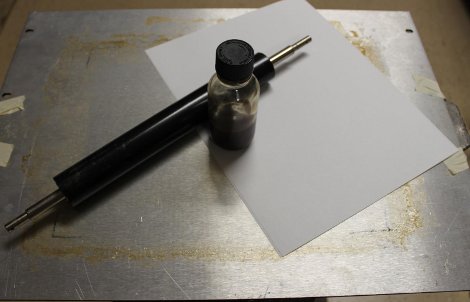
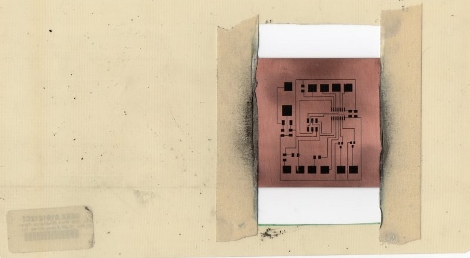
Who would have thought that some corn starch could be made into toner transfer paper? We’re not sure of the advantages (perhaps its cheaper?), but if you have a lot of time or just love to get sticky [Matthew Sager] shows the proper method for making the paper, printing, and then etching a PCB.

If you’re just getting started making PCBs, we recommend you check out these DIY circuit etching videos to get a better grasp on the printing and etching steps.

Preparing Your PCB Design For Manufacture

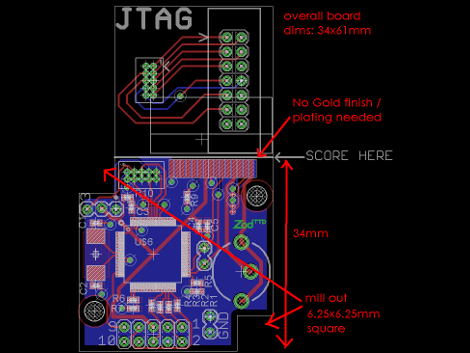
[Colin] has cut his teeth with about fifteen PCB orders. He wrote a tutorial describing the process and sharing his tips on avoiding common problems. You may remember our own How-To prepare designs for manufacture early last year. In that post, [Ian] shared his veteran knowledge by outlining BatchPCB’s board design process. This time, [Colin] is using Advanced Circuits in Colorado as a board house, giving us more insight on how the different companies work. No matter who you choose for manufacturing, make sure you really understand how to properly format and troubleshoot your designs. It’ll end up saving you a lot of time and money.

Brighten Up Your PCB Drilling Station

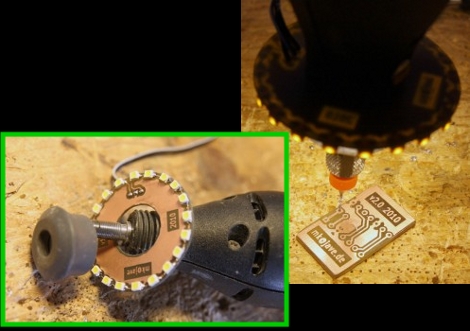
Being able to see what you’re doing can be the hardest part of drilling the through holes in those freshly etched printed circuit boards. We don’t know why we didn’t come up with this, but [Markus Gebhard] solved his shadowy woes with his 20-LED Dremel light ring. Honestly, how many times have we seen lights rings in photography without putting it together that a light ring is perfect for this purpose. So kudos to [Markus], now we’ve got to go and dig up some surface mount LEDs and uncork the copper chloride.

Minimalist AVR Programmer Is Just Fab!

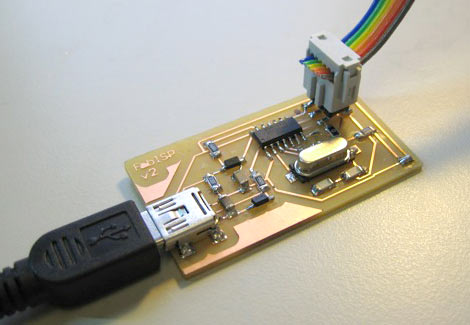
Whether you’re burning a new bootloader to an Arduino board, or doing away with a bootloader to flash Atmel chips directly, an in-system programmer (ISP) is an indispensable tool for working with AVR microcontrollers. If cost has held you back, it’s no longer an excuse: FabISP is a barebones USB-based AVR programmer that can be pieced together for about ten bucks.

FabISP was created by [David Mellis] as a product of MIT’s Fab Lab program, which provides schools with access to design and manufacturing tools based around a core set of fabrication capabilities, so labs around the world can share results. But the FabISP design is simple enough that you don’t need a whole fab lab. It’s a small, single-sided board with no drilling required; the parts are all surface-mounted, but not so fine-pitched as to require reflow soldering. Easy!

There’s still the bootstrap problem, of course: you need an AVR programmer to get the firmware onto the FabISP. This would be an excellent group project for a hackerspace, club or school: if one person can provide the initial programmer to flash several boards, each member could etch and assemble their own, have it programmed, then take these out into the world to help create more. We must repeat!

[Thanks Juan]

Toner Transfer Explained Step-by-step

[Tanjent] send us a link to his tutorial on the toner transfer process for fabricating circuit boards. We’ve seen a lot of these in the past, but we liked how his is straight to the point while also sharing several tips and options along the way. Notably, he ”tints” the copper clad before trying to adhere the toner to it by swabbing on a bit of etchant. His reasoning for this is that the toner has more trouble sticking to the shiny copper. Just a bit of etchant will pit the surface and let the toner stick better.

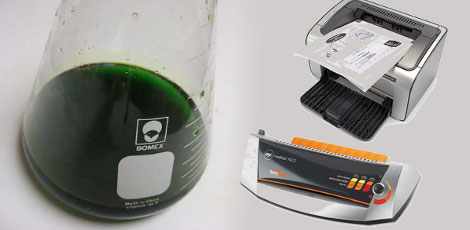
He’s still using paper as a medium and not printing toner powder directly to the copper clad. His paper of choice is HP Brochure Paper while we use glossy pages from the union newspaper. But like us, he does use copper chloride as an etchant, which you can learn to make yourself. We’re still looking for a definitive solution for disposing of this chemical. We’ve been using the same batch for years and recently it’s turned cloudy with impurities. If you’ve got disposal tips let’s hear them in the comments section.

Print Toner Directly To A PCB

We use the toner transfer method to fabricate printed circuit boards. The most difficult part of this is printing, ironing, and removing the paper from the toner that is used as an etchant resist material. [Mark Lerman] is developing a method to apply toner directly to the copper clad using a laser printer. Each of the photos in his gallery have comments that take us through his process. A laser printer has been modified to negatively charge the copper plate, thereby attracting the positively charged toner to it. Once the toner has been applied, the board is baked in an oven, then run through a laminator. This process can yield 2 mil traces and it looks like the potential for incredibly clean boards is just around the corner. The question is, will this be easier and take less time than using photo resist?

We’ve contacted [Mark] in hopes of getting more details. If you can’t wait for a follow-up, take a look at this thread concerning his work.

[Thanks Komradbob]

Get Serious About Building A Sequencer

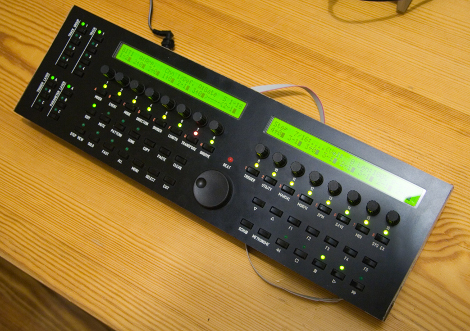
This is the fourth generation MIDIbox sequencer which has a features set that’s several screens long. We’ve embedded the teaser video of this 16-track marvel after the break. You can use it via a traditional MIDI connection or with USB. Standalone Ethernet features are also in the works. It’s fully documented and you can etch your own PCB if you’re brave but it might be easier to get in on the group PCB buy if you just have to have one of these. There’s no all-in-one kit, but that will just make the taste of success sweeter once your soldering iron cools down.

Continue reading “Get Serious About Building A Sequencer”