Walking Motion Analysis Using Wii Remotes

WiiGait is not a political scandal, it’s a project that records motion data while walking. [Bilal Chishti] and [Zassa Kavuma] are strapping a Wii remote onto each leg and recording the sensor data while making video of the walker at the same time. The two are using an Ubuntu box to pull the sensor data from the Bluetooth-enabled devices and utilizing its built-in webcam for the video. They graph the data for each axis and we’re sure that syncing up data anomalies with the video is just a matter of matching timestamps.

So what good is this? The creators are keeping us in the dark about an end-goal for collected data; this may just be for the experience of using the hardware. But we could see it having uses in making distance runners more efficient, or teaching that bipedal robot how to balance.

Continue reading “Walking Motion Analysis Using Wii Remotes”

Modern Freaking: Pull Phone Numbers From YouTube Audio

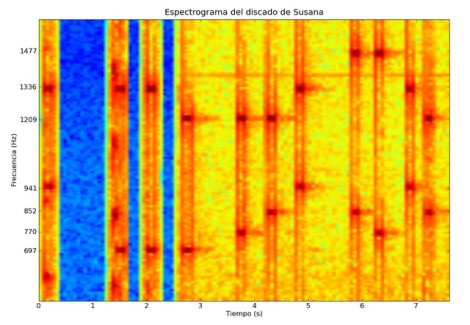
[Charlie X-Ray] is having some modern fun with the phone system by pulling dialed numbers from the audio track of YouTube videos (translated). The first step was to find a video where a telephone is being dialed and the sounds of the keypresses are audible. You can’t tell those tones apart, but a computer can. That’s because each number pressed generates a combination of two out of seven closely related frequencies. [Charlie] isolated the audio using Audacity, then wrote a python script to generate a spectrogram like the one above. By matching up the two dark nodes you can establish which two frequencies were played and decode the phone number being dialed. So how does this work again… find audio of a phone being dialed, decode the number.. profit?

R2D2 Wannabe Lacks Lightsaber Launcher, Autonomy

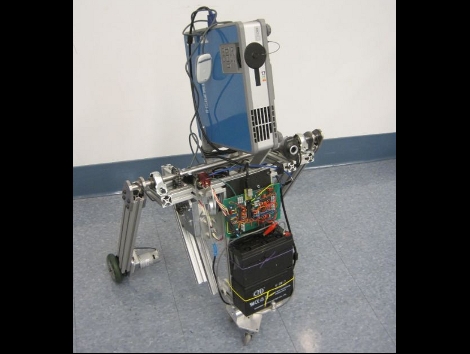
Is this what the lovable Star Wars droid would look like without its protective skin? This R2D2 inspired robot is another Olin College of Engineering (where that CNC cake decorator came from) build developed by [Nathaniel Ting] and his classmates. Alas, it lacks autonomy, relying on an operator for guidance. But we enjoy it for the build quality. Two motorcycle batteries supply DC motors on the two rear legs of the trike. It can be driven with a wireless Xbox controller or through a Python interface that also randomly plays droid audio clips from the movie. That’s a tilting projector on top, which would be used to show Princess Leia’s pleas for assistance. That is, after the operator plugs in an extension cord to power it up. Oh well, it’s still a lot of fun to watch. See for yourself after the break.

Continue reading “R2D2 Wannabe Lacks Lightsaber Launcher, Autonomy”

Internet Enabled Drip Coffee

A fresh pot of coffee is never more than a tweet away with the Tweet-a-Pot. It works in much the same way that our Troll Sniffing Rat does. For that build we used a Python script to monitor our comments, and this does the same except that the script read tweets through the Twitter API. It watches for a specific hash tag (#driptwit) and when found it sends a serial command to an Arduino. The microcontroller then writes a digital pin high to actuate a relay, powering up the coffee maker.

Sure, you have to preload the pot with grounds and water, but what do you expect, automatic coffee roasting and brewing? That’s quite a bit more work.

CNC Cake Decorator

The AutoFrost CNC cake decorator is the result of a student project a Olin College of Engineering. [Tara Krishnan] and her classmates designed and built the hardware, as well as a Python interface that is used for drawing the design you want printed in frosting. The X and Y axes are controlled by stepper motors, with manual adjustments for the Z axis. The software has setting for the size of the cake, making it a bit more versatile than the last mechanized decorator we looked at. The GUI also allows for multiple colors which are applied one at a time, with the machine pausing for an operator to switch out the colored frosting container. All in all a nice build, but the next rendition should look to get rid of that second Arduino. We can’t think the code is complex enough to warrant two of them. Check out the demo video after the break.

Continue reading “CNC Cake Decorator”

Hackaday Unleashes A Troll Sniffing Rat

Sometimes we like to take a few minutes away from Hackaday to spend time with our families. But just when you take your eyes off of the incoming comments, Trolls are bound to strike. Well, [Caleb] and I found a solution to the problem in the form of a troll sniffing rat. This beady-eyed vermin sits on my desk and waits. When a trolling comment is detected its eyes glow red and an alarm is sounded. Join us after the break for more about this silly project.

Continue reading “Hackaday Unleashes A Troll Sniffing Rat”

Interface Up To 12 Servos Using Arduino

[Brian] is using an Arduino to control multiple servo motors. This is nothing new and has been happening since the earliest days of Arduino. But rather than develop a project and share it, [Brian] did a fantastic job of making the code scalable, readable, and even explained how the different parts work.

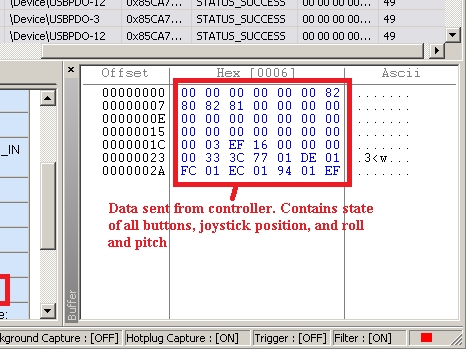
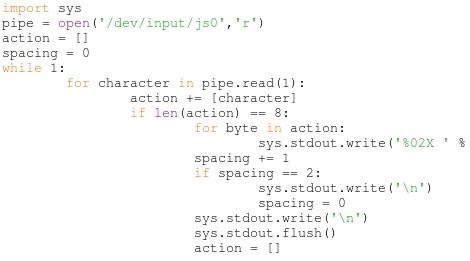
His code listens for serial commands and manipulates the motors accordingly. He wrote a Python script using pyserial which talks to the Arduino. As an example, he uses a joystick to send data for X and Y axes as well as pitch and roll. Want to know how those serial communications work? He explains that in detail. He also outlines the process of scaling up from the 4 servo demo to 12 servos on a standard Arduino. Sounds like it might be time to build your own version of a mouse-controlled Lynxmotion arm using the tools [Brian] has put together.