USB Controller For Multiple Servos

USB_controller_for_6_servos

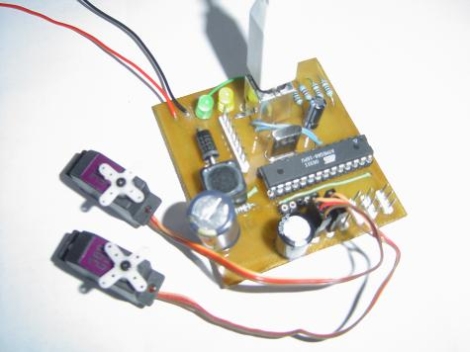
[dunk] constructed an easy to use AVR-based USB controller with the ability to drive up to six R/C hobby servos at once.  While the USB-powered Atmega8 he used supplies the necessary PWM signaling for all of the servos, an external power supply rated up to 30v at 3A is necessary to provide the 5v of power each servo requires.  His project is an extension of the USB servo controller built by [Ronald Schaten] and includes several significant upgrades.  The addition of 5 more servos aside, [dunk] switched to AVRlib routines for multi-servo control and PWM management, as well as added the aforementioned power supply to prevent an excessive current draw on the USB port.  His tutorial includes a complete parts list, Eagle PCB schematic, the required USB servo source code, as well as a sampling of commands that can be issued to the servo controller.

The OpenServo Project

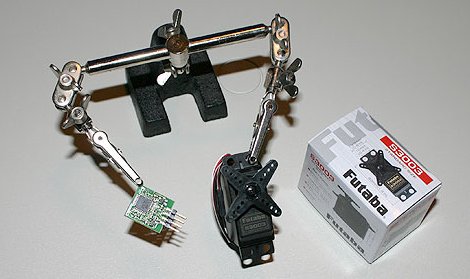
When it comes to using servos in projects, there is a definite distinction between the cheap ones and the expensive high power and precision models. The OpenServo project gives you a couple options for enhancing your servo experience. By replacing the control board with a new one based on a familiar microcontroller, a whole new set of features can be attained. For those of you out there with a need for servos like these, you can buy the pre-built replacement board (unfortunately sold out right now), or build your own from the provided schematic, BOM, and source code.

Building A Creepy Doll Army

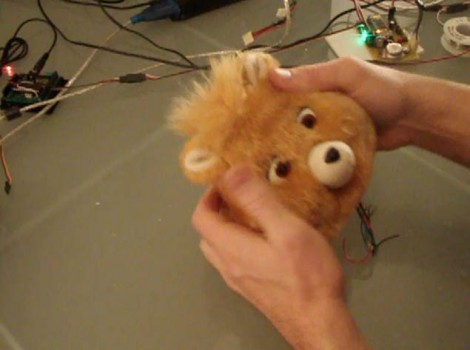
Want your very own Chucky doll to scare the crap out of the roommates? [Gzip] shows you how to make this happen by adding servo-based animatronics to old dolls. In the video after the break you can see the doll throw up her arms and turn her head thanks to a motor in each shoulder and one in her melon. You won’t see it in the clip, but the legs are motorized too meaning that some creative coding might have this old gal awkwardly crawling across the room (with knife in hand). Then again, maybe this is just the inspiration you need to get off your bum and finish the Santa-Pede Challenge. Submissions are due a week from today!

Continue reading “Building A Creepy Doll Army”

Zipitbot

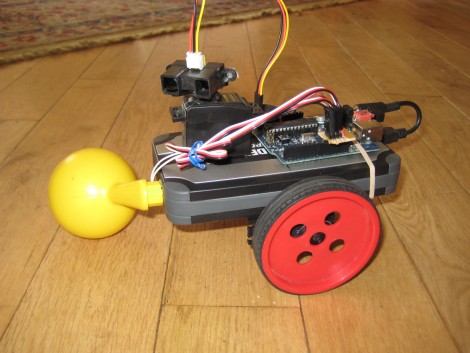
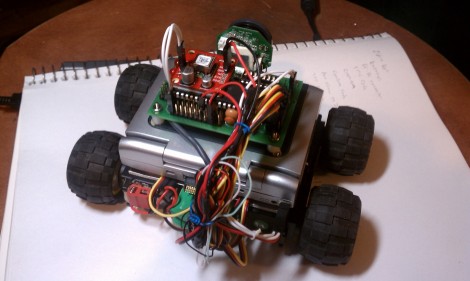
[Nulluser’s] Zipit was fine, but it couldn’t go anywhere on its own. Adding some motors and a microcontroller fixed that issue, and now he’s got a little robot called the Zipitbot. That’s a dsPIC board on top which communicates with the Zipit over an I2C bus. Four servo motors provide plenty of power to the wheels,with some extra battery packs nestled between them.

Since the Zipit is running Linux, and already has WiFi hardware, it’s not too hard to add Internet control. With this in mind there’s a webcam on the front to broadcast a video feed for use when controlling it remotely. See a couple of videos of this hack after the break.

Continue reading “Zipitbot”

Improving A Hexapod Design

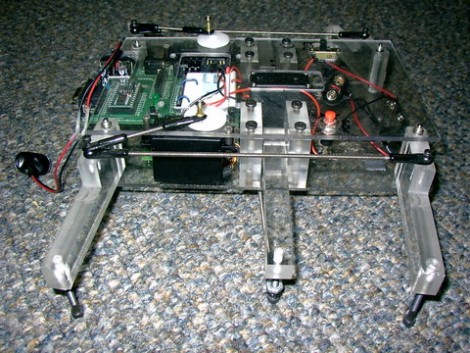
[JC] built himself a hexapod based on a project he found on the Internet. It worked fairly well, but was mechanically weak and prone to breakage. He set out to improve the design and came up with the unit seen above. It uses three servo motors to control the six legs, and walks quite well as seen in the quick clip after the break. It’s not quite as agile as the little acrobatic six-legger we saw yesterday, but the movement is quite pleasing and it’s capable of moving forward, backward, and turning. [JC’s] post is four pages in all so don’t forget to seek out his links for the construction, linkage, and servo control pages to find concept drawings, cad designs, and his thoughts on the process.

Continue reading “Improving A Hexapod Design”

Meter Clock With Pleasing Design Considerations

[AndyO] embraced his inner geek by building this meter clock. It exhibits a lot of features that you’d want to see in a home-built timepiece, include over-complexity, abundant features, and RGB LEDs. We’re fascinated by the design he put into this. For instance, the two indicator LEDs on the clock face are not poking through the surface, but use brass tubes as light pipes. Also, the three buttons on the top are almost indistinguishable, and have an RGB back light that places a halo around each. The case itself was built by first making a form, then laminating thin sheets of wood (a difficult task due to the tight curves). The needles themselves are not actually meters, like the clock the inspired the build, but are attached to servo motors. This all comes together into a fascinating build, and a great writeup.

[Thanks Graham]

Developing An Animatronics Platform

This Predator costume has an animatronic element in the shoulder cannon. It tracks the movement of the mask, aiming wherever the Predator gazes. [Jerome Kelty] was asked by a friend to help develop the costume and he ended up with an animatronics platform which can be adapted for many different uses.

Starting with an Arduino Pro Mini [Jerome] designed a host board which would breakout the pins of the Arduino and make it easy to connect and drive multiple servo motors. The board is powered by a 3.3v Lithium Polymer battery with charging handled by a MAX1555 that was included in the design. Check out the video after the break which shows off the Predator suit. Looks like [Jerome] got it right, and he’s also put the platform to use with an Ironman suit that has an arm-mounted missle feature.

Need some inspiration for you next costume build? Take a look at this animatronic collection to get you started.

Continue reading “Developing An Animatronics Platform”