
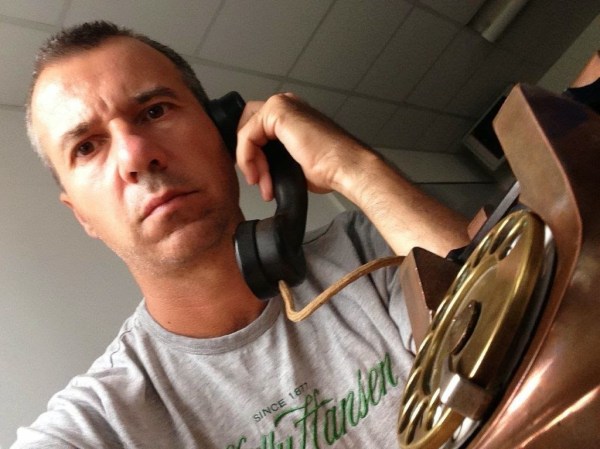
[Ivan] is fed up with all this rampant virtualization. When his company took away his physical desk phone in favor of using MS Lync, he was driven to build a USB rotary phone. His coworkers loved it and one of them asked [Ivan] to build another. The build log focuses on converting his coworker’s vintage brass and copper number that must weigh a ton.
He had to do a bit more work with this one because it had rusted out inside and a few of the contacts were bent. The good news is that the speaker and microphone were in working order and he was able to use them both. After restoring the stock functionality, he added a USB sound card and created a USB keyboard using a PIC32MX440F256H.
The rotary phone’s dial works using two switches, one that’s open and one that’s closed when no one is dialing. Once dialing is detected, the open switch closes and the closed switch clicks according to the dialed digit (ten clicks for 0). [Ivan] also reads the switch hook state and has added debouncing. This gave him some trouble because of the quick response expected by the PC bus, but he made use of interrupts and was allowed to keep his seat.
Please stay on the line. [Ivan]’s videos will be with you shortly.


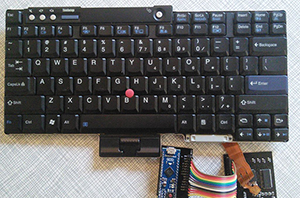 It doesn’t have buckling springs, Cherry blues, or even the wonderful if forgotten Alps switches, but the keyboard found in ThinkPads has the best keyboard action of any laptop around. They would make a great USB conversion keyboard, but the board to board connector is very hard to find, and no one has yet managed to get the keyboard and track point working as a USB HID device.








