Multitouch using water

posted Jun 26th 2010 4:55am by
filed under: multitouch hacks

[Taichi Inoue] is back again, this time with a multitouch system that uses water as the touch surface.  The setup consists of a tank of water placed atop an LCD, a lamp, and a web cam. The web cam pics up the light that is reflected when something breaks the surface of the water. It is, as far as the computer is concerned, no different than the blob recognition we see with many of the home made multitouch systems. Mixed with his Yukikaze, this guy might end up with the most relaxing computer system in the world.

[via Makezine]

Jumping robot looks like a product of Doctor Wily

posted Jun 25th 2010 11:34am by
filed under: robots hacks

We love it when footage of a robot prompts a “holy crap” response from us. This little guy, a product of the Chiba Institute of Technology, uses four rods as a suspension system for jumping. The bulk of the bot can be moved up or down, using its momentum to raise the wheels and jump to the next level. Check out the clip after the break to see how getting down involves a controlled fall as graceful as a dancer. Doctor Light better get cracking on another robot to take this one out when it turns on us.

Read the rest of this entry »


Selective Laser Sintering rig on the cheap

posted Jun 25th 2010 10:00am by
filed under: cnc hacks

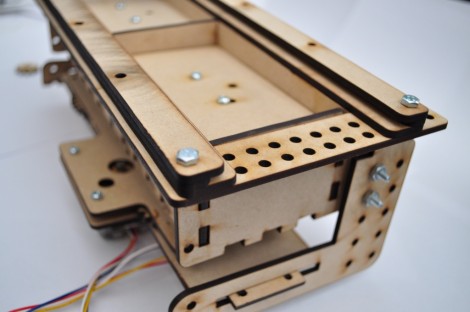
[Peter's] been hard at work designing an affordable Selective Laser Sintering (SLS) 3D printing platform. We first saw his work on this back in April when he was working mostly with acrylic. Now he’s moved on to a design that relies on hardboard which has resulted in a build that comes it at around $20 including the motors.

The design uses a dual z-axis table for the feed stage and the build stage. That is to say, as the powder is fused together by the laser the platform it is on is lowered. Next to this platform, the feed platform is raised, allowing the power to be swept onto the build stage. This setup is moving in the right direction, but we’re still waiting to see what works when it comes to adding the laser and sourcing the powder.

SOAP compatibility for SQLmap

posted Jun 25th 2010 9:00am by
filed under: security hacks

[_coreDump] was doing some database vulnerability testing using SQLmap to automate the process. To his dismay, the package was unable to test using the Simple Object Access Protocol. Faced with having to manually test all of the SOAP vulnerabilities he decided to work some Python magic and add support. His solution allows SQLmap 0.8 to parses XML data from the SOAP protocol by modifying three files from the package. He’s made the diff files available if you need this functionality for your own security testing.

Adding motion control to an RC transmitter

posted Jun 25th 2010 7:36am by
filed under: radio hacks

If your soldering skills are up to snuff you can add a motion control feature to your radio controlled transmitter. [Starlino] used a combination accelerometer and gyroscope module as an alternate source of analog control information. He built a filter to dial in the analog voltage range to match that of one of the sticks on the controller. A switch is used to disconnect the signal when motion input is not desired. This would be a nice addition to one of those more creative aerial hacks.


Yukikaze, music visualizations

posted Jun 25th 2010 6:34am by
filed under: digital audio hacks, home entertainment hacks

[Taichi Inoue] put together this beautiful visualization system called Yukikaze, japanese for “snow wind”. Basically a spectrum analyzer, Yukikaze is delightful to watch. We would love to see what kind of response he gets, as most of the footage shows very slowly changing smooth jazz. While we don’t think he gets crisp EQ visualizations out of this since it is a single large chamber, we still think it is amazing to watch.

[via MakeZine]

Machining a horizontal Stirling engine

posted Jun 24th 2010 2:00pm by
filed under: cnc hacks

Satisfy your need to view some quality machining by looking through this Stirling engine worklog. We’ve seen these engines used a few other times in creating electricity from solar energy, powering a car, and even built from aluminum cans. [David Morrow] built this rendition to push the limits of his machining skills. We’d say he succeeded. The finished piece should run with the help of a heat source such as a candle. There’s no video of this engine, but we’ve embedded a clip of a similar device after the break in order to give you an idea of how this would work.

Read the rest of this entry »

Adding a serial port to the Zipit

posted Jun 24th 2010 1:00pm by
filed under: handhelds hacks, linux hacks

[Geordy] added a serial port to his Zipit. It uses a 3.5mm jack as the connector. He managed to include an RS232 level converter inside the case. Both components were hard to fit into the cramped quarters but he did it and he kept the hacker-friendly device looking nice too.


Hack a Day serves up fresh hacks each day, every day from around the web as well as hacking related news.

Send us your hacks


Hacks

Resources