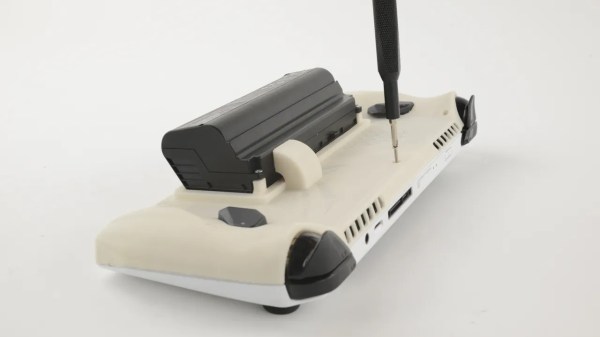
Today’s hack is an unexpected but appreciated contribution from members of the iFixit crew, published by [Shahram Mokhtari]. This is an ROG Ally Asus-produced handheld gaming console mod that has you upgrade the battery to an aftermarket battery from an Asus laptop to double your battery life (40 Wh to 88 Wh).
There are two main things you need to do: replace the back cover with a 3D printed version that accommodates the new battery, and move the battery wires into the shell of an old connector. No soldering or crimping needed — just take the wires out of the old connector, one by one, and put them into a new connector. Once that is done and you reassemble your handheld, everything just works; the battery is recognized by the OS, can be charged, runs the handheld wonderfully all the same, and the only downside is that your ROG Ally becomes a bit thicker.
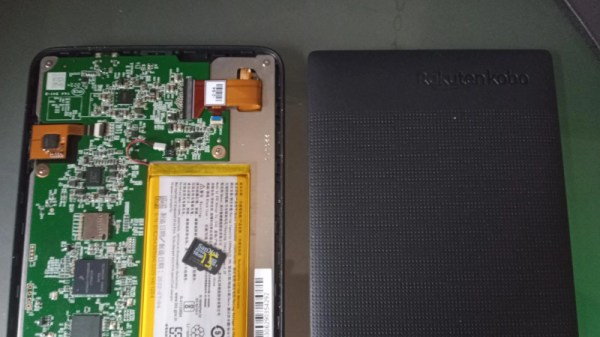
Mobile devices have become notorious for their unrepairability, with glued-together parts and impossible-to-reach connectors. So it’s refreshing to see something new in that field from the e-book reader brand Kobo in the form of a partnership with iFixit to ensure that their new reader line can be fixed.
Naturally, we welcome any such move, not least because it disproves the notion that portable devices are impossible to make with repairability in mind. However, the linked article is especially interesting because it includes a picture of a reader, and its cover has been removed. We’re unsure whether or not this is one of the new ones, but it’s still worth looking at it with reparability eyes. Just what have they done to make it easier to repair?
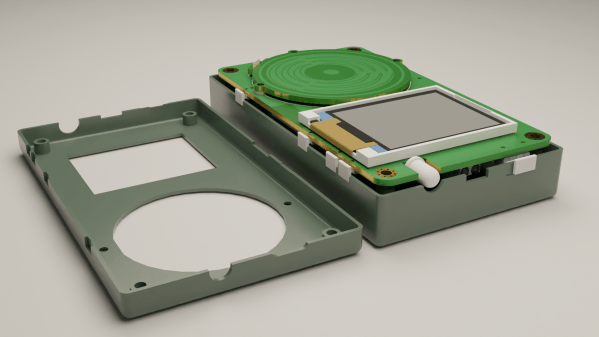
While the proliferation of the smartphone has caused the personal music player (PMP) market to mostly evaporate, there are still those who prefer a standalone device for their music. The Melodio Self-Mate is one such spiritual successor to the iPod.
Music-only devices really benefit from the wheel interface pioneered by Apple, so we still see it in many of the new Open Source PMPs including this one and the Tangara. The Melodio uses the ubiquitous ESP32 for its brains coupled with a TI PCM5102A DAC and TI TPA6130A2 headphone amp for audio. A slider on the side of the device allows you to switch it between mass storage mode and programming mode for the ESP32.
Since this device packs a little more horsepower and connectivity than the original iPods, things like listening to Spotify are doable once assembled, instead of having to completely rebuild the device. Speaking of building, there are only renders on the GitHub, so we’re not sure if this project has made the jump IRL yet. With more people concerned about the distractions of smartphones, maybe this renaissance of open PMPs will lead to a new golden age of music on the go?
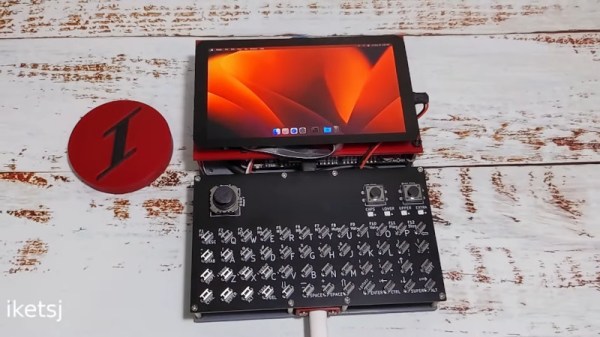
As handheld computing has solidified alongside everything else into the mobile phone, it’s sad that the once promising idea of a general purpose machine in the palm of the hand has taken a turn into the dumbed-down walled-garden offered by smartphone vendors. There was a time when it seemed that a real computer might be a common miniaturized accessory, but while it’s not really come to pass, at least [iketsj] has taken a stab at it. His handheld Hackintosh runs MacOS on a miniature scale, and looks rather nice.
At its heart is the LattePanda Alpha x86 single board computer, with a small custom expansion board for a couple of buttons, a USB hub, a small keyboard, and a display. These parts are all mounted to a baseboard with metal stand-offs, and the power is sourced from a single USB-C socket at the bottom edge. What makes it more extraordinary is that it’s not the first handheld Hackintosh from this maker, the previous one being significantly bigger.
On one hand then, this is home-built PC like any other, assembled from off-the-shelf-parts. But on the other it’s far from normal, for despite its simplicity it forms a very usable small form factor device. The Akruvia Una keyboard uses tactile switches so maybe it’s not the machine to type your thesis on, but other than that it makes a great little machine for MacOS, Linux, or Windows. We like it, and we think you will too when you see the video below the break.
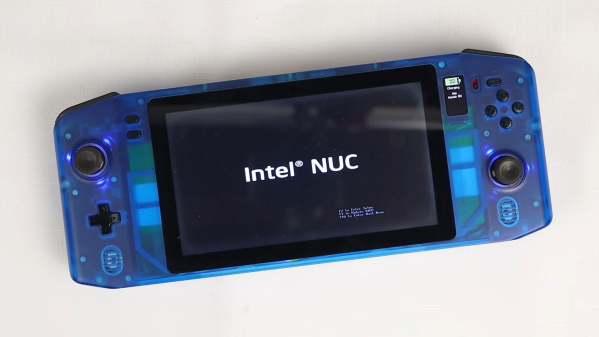
As he goes over the feature list, it sounds like a commercially available console. A 1024 x 600 screen provides a good balance of fidelity and performance. Stereo-chambered speakers provide good front-facing sound. Two thumbsticks with gyro aim assist, two hall effect triggers, and many buttons round out the input. Depending on the mode, the Raspberry Pi Pico provides input as it can emulate a mouse and keyboard or a more traditional gamepad. A small OLED screen shows battery status, input mode, and other options. This all fits on four custom PCBs, communicating over I2C. 6000 mAh of battery allows for a decent three hours of run time for simpler emulators and closer to an hour for more modern games.
The whole design is geared around easily obtainable parts, and the files are open-source and on GitHub with PDFs and detailed build instructions. We see plenty of gorgeous builds here on Hackaday, but everything from the gorgeous translucent case to the build instructions screams how much time and love has been put into this. Of course, we’ve seen some exciting hacks with the steam deck (such as this one emulating a printer), so we can only imagine what sort of things you can do once you add any new hardware features you’d like.
The 8-bit Arduboy isn’t exactly a powerhouse by modern gaming standards, or even really by old school standards for that matter. But for the talented developers that produce software for the system, that’s just part of the challenge. To date the monochromatic handheld has seen miniaturized takes on many well-known games, with several taxing the hardware beyond what most would have assumed possible.
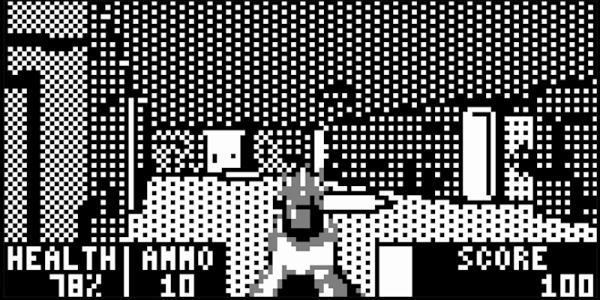
But the latest entry into this catalog of improbable software, WolfenduinoFX, is easily the most technically impressive. As the name implies, this is a “demake” of 1992’s iconic Wolfenstein 3D. It features 10 levels based on the original game’s shareware release, with the enemies, weapons, and even secret rooms lovingly recreated for the Arduboy’s 128 x 64 OLED display.
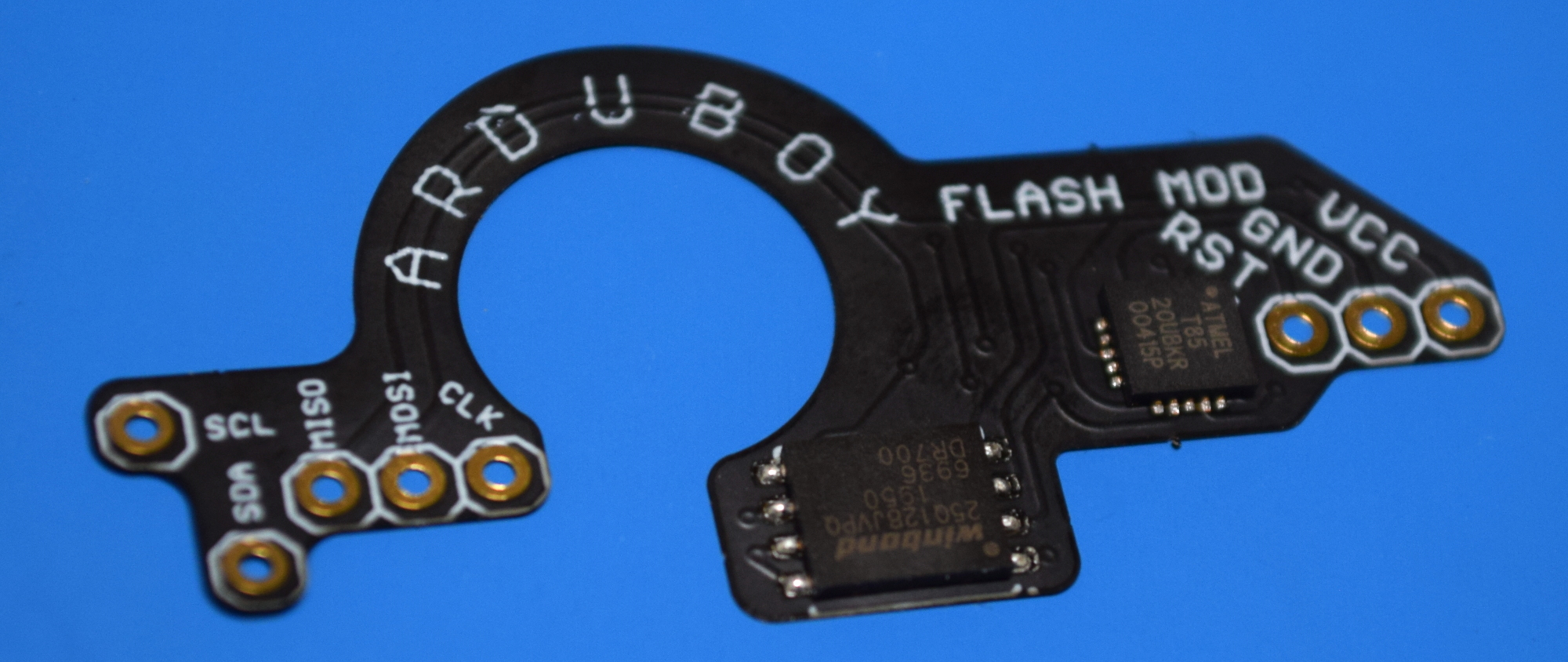
Arduboy FX Mod-Chip
Now, those of you who have experience working with the ATMega32u4 microcontroller at the heart of the Arduboy might think this is impossible…and you’d be right. The only way developer [James Howard] was able to pull this feat off was by leveraging the extended flash memory offered by the Arduboy FX.
This upgrade, which was developed in conjunction with the community, allows the handheld to hold hundreds of games by loading them from an SPI flash chip. For WolfenduinoFX, that flash chip is used to hold graphical assets for the game that would otherwise be too large to fit on the MCU alone.
When we looked at the Arduboy FX back in 2021, it was clearly a must-have upgrade, so it’s no wonder that the newest version of the handheld has the capability built-in. Now that games are actually requiring the expanded flash to function, it seems we’ve officially entered into a new era for the quirky little handheld that [Kevin Bates] first sent our way nearly a decade ago. Long live the Arduboy!
For those of you who’ve had the opportunity to join us in Pasadena for Supercon, you’ll know it’s a wild ride from start to finish. Singling out a single moment as our favorite is pretty much impossible, but certainly the Sunday Badge Hacking Ceremony has to rank up there. It’s the culmination of ~78 hours of intense hardware and software hacking, and that’s not even counting the pre-show work that attendees often put into their creations. Every year, without fail, this community manages to pull off badge hacks that are beyond anything we could have imagined — and we’re the ones who made the thing in the first place.
Unfortunately, in the mad rush, we’ve never had a chance to actually photograph the hacked badges and share them with the Hackaday readers. This year, at the urging of some of the badge hackers themselves, we were able to throw together a suitable overhead light at the last minute and actually snapped shots of each badge after it was presented to the audience.
The resulting images, sorted by badge hacking category, are below. While some proved difficult to photograph, especially with an impromptu setup, we’re happy to at least have a complete record of this year’s creations. Hopefully we’ll be able to improve on our technique for 2024 and beyond. If yours shows up, or if you’d like to share your appreciation, sound off in the comments below!