All it takes is one knucklehead to go and do something stupid to screw things up for everyone. We’re not exactly sure who the knucklehead is behind the recent ban on hexamine fuel tablets, but given that it’s now proscribed in the UK under the “Control of Poisons and Explosives Precursors Regulations 2023,” we expect that that story is a doozy.
So what’s hexamine, and why should we care if it’s banned? As [Markus Bindhammer] explains, hexamine is a solid fuel commonly used to power model steam engines, among myriad other uses. Its ban leaves a bit of a hole in the model steam community, which [Markus] seeks to fill with this quick and easy gel fuel chemistry project.
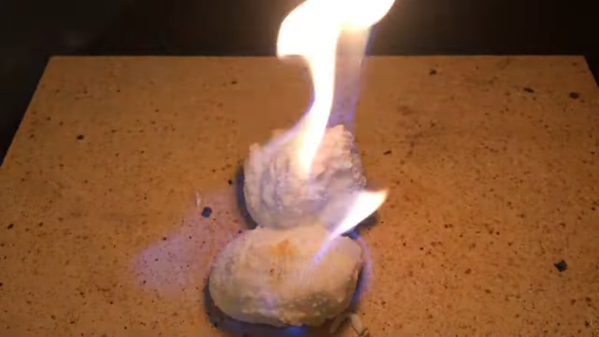
The “California Snowball” is a homebrew version of what’s in those solid fuel cans you see heating chafing pans at catered events, with one common brand being Sterno. [Markus] used a saturated solution of calcium acetate (6 g in 50 ml of water) and added that to 150 ml of ethanol; commercial formulations usually use methanol to prevent anyone from drinking the stuff, with varying degrees of success. The calcium acetate forms a gel that looks like whipped cream and traps the ethanol inside. The gel can be easily scooped up and spread around, and burns with a clean, smokeless flame.
It may not exactly be a “plug and play” replacement for hexamine tablets, but one does what one can. And if there’s one thing we can celebrate about model steam engineers, it’s their persistence. We got a bunch of them together last year for a Hack Chat with [Quinn Dunki], and their passion for making things move with steam was pretty impressive.
Continue reading “Homebrew Gel Fuel Keeps The Steam Coming, Legally”
 This is an older project, but the electromechanical solution used to create