Tiny GSM alarm system

posted Sep 1st 2009 7:00am by Gerrit Coetzee
filed under: cellphones hacks, classic hacks

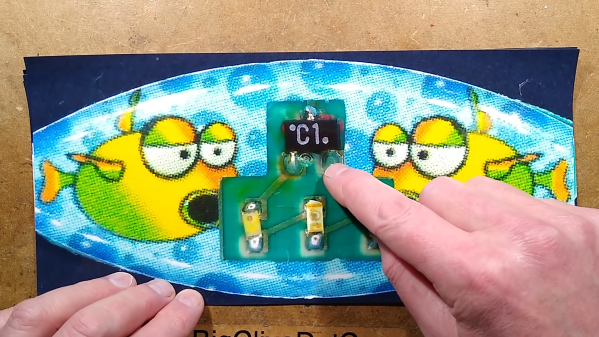
We’ve covered this sort of thing before, but there is something to be said for the simplicity of this tiny GSM alarm system by [trax]. The alarm system is designed to send the owner a text message when a sensor is triggered. This alarm only works with Siemens phones, but it shouldn’t be too hard to find one.  The alarm is configured via a dip switch on the board and can also be armed and disarmed by text. The brains of this system is a PIC16F84A. The code and schematics are included at the bottom of the page.

Read the rest of this entry »

Vaio P HSDPA mod

posted Feb 13th 2009 12:30pm by Eliot Phillips
filed under: laptops hacks, netbook hacks, wireless hacks

sim

[tnkgrl] has concluded her Sony Vaio P by adding GSM support. We covered the switch to XP earlier, but this should work on Vista too. The Vaio P is sold in the US with support for Verizon’s EVDO wireless broadband, but it uses the same hardware as the European model that uses GSM. This is possible because of the the Qualcomm Gobi radio module. To get GSM support, you trick the VZAccess Manager into loading a different firmware than the stock EVDO. The difficult part is that the Vaio P doesn’t come with a SIM card slot, so you’ll have to solder in your own. When you’ve got the computer reassembled, just change VZAccess Manager to use your carrier.

UPDATE: Wired has an article on the Gobi chipset.


Bug Labs introduces new BUGmodules

posted Jan 8th 2009 2:00pm by Strom Carlson
filed under: handhelds hacks, portable video hacks, wireless hacks

bug

Bug Labs, the company that makes modular electronics that allow you to build your own tech doohickeys quickly and easily, has announced five new modules: BUGprojector, a mini DLP projector developed in conjunction with Texas Instruments, which sounds very much like the tiny DLP projector we posted about last week; BUGsound, an audio processing module with four stereo input/output jacks, a microphone, a speaker, and builtin hardware codecs; BUGbee (802.15.4) and BUGwifi (802.11 and Bluetooth 2.0+EDR), which will let you connect wirelessly with your PAN and WLAN, respectively; and BUG3g GSM, for connecting to (you guessed it) 3G GSM networks. In conjunction with Bug Labs’ existing series of modules, especially the highly versatile BUGvonHippel universal module, you’ll be able to create some pretty kickass gadgets. No word yet on pricing, although Bug Labs expects to ship by the end of Q1 2009.

Hardware-unlocked Android G1 for sale

posted Dec 8th 2008 3:43pm by Eliot Phillips
filed under: android hacks, cellphones hacks, g1 hacks, google hacks

g1

Google has new program to sell Android phones directly to developers. The Android Dev Phone 1 is both SIM-unlocked and hardware-unlocked. SIM-unlocked means you can use it on any GSM carrier you want. Hardware-unlocked means you can run any system you want on the phone, not just officially signed ones. No more need to worry about security patches taking away your root access.

The device is $399. You will need to purchase it through the Android Market as a registered developer (a $25 fee). We wonder how long before the unsigned bootloader starts getting flashed to T-Mobile phones.

Two new Android phones have surfaced recently which may prove just as friendly: the Kogan Agora Pro and the QiGi i6.

UPDATE: While shipping is free in US, it is incredibly expensive everywhere else. Yes, we bought one.

[via Techmeme]

[photo: tnkgrl]

25th Chaos Communication Congress schedule

posted Nov 24th 2008 4:28pm by Eliot Phillips
filed under: cons, news, security hacks

The team behind 25C3 has published the first draft of this year’s schedule. The annual Chaos Communication Congress is happening December 27th to 30th in Berlin, Germany. There are plenty of interesting talks already in place. We’re spotting things we want to attend already: The conference starts off with how to solar power your gear, which is followed by open source power line communication. A TOR-based VPN, an open source BIOS, rapid prototyping, holographic techniques, and running your own GSM network are on the bill too.

We’ll have at least three Hack a Day contributors in attendance. Last year featured two of our favorite conference talks: [Drew Endy]’s Biohacking and the MiFare crypto1 RFID crack. We hope to see you there.


ShmooCon registration opens

posted Nov 1st 2008 12:16pm by Eliot Phillips
filed under: cons, news

November 1st means that registration for ShmooCon 2009 has opened. The DC hacker convention is entering the fifth year. They’re releasing the tickets in blocks; after today’s are gone the next won’t be available till December 1st. Today is also the closing of first round consideration for their call for papers, but you still have another month before the final deadline.

We’ve always enjoyed our time at ShmooCon. In 2008 we saw talks on cracking GSM encryption and recovering data from SSDs.

SIM card reader

posted Jul 19th 2008 12:00pm by Eliot Phillips
filed under: cellphones hacks


Adafruit Industries just announced their next kit: a SIM card reader. Using the kit, you can read or write any SIM card. You could use this for fun things like recovering deleted contacts and SMS messages. The kit looks like a very straight forward design (based on [Dejan]’s work); the only chip is a hex inverter and the board is powered by a regulated 9V battery. With all through-hole components, it should be easy to assemble. You can talk to it using the board mounted serial port or connect to the extra pin header using an FTDI USB cable just like the Boarduino. The FTDI option is bus powered, so you won’t need the battery. [ladyada] has collected some resources in case you want to learn more about smart cards.

Openmoko FreeRunner now available

posted Jun 25th 2008 8:50pm by Eliot Phillips
filed under: cellphones hacks

Openmoko began selling Neo 1973 phones direct to developers last July. The phone is an open source project designed to ease development on mobile platforms. The Neo 1973 has since sold out, but a new Linux phone intended for the mass market has been released, the FreeRunner for ~$399. The screen is 640×480 with 3D acceleration and a 500MHz Samsung processor. The new phone has WiFi and 2.5G GSM support. It has some truly unique features like USB host mode support. You can find the differences between the two phones here. This new phone release should help strengthen the community since average users were discouraged from purchasing the original. Pictures of the phone’s internals and a component diagram can be found on the Openmoko wiki. We wish more manufacturers would explicitly tell us how to get console access.

[via Slashdot]


GSM Alarm

posted Aug 28th 2007 10:45pm by Will O'Brien
filed under: cellphones hacks, misc hacks


Fresh from the tips line, [Pedro] sent in his GSM alarm. He combined a GSM phone, a motion sensor and BasicX24 controller board. If the detector trips during a set time period, the alarm sends SMS messages to the terminator, er whoever you want. He was kind enough to release the code, but I’d like to see this with a smaller micro-controller board to keep the cost/size down.

SMS tracking with a GPS GSM enabled AVR

posted Jul 15th 2007 10:31pm by Will O'Brien
filed under: cellphones hacks, gps hacks


[Alex] sent in some of his latest work. He interfaced some not so cheap components to give an AVR GPS and GSM I/O. For now it can read the GPS position and send text messages. Thanks to the GPS/GSM module, the schematic is pretty simple – anyone with basic soldering skills and a desire to put a dent in their credit card can probably build this. (Programming the AVR is probably the most difficult task)

Hack a Day serves up fresh hacks each day, every day from around the web and a special How-To hack each week.

Send us your hacks