posted Oct 10th 2010 11:00am by
Mike Szczys
filed under:
pcs hacks

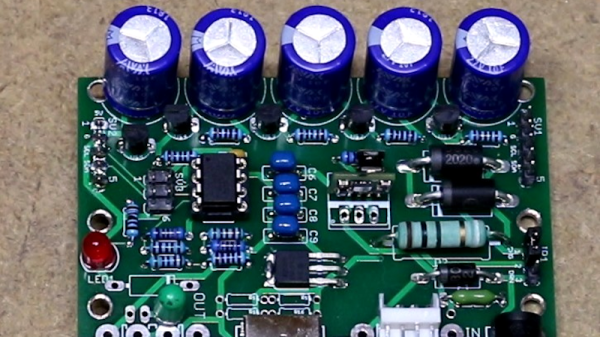
[SXRguyinMA] built a replacement top bezel for his computer case. He wanted to add vents that would automatically open or close based on the cooling needs of the computer. With some careful measurements he modeled the parts in Sketchup and sent out for them to be cut from styrene with a water jet cutter. The parts came back looking great and the assembly of the shutters went swimmingly. The bezel also includes a lighted screen for temperature information, as well as the front USB ports, headphone and mic jacks, etc. Hidden underneath is an Arduino board and servo motor. The Arduino polls the temperature and drives the servo to adjust the fins accordingly. There’s even a supercap in the circuit that will close the vents when the PC powers down or when power is unexpectedly lost. See it in action after the break.
Read the rest of this entry »
posted Oct 8th 2010 11:00am by
Mike Szczys
filed under:
classic hacks

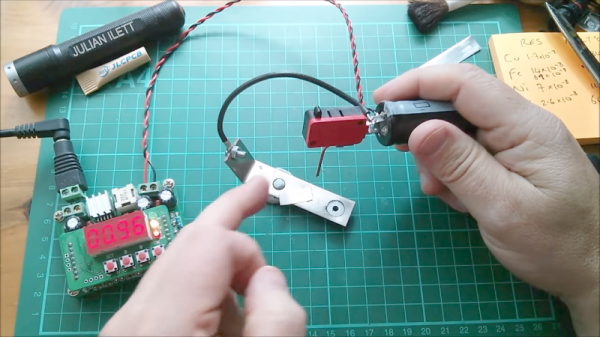
Many exercise machines generate electricity as you pedal or climb in order to run the on-board electronics. Unfortunately if you stop or even slow down too much the juice will die and your exercise program will reset. Wanting to improve on this gotcha, [Mike] cracked open his exercise bike and added some super capacitors.
On the circuit board he found an ATmega128 was in charge of the user interface. He probed the board a little bit and couldn’t find how it was connected to the power regulators. After some additional snooping he found it has its own SOIC regulator separate from the ones that run the display and peripherals. He takes us through the calculations he made before choosing his parts. What he ended up with is a set of three supercaps in series that add about two minutes of juice before the levels drop and the chip resets. The design of the board helped a lot as the high-load electronics (like the LCD screen) are on a separate power bus than the processor.
posted Jan 29th 2009 4:40pm by
Eliot
filed under:
home hacks,
wireless hacks

[Alanson Sample] and [Joshua R. Smith] have been experimenting with wireless power transfer for their sensing platform. Their microcontroller of choice is the MSP430, which we used on our e-paper clock. They chose it specifically for its ability to work with low voltages and they discus its specific behavior at different voltages. The first portion of their paper uses a UHF RFID reader to transmit to the sensor’s four stage charge pump. They added a supercap to provide enough power for 24 hours of logging while the node isn’t near a reader. For the second half of the paper, they use a UHF antenna designed for digital TV with the same circuit and pointed it at a television tower ~4.1km away. It had an open circuit voltage of 5.0V and 0.7V across an 8KOhm load, which works out to be 60uW of power. They connected this to the AAA battery terminals of the thermometer/hygrometer pictured above. It worked without issue. The thermometer’s draw on a lab power supply was 25uA at 1.5V.
It’s an interesting approach to powering devices. Do you have an application that needs something like this? For more on wireless power, checkout this earlier post on scratch building RFID tags.
[via DVICE]