Behind The Scenes Of A 1K Graphics Demo

Programmer/designer [Steven Wittens] has posted a fantastic write-up on the black art of producing compact demo code, dissecting his own entry in the 1K JavaScript Demo Contest. The goal is to produce the best JavaScript demo that can be expressed in 1024 characters or less and works reliably across all standards-compliant web browsers.

[Wittens] details several techniques for creating a lot of visual flash in very few bytes, including the use of procedural graphics rather than fixed datasets, exploiting prime numbers to avoid obvious repetitions in movement, and strategically fudging formulas to save space while adding visual interest. These methods are just as applicable to other memory-constrained situations, not just JavaScript — some of the contest entries bear a resemblance to the compact microcontroller demos we’ve previously showcased, except running in your browser window.

The contest runs through September 10th, allowing ample time to come up with something even more clever. Whether he wins or not, we think [Steven] deserves special merit on account of having one of the most stylish blogs in recent memory!
Adding A Microphone Jack To A HAM Radio Handset

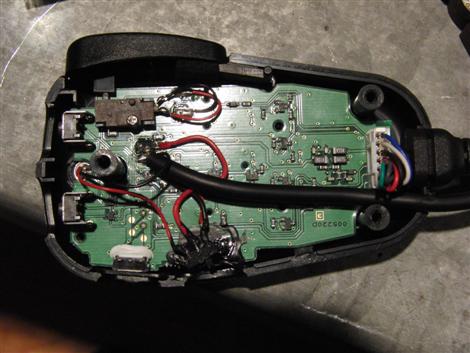
[dajjhman] wrote in to show us how he added a microphone jack to the handset of his Yaesu radio while retaining the DTMF functions. He states that there were some adapters available on the market, but they are non standard and didn’t really fit his needs. The modification itself is pretty simple, especially with his great documentation and clear pictures. For anyone else who might need this setup, this should be a great resource.

Chainsaw/flashlight Overkill

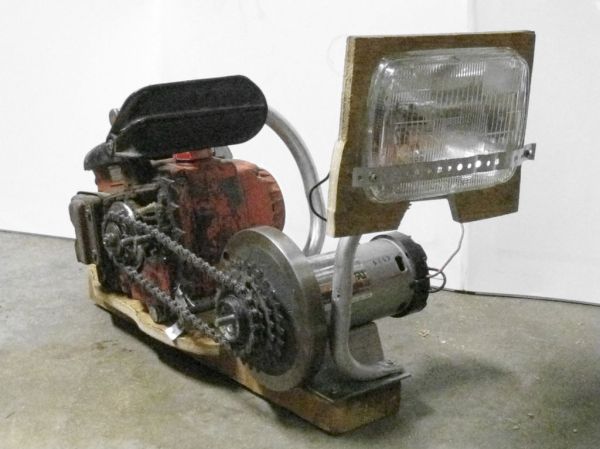
[Robbtoberfest] has earned our admiration with this crazy chainsaw powered spot light. It looks horribly dangerous, extremely inefficient, and woefully under engineered. We absolutely love it.

This could be plucked from a video game or a movie and seems to be one UV bulb away from being the ultimate post apocalyptic zombie vampire Armageddon weapon. He has taken apart a chainsaw and attached it to a DC treadmill motor using a couple of bike sprockets and a chain. That DC motor then feeds a car headlight directly. As you can see in the video, when he cranks the gas, it shines pretty brightly. The unfinished nature of this is due to a deadline for a contest on instructables, so he plans on adding a protective cowl, some fancy paint work, and a voltage regulator down the road.

Continue reading “Chainsaw/flashlight Overkill”

Solar Panel Charger Analysis With Ladyada

[vimeo = http://vimeo.com/13936259%5D

[Phillip Torrone], one of the original crew of HackaDay, now working with [LadyAda] tipped us off to this video of her explaining the device they built for configuring the charging circuits to be used with their solar panels. Unlike most of their tutorials, this one is not intended to be a final product sold on their store. Rather, this is a project that helps them deliver the best quality they can.

The unit itself is built around an Arduino and can log the statistics to an SD card, show battery voltage, panel voltage, and current from panel to charger. You can see in the video above how she uses this to refine her design in real time for optimal results.

Texas Instruments Watch Claims It’s A Computer Mouse

[youtube http://www.youtube.com/watch?v=TDL3JRG_zrs%5D

[Jack Toole] and his team [Aaron King] and [Libo He] sent in their computer interface dubbed the Chronos Flying Mouse. The video above explains the concept very thoroughly, but we’ll reiterate some of the highlights here. The project uses a Chronos EZ430 with its accelerometers to wirelessly transmit delta positions of the user’s wrist. Add a little open source software and you have a regular PC mouse, a video game joystick, a game wheel, and a few other different devices in one. We just love the suave feeling of snapping to click.

Open Graphing Calculator: Beagleboard + R

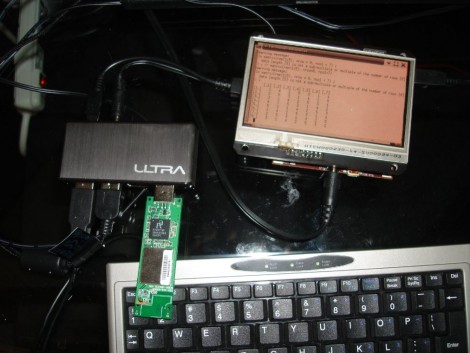
It looks like we missed the boat on this one but just in case you missed it everywhere else on the Internet, last Saturday [Matt Stack] introduced the world to a completely open source calculator. This marries two heartily tested open source projects; the R Project for Statistical Computing and the Beagleboard. The hardware side of things is very similar to that Linux tablet from back in June. It uses a stock Beagleboard with the BeagleTouch module.

Why do we care? First off, don’t forget what’s under the hood. That ARM processor kicks the 6 MHz Z80 processor found in TI’s calculators to the curb. The R language is a boon as well, offering plots of almost limitless quality and allowing extensibility that can’t be equaled with the current non-open offerings. But mostly because it’s a hack. We like seeing software run on hardware it wasn’t intended for.

Miniscule Intervalometer

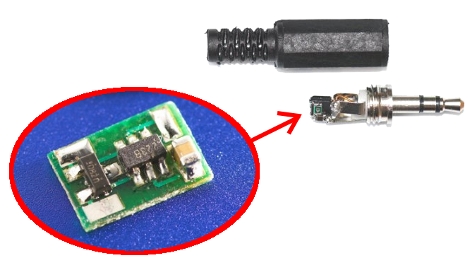
Calling this intervalomemter small would be a glaring understatement. It’s tiny enough to fit inside the plastic cover for a 2.5mm jack for use with a Canon DSLR camera. We should point out that the image we put together is a bit misleading. The picture of the jack is version 1 of this circuit and uses an 8-pin SOIC chip. The board in the oval is version 2, with a PIC 10f222 SOT23-6 package making it even smaller than the original version.

This is used for time-lapse photography. When plugged in the chip draws power from the camera. Get this: it learns the timing interval by listening for the first two images. Once you’ve snapped the first two pictures the PIC will continue to take images based on that initial delay. Amazing.

[Thanks AW via DIY Photography]