Listening To A Swarm Of Satellites In Orbit

kicksat

A few months ago, we heard of a Kickstarter with an amazing goal: give everyone with $300 burning a hole in their pocket their very own satellite orbiting Earth. Time passes, the mothership has been launched, and in just a few short hours, over a hundred of these personal femtosatellites will be released into low Earth orbit.

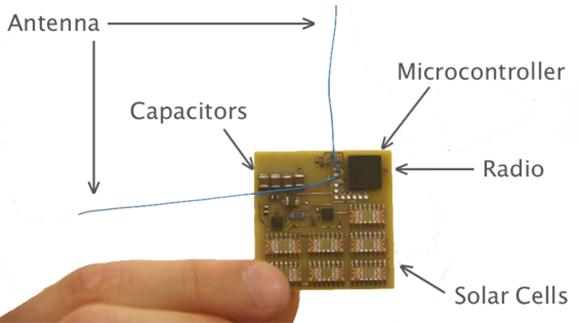
The Kicksat consists of a 3U cubesat that was recently launched aboard the SpaceX CRS-3 mission to the International Space Station. Inside this cubesat are over one hundred satellites called Sprites, loaded up with solar cells, magnetometers, a microcontroller and a radio to communicate with ground stations below. The current mission is a proof of concept, but if everything goes as planned, similar satellites can be deployed into the path of incoming asteroids, or whenever a mission calls for a swarm of small smart devices covering a huge area.

Already the Kicksat mothership has been tracked by a few enterprising amateur radio enthusiasts but the deployment of the Sprites isn’t scheduled until today at 4:00 PM EDT (20:00 GMT). After that, the Sprites will be on their own, spewing out data and the initials of kickstarter backers to most of the population of Earth.

For anyone worrying about these Sprites causing an ablation cascade or a Kessler syndrome, don’t. Orbital decay is a function of surface area and mass, and these extremely lightweight thin rectangles will burn up in the atmosphere in a few week’s time. The lack of radiation hardening on the Sprites won’t be a problem, either. This shouldn’t be a surprise, as they’re orbiting well within our wonderful, protective magnetosphere, and there are digital cameras, tablets, and other much more radiation sensitive electronics that have been working perfectly on the ISS for years now.

You can check out the current location of the orbiting Kicksat mothership on the project website, read the updates on the project blog, or check out our coverage of the Kicksat program from last year’s world maker faire in New York. Relevant videos below.

Oh, and if you have a USB TV tuner, a good antenna, LNA, and some experience with SDR, here’s what you need to listen in.

Continue reading “Listening To A Swarm Of Satellites In Orbit”
Cadence Meter Proves Wearable Development Is All About Just Doing It

wearables-just-start-doing


The tech involved in the fitness world really empowers athletes, whether they’re serious or not, to improve their performance by providing empirical evidence. The Striker project focuses on cadence, which is the frequency of strides when running, or revolutions when pedaling. It uses a force sensitive resistor in the shoe to measure footfalls or power strokes.

The concept behind the device is solid, and there are consumer-grade devices already on the market that are capable of performing the same functions. In fact, a Garmin device is used to help measure the accuracy of the system. But we love to see bootstrapped projects, and this one distinguishes itself not only in finished product, but in the process itself. To us it screams: “What are you waiting for, build a prototype and then iterate!”.

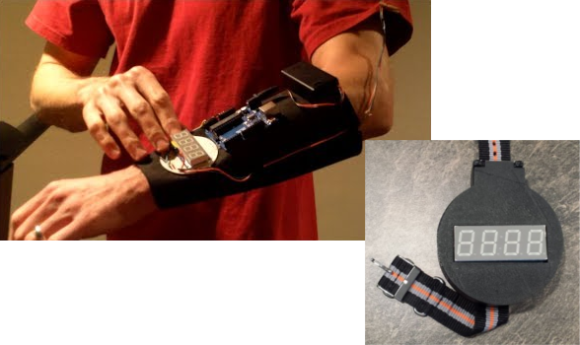
The larger image above shows the earliest working version which is just a piece of fabric that wraps around the forearm to hold a 4-digit 7-segment display. The wire following the arm of the wearer snakes all the way down to the shoe to connect with the force sensor. The image to the right is the first wireless version of the readout. But the project has already seen at least two more versions after this one, mostly using SparkFun components.

We think this is but one example of the kind of stuff we want to see as contenders for The Hackaday Prize. The project uses Open Design and it’s arguably a connected device because the sensor and readout connect to each other (but ideally you’d want to add more connectivy to get at the data). The open nature of the build could lead to leaps forward in the technology by affording talented people wider development access.

Continue reading “Cadence Meter Proves Wearable Development Is All About Just Doing It”

Roman Headgear Looks Less Silly With Lots Of Blinky

centurion-project

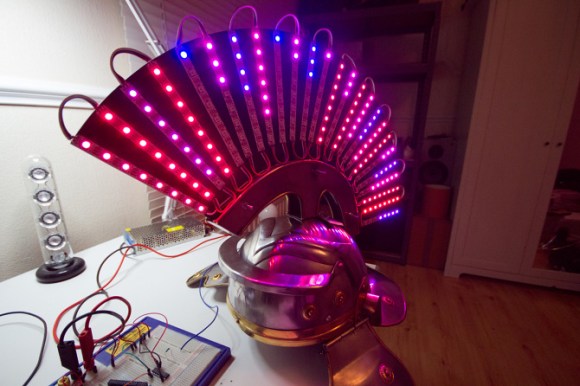
Look, it’s not Steam-Punk because the period is way out of whack. And we’ve never seen ourselves as “that guy” at the party. But it would be pretty hard to develop The Centurion Project and not take the thing to every festive gathering you could possibly attend. This sound-reactive helm compels party-going in a toga-nouveau sort of way.

[Roman] tells us that it started as a movie prop. The first build step was to remove the plume from the top of it. The replacement — seven meters worth of addressable RGB LEDS — looks just enough like an epic mohawk to elicit visions of the punk rock show, with the reactive patterns to make it Daft. The unexpected comes with the FFT generated audio visualizations. They’re grounded on the top side of each of the LED strips. Most would call that upside-down but it ends up being the defining factor in this build. Seriously, watch the demo after the break and just try to make your case that this would have been better the other way around.

As a final note, this project was written using Cinder. It’s an Open Source C++ library that we don’t remember hearing about before.

Continue reading “Roman Headgear Looks Less Silly With Lots Of Blinky”

Jackal Takes It To The Streets

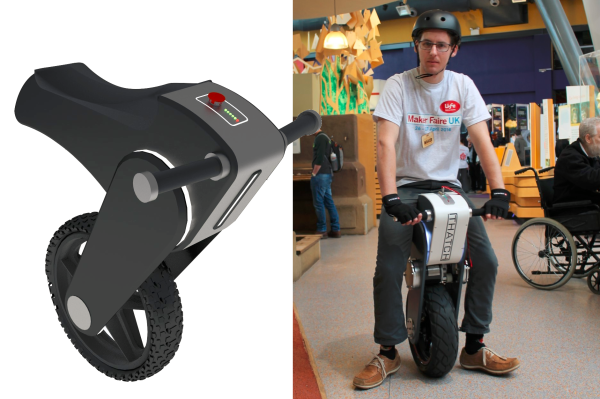
[Nick Thatcher] is becoming the world’s authority on self-balancing unicycles.  He’s unveiled The Jackal, his new single wheel vehicle. The Jackal is an upgrade to The Raptor, [Nick’s] 2012 machine. The wheelbarrow wheel has been replaced with a much more fitting model sourced from a motorcycle. The 19″ motorcycle wheel improved balancing quite a bit. Wheelbarrow wheels were not exactly quality components, so they definitely made balancing the unicycle more difficult.

[Nick] upgraded his power system as well. The Jackal is powered by a 450 Watt 1020z geared motor. The 1020z is often found on scooters imported from the Far East. The motor controller  is the same SyRen 50 Amp continuous / 100 Amp peak  model used in the Raptor.

The Jackal’s frame has also seen some changes. It’s now sporting quite a bit of machined aluminum as well as [Nick’s] standby PVC.  The upgrades have paid off in performance. The Jackal can reach about 20 MPH, however the top safe speed is closer to 15 MPH.

Click past the break to see [Nick] demonstrating The Jackal at Makerfaire UK.

Continue reading “Jackal Takes It To The Streets”

Pneumatic Rocket Man

Here’s a fun May the 4th be with you project… A pneumatically powered Boba Fett jetpack-launching-mannequin!

[Rodger Cleye], best known for his crazy quadrotor projects, wanted to try experimenting with pneumatic power for a change. He managed to obtain a fire extinguisher which he’s routed through a home-made PVC air delivery system on the back of his faithful test dummy — this time decked out in a complete [Boba Fett] costume.

Continue reading “Pneumatic Rocket Man”

Ask Hackaday: Can The Lix 3D Printing Pen Actually Work?

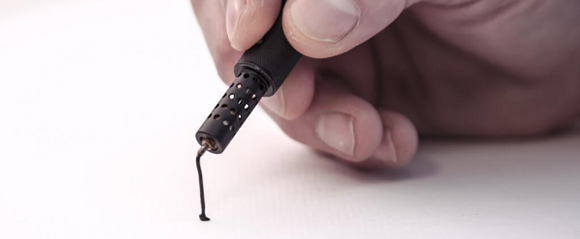
Introducing Lix, the world’s smallest 3D printing pen that allows you to draw plastic structures in 3D. It’s only been on Kickstarter for a few days now, and already it has garnered close to a million dollars in pledges. An astonishing achievement, especially considering we can prove – with math and physics – that it doesn’t work as advertised. However, we’re wondering if it could work at all, so we’re asking the Hackaday community.

The device is powered through a USB 3 port. In the video, the Lix team is using a MacBook Pro. This has a USB port capable of delivering 900 mA at 5 Volts, or 4.5 Watts. Another 3D printing pen, the 3Doodler, uses a 2A, 12V power adapter, equal to 24 Watts. Considering the 3Doodler works, and they both do the same basic thing, there’s something extremely odd going on here.

Just as a comparison, here’s a wirewound resistor commonly found in the heating element or ‘hot end’ of a 3D printer. It’s a 6.8  Ohm resistor powered at 12 Volts. That’s 21 Watts. Here’s a heater cartridge, also found in quite a few hot ends. It sucks down 40 Watts. Once again, the Lix Kickstarter clearly shows the pen extruding filament using only 4.5 Watts of power. Something is really, really fishy here.

Intuition doesn’t hold a candle to math, so let’s figure out exactly why it won’t work.

Continue reading “Ask Hackaday: Can The Lix 3D Printing Pen Actually Work?”

Hackaday Space: The Winners!

arg-winners

We promise this is the last post about the ARG we ran throughout April to promote The Hackaday Prize. But we’re excited to announce the winners and all the goodies they are going to get!

The Prizes!

Now that the scoreboards are finalized we can announce the overall winners of the Alternate Reality Game and the prizes they will receive!

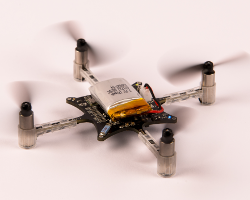
crazyflie_pageFirst, we’re giving away a Crazyflie Nano quadcopter to each of the people who were the first to post all the details for the first three Transmissions on the Major Tom profile pages.

Transmission 1 Winner

[kline] wins Transmission 1 as he was the first to post all the details from the transmission and did some great work to convert the QR code into an image using Python.

Transmission 2 Winner

[Tyler Anderson] wins this round as he was the first to decode the status message from Major Tom.

Transmission 3 Winner

This was a tough one since we know some people got very close to the answer on IRC but were led down rabbit holes instead, however [Ted] wins as he was the first to finally locate the launch site longitude and latitude hidden in the audio files.

Final Transmission Winner

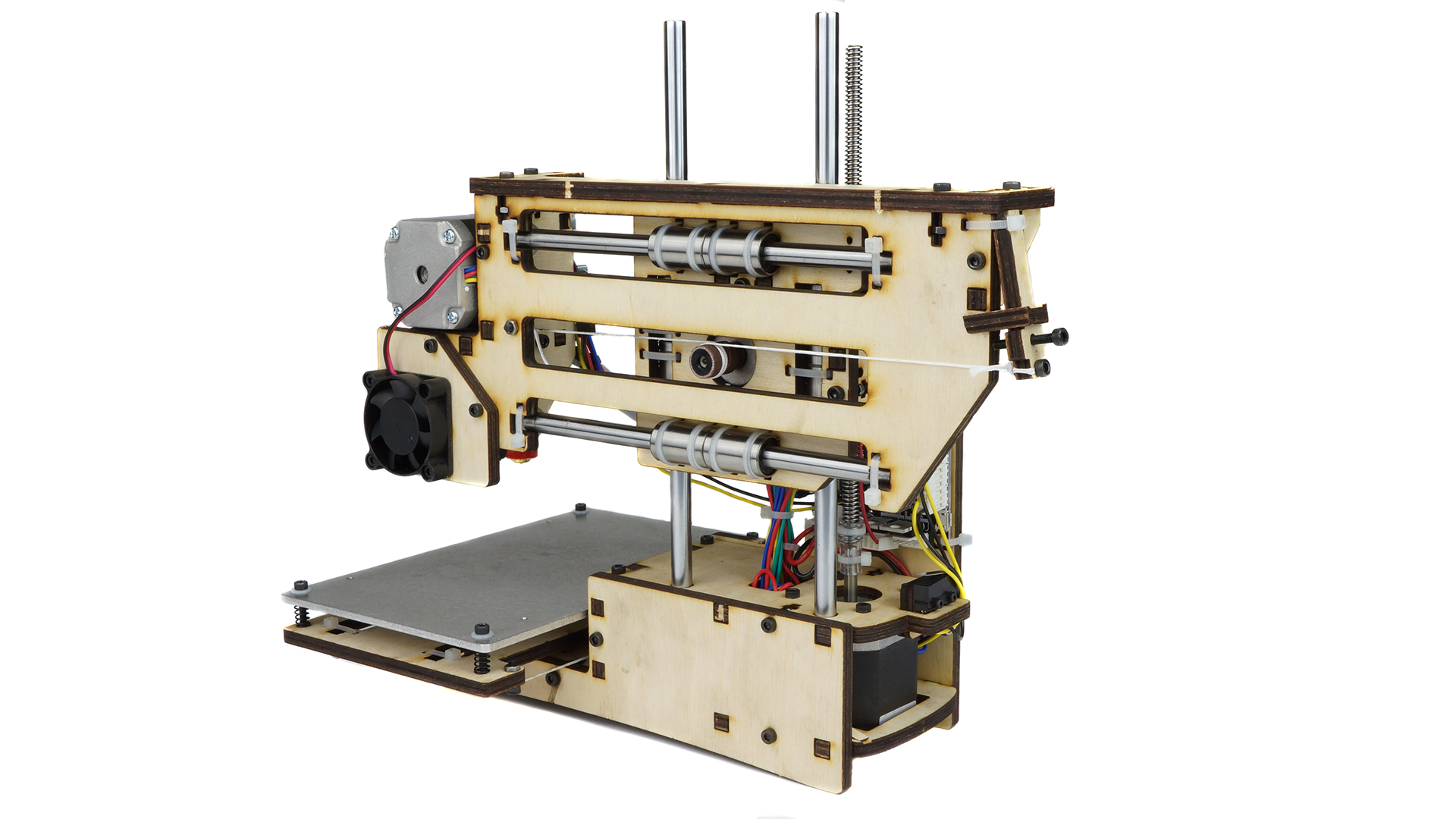
Printrbot Simple Maker KitNext up we have the winner of the Final Transmission. Someone suggested that when the pixel art contest was over we should 3d print all the entries, so this inspired us to give away a low cost 3d printer that the winner could use to do just that. Therefore we are presenting a Printrbot Simple Makers Kit.

This prize goes to the person at the top of the scoreboard and winner of the pixel art contest [XDjackieXD]. Congratulations and we expect to see your Portal Cube rendered in plastic sometime soon!

Best Overall Contributor

hexyFinally, since this ARG was a team effort and some people put in outrageous amounts of work we decided we should award a prize for Best Overall Contributor.

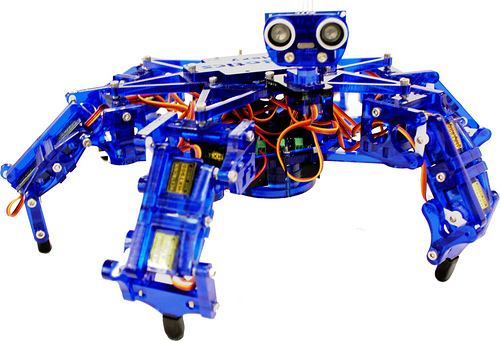
This was a hard decision as so many people contributed throughout the month. But we feel that the efforts of [Emerica] really stand out, not only was he responsible for figuring out the use of OpenPuff in Transmission 2, he also contributed massively to the Pixel Art Contest and even built a stunning rendition of the Space Needle over the location of Seattle. [Emerica] wins a Hexy the Hexapod robot kit for his contribution, we hope to see many creative uses for this little fellow in the coming months.

Mission Complete.

It may be all over, but we just want to say how much fun putting together this ARG has been and how much it has shown the creativity, ingenuity and pure genius that exists in this community.

It was wonderful to watch everyone come together to work things out and the life that has sprung up in the IRC channel is really great to see. We hope we can all continue to play and build together as we truly believe there is nothing this community cannot accomplish when we come out of our respective sheds and workshops and work together on something.

Thank you all for participating and good luck in with your entries in The Hackaday Prize!