A New OS For Apple II Computers

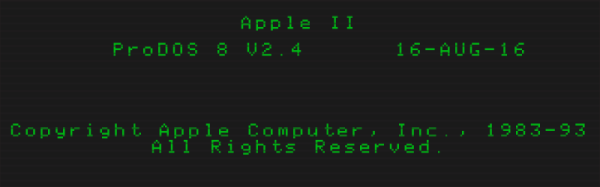
Although this sort of work is usually reserved for KansasFest and other forums for highly technical and very skilled Apple enthusiasts, [John Brooks]’s release of a new version of the ProDOS operating system is no less important. It is, without a doubt, the greatest release the Apple II platform will see for the next few years. This swan song of the Apple II platform is simply ProDOS 2.4, an update to the last version of Apple’s ProDOS, last released in 1993.

For a bit of historical context, ProDOS was not the operating system that shipped with the Apple ][ in 1977. That OS was simply called DOS. ProDOS, released in 1983, included support for the new 3.5″ floppy drives, allowed for hierarchical directories, supported hardware interrupts, and kept the Apple ][ line going well into the 90s. Despite these improvements, not all Apple ][ systems were supported. The original ][ and ][+ were out in the cold. Now, with the ability to add Compact Flash and USB devices to an Apple ][, even the latest version of ProDOS is horribly out of date.

[John]’s release of ProDOS 2.4 fixes all of this. This release is the most important development in the Apple ][ ecosystem in recent memory, and will remain so for at least a decade. The only person who still uses an Apple ][ as a daily driver agrees, and ProDOS 2.4 is now enshrined in The Archive for all eternity.
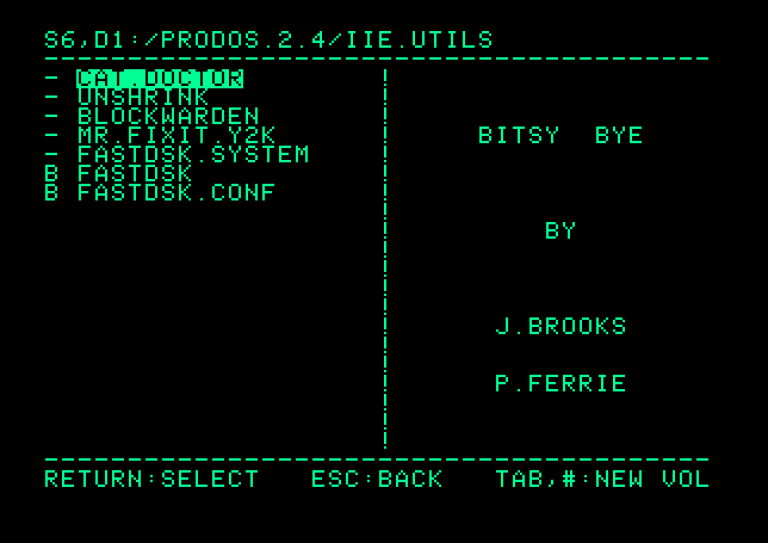
prodos-2-4-bitsy-bye-768x543New features abound, although most of them are geared toward the now thirty-year-old Apple IIGS. These features include enhanced utility in GS/OS – the Apple equivalent of the Commodore GEOS – slot remapping, and an OS that is both smaller and loads faster. Older machines aren’t left out, and ProDOS includes the usual features and improvements found in ProDOS 2.x that weren’t available in the Apple ][, Apple ][+ and un-enhanced Apple //e.

The killer feature and one more thing of this release is the BitsyBye utility, a small ($300!) system program that allows you to boot various Apple II devices and programs. Think of this as the Norton Commander of the Apple II ecosystem, allowing slots to be selected, booting the most recently used ProDOS device, and basic file system exploration. BitsyBye also includes an easter egg. A few utilities are also included on the ProDOS 2.4 disk image including ADTPro, Shrinkit archive expander, and disk utilities.

A 140k ProDOS 2.4 disk image is available on [John]’s site and on Archive.org. Since you’re probably not downloading directly to an Apple II disk, grab ADTPro and load it over audio.
Desuiciding Capcom Arcade Boards

Capcom’s CPS2 – or CP System II – was the early to mid-90s arcade hardware famous for Super Street Fighter II, Alien vs. Predator, and a few of the Marvel and Capcom crossover arcade games. As you would expect, these boards have become collectors items. Unfortunately for future generations, Capcom took some short-sighted security measures to prevent copying the games, and the boards have been failing over the last two decades.

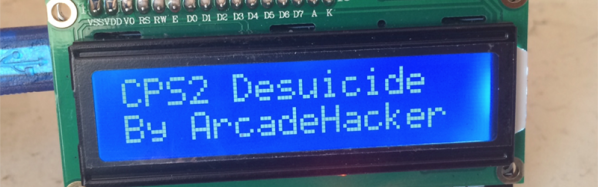
After months of work, [ArcadeHacker] and several other arcade enthusiasts have reverse engineered the security protocol and devised a method of de-suiciding these arcade boards, allowing for the preservation of this hardware and these games. The code that does the trick is up on GitHub.

Last year, [ArcadeHacker] reverse engineered the on-chip security for Capcom’s Kabuki processor, the CPU used in some of Capcom’s earlier arcade boards. It used a similar protection scheme. In the Kabuki hardware, the on-chip ROM was interspersed with a few XOR gates on the processor’s bus. With a security key kept in battery-backed memory, this was enough to keep the code for the game secret, albeit at the cost of preventing historical preservation.

Over the next few weeks, [ArcadeHacker] will post more detailed information about the copy protection scheme of the CPS2 board, but the proof-of-concept works right now. It’s now possible to revive a CPS2 board that has killed itself due to a dead battery, and the hardware is as simple as an Arduino and a few test clips. You can check out a video of the exploit in action below.

Continue reading “Desuiciding Capcom Arcade Boards”

Open Hardware RC Radios

A decade ago, RC transmitters were clunky, expensive and PCM. A decade before that, everything was analog. Now, RC transmitters are completely digital, allowing for hundreds of aircraft to take to the sky. They’re also cheap, thanks to engineers in China. Now, they’re open hardware, too.

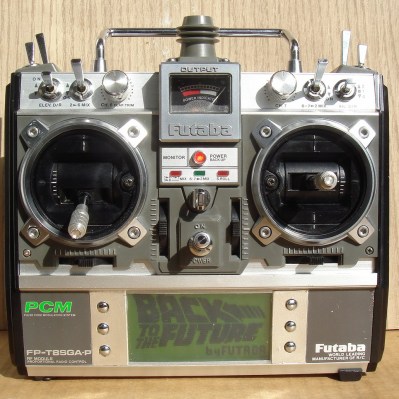
An old Futaba radio outfitted with AR Uni electronics. Image source: vikar

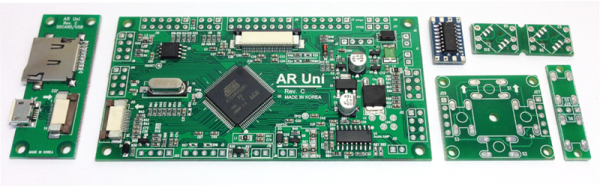
An exceptionally long thread over on the RCGroups forums has been going on for a few months, extolling the virtues of the ‘AR Uni’ board that turns old transmitters into full featured digital radios. This board runs everything, from two analog sticks, a directional keyboard, pots galore, switches everywhere, and a fancy LCD that makes programming easy. The joys of Open Hardware, brought to RC geeks. It’s a thing of beauty. Continue reading “Open Hardware RC Radios”

Hackaday Prize Entry: Environmental Regulation

A while back, [Kyle] wanted to grow gourmet mushrooms. The usual way of doing this is finding a limestone cave and stinking up half the county with the smell of manure. Doing this at home annoys far fewer neighbors, leading him to create a device that will regulate temperature, humidity, and carbon dioxide concentration. It’s called Mycodo, and it’s one of the finalists for the Automation portion of the Hackaday Prize.

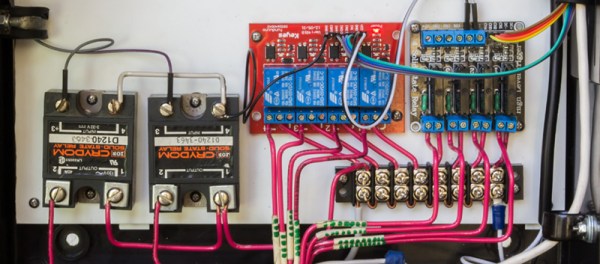
Mycodo is designed to read sensors and activate relays, and when it comes to environmental sensors, there’s no shortage of sensors available. Right now, Mycodo has support for the usual DHT11 and DHT22 temperature and humidity sensors, HTU21D, AM2315, SHT* DS18B, and infrared sensors like the TMP006 and TMP007. These are connected to a Raspberry Pi equipped with a 7-inch touchscreen and a few relays to turn power outlets on and off. It’s not a complete system, though: think of it as a firmware for a 3D printer – the firmware doesn’t give you a 3D printer, it just makes building your own much easier.

Already Mycodo has been used for a few environmental control issues in addition to growing mushrooms. It was used to control the humidity in a bat cave – for real bats, not some cosplay thing – and a temperature- and humidity-regulated apiary. With the right environmental control system, there’s nothing you can’t do, and we’re glad to have Mycodo in the running for the Hackaday Prize.

Hackaday Prize Entry: The Internet Of Garbage

The Internet of Things is garbage. While the most visible implementations of the Internet of Things are smart lights that stop working because the company responsible for them folded, or smart thermostats that stop working because providing lifetime support wasn’t profitable, IoT could actually be useful, albeit in devices less glamorous than a smart toaster. Smart meters are a great idea, and so is smart trash. That’s what [mikrotron] and company are entering into the Hackaday Prize – smart trash cans – and it’s not as dumb as spending $40 on a light bulb.

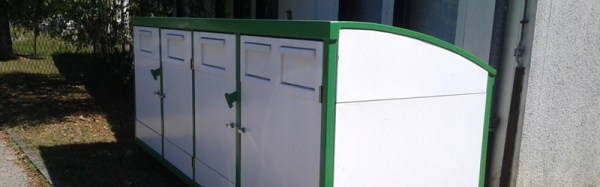
The idea behind the Internet of Trash is to collect data on how full a trashcan is, and publish that data to the Internet. This information will be used by a city’s trash collectors and recycling agencies to know when it’s time to collect the garbage.

The hardware for the Internet of Garbage needs to know how full a can is, and for that the team has turned to an ultrasonic sensor pointed down into the garbage. The amount of trash in a can is pinged once a day, and the information is sent over the Internet via a GSM network. Additionally, the GPS coordinates and a unique ID are delivered to the server, with everything ultimately powered by a solar panel.

The future of the Internet of Things isn’t putting Twitter in a coffee maker, it’s all about infrastructure, whether that’s power, solar freakin’ roadways, or the trash. We’re glad to see a useful application of a billion smart things, and the Internet of Trash makes for a great Hackaday Prize entry.

MicroLisp, Lisp For The AVR

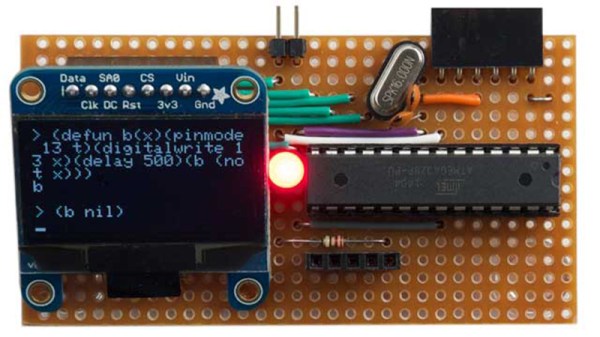
We’ve seen tiny microcontroller-based computers before, but nothing like this. Where the usual AVR + display + serial connection features BASIC, Forth, or another forgotten language from the annals of computer history, this project turns an AVR into a Lisp machine.

The μλ project is the product of several decades of playing with Lisp on the university mainframe, finding a Lisp interpreter for the 6800 in Byte, and writing a few lisp applications using the Macintosh Toolbox. While this experience gave the author a handle on Lisp running on memory-constrained systems, MicroLisp is running on an ATMega328 with 32k of Flash and 2k of RAM.  In that tiny space, this tiny computer can blink a few boards, write to an OLED display, and read a PS/2 keyboard.

The circuit is simple enough to fit on a breadboard, but the real trick here is the firmware. A large subset of Lisp is supported, as is analog and digitalRead, analog and digitalWrite, I2C, SPI, and a serial interface. It’s an amazing piece of work that’s just begging to be slapped together on a piece of perfboard, if only to have a pocket-sized Lisp machine.

Thanks [gir] for the tip.

Hackaday Prize Entry: Alarm Detection For The Hearing Impaired

A few years ago, [K.C. Lee] woke up in the middle of the night to the smell of smoke. He was drying a futon next to the heater and it caught on fire. A smoke detector would have helped in that situation, but wouldn’t have for anyone who was hearing impaired. Since we’re in the Assistive Technologies portion of the Hackaday Prize, [KC] decided to build on his previous work and build an alarm alarm – a device that would tell anyone when an alarm is going off

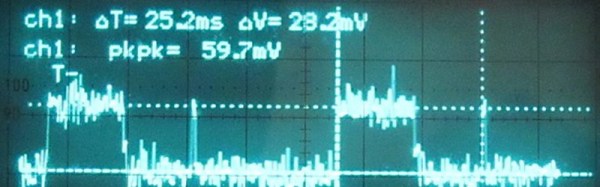
Smoke detectors and other alarms are surprisingly standardized – loud, somewhere around 3kHz. (Not coincidentally around the resonant frequency of a 3/4″ piezo disc.) Some modern alarms use a 520 Hz alarm, but in either case, you’re looking at something very loud with a very narrow peak when viewing the audio spectrum.

[KC]’s Alarm Detector relies on this one property to detect alarms and light up, vibrate, or really do anything else that can be controlled electronically. Right now the device is a tiny STM32F0-based device with an old Nokia LCD working as a spectrum analyzer, with the entire device lighting up whenever an alarm is detected. It’s simple, it works, and it’s a great entry for the Assistive Technology portion of the Hackaday Prize.