C64 Emulator For The Arduino Due

c64

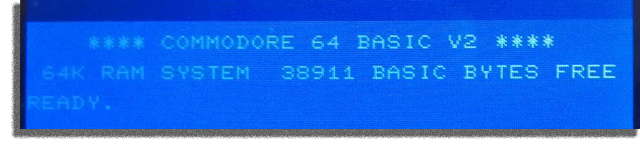
Almost a year ago, [miker00lz] started a thread on the Arduino forums telling everyone about a 6502 emulator and BASIC interpreter he wrote for an Arduino Uno. The chip inside the Uno isn’t a powerhouse by any means, and with only 2KB of RAM it’s far less capable than just about any computer from the 70s. Arduino works on a lot of different chips, though, and after a few months, [Jan] turned an Arduino Due into a Commodore 64 emulator.

[Jan]’s code isn’t limited to the DUE, and can be used with any chip with enough memory. If you’re feeling fancy, you can connect a TFT display for all the vintage goodness of PETSCII graphics, all while running a faster BASIC than the very stripped down EHBASIC.

Because the emulator is using software to talk to the outside world, it should be possible to use this project to interface with the cooler chips found in Commodore machines – SIDs for one, but also the cartridge port for some vintage Ethernet goodness. It’s not even limited to Commodore machines, either: the POKEY chips found in Atari 8-bit micros are seriously underutilized in the chiptune and demoscene, and having modern hardware to play with these chips couldn’t hurt in the slightest.
Continue reading “C64 Emulator For The Arduino Due”

The Disintegrated Op Amp

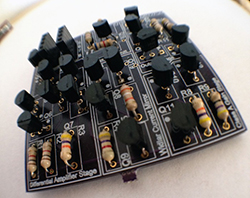
741By now we’ve all seen the ‘Three Fives’ kit from Evil Mad Scientist, a very large clone of the 555 timer built from individual transistors and resistors. You can do a lot more in the analog world with discrete parts, and [Shane]’s SevenFortyFun is no exception: it’s a kit with a board, transistors, and resistors making a very large clone of the classic 741 op-amp, with all the parts laid bard instead of encapsulated in a brick of plastic.
[Shane] was inspired by the analog greats – [Bob Pease], [Jim Williams], and of course [Bob Widlar], and short of mowing his lawn with goats, the easiest way to get a feel for analog design was to build some analog circuits out of individual components.

[Shane] has a few more kits in mind: a linear dropout and switching regulators are on the top of the list, as is something like the Three Fives kit, likely to be used to blink giant LEDs.

The Cheapest Crystal Oven

oven

The crystals you’ll find attached to microcontrollers or RTCs are usually accurate to 100 parts per million at most, but that still means if you’re using one of these crystals as a clock’s time base, you could lose or gain a second per day. For more accuracy without an atomic clock, a good solution is an oven controlled crystal oscillator – basically, a temperature controlled crystal. It’s not hard to build one, and as [Roman] demonstrates, can be built with a transistor and a few resistors.

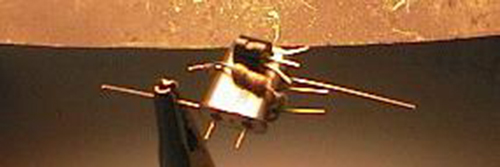
The heating element for this OCXO are just a few resistors placed right on the can of a crystal. A thermistor senses the heat, and with more negative feedback than the Hackaday comments section, takes care of regulating the crystal’s temperature. A trimpot is used for calibrating the temperature, but once everything is working that can be replaced with a fixed resistor.

This deadbugged circuitry is then potted in five minute epoxy. That’s a bit unconventional as far as thermal management goes, but the results speak for themselves: [Roman] can get a clock with this circuit accurate to a few seconds per year.

A GSM Base Station With Software Defined Radio

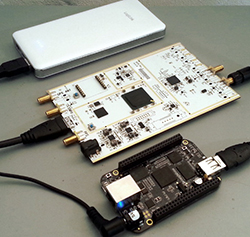
gsmIf you’re wondering how to get a better signal on your cellphone, or just want to set up your own private cell network, this one is for you. It’s a GSM base station made with a BeagleBone Black and a not too expensive software defined radio board.
The key component of this build is obviously the software defined radio. [Julian] is using a USRP B200 radio for this project. It’s not cheap, but it is a very nice piece of hardware capable of doing just about anything with GNU Radio. This board is controlled by a BeagleBone Black, a pretty cheap solution that puts the total cost of the hardware somewhere around $750.

The software side of the build is mostly handled by OpenBTS, the open source project for the software part of a cell station. This controls the transceiver, makes calls and SMS, and all the backend stuff every other cell station does. OpenBTS also includes support for Asterisk, the software of choice for PBX and VoIP setups. Running this allows you to make calls and send texts with your SDR-equipped, Internet-enabled BeagleBone Black anywhere on the planet.

THP Entry: Embedded Hardware Security With The ChipWhisperer

KONICA MINOLTA DIGITAL CAMERA

There are thousands upon thousands of papers discussing various aspects of embedded hardware security, and dozens of books covering the same subject. The attacks discussed in the literature are very cool – things like side-channel power analysis and clock glitching used to extract keys from a system. The experimental setups in these papers are extraordinarily expensive – you can buy a new car for less. [coflynn] was disheartened with the price of these tools, and thought building his own would make for a great entry to The Hackaday Prize.

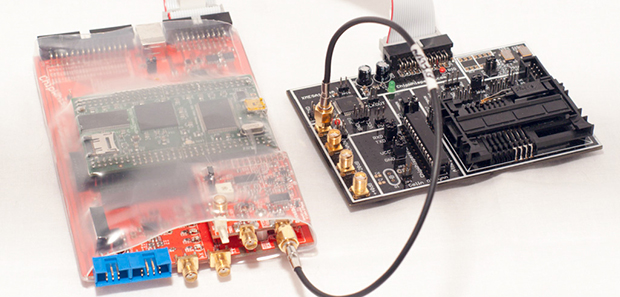
The hardware part of the ChipWhisperer includes a breakout board with an FPGA, ADC, and connectors for a lot of different probes, adapters, breakout boards, and a target board, With all these tools, it’s not unreasonable to say that [coflynn] could carry out a power analysis attack on a lot of embedded hardware.

Open source hardware is just one part of this entry. The biggest focus of this project is the open source software for analyzing whatever the probes and target boards record. With this software, anyone can monitor the power used when a chip runs a cryptographic function, or glitch a clock for some unintended functionality in a device. In keeping with the academic pedigree of all the literature on these attacks, there are a ton of tutorials for the ChipWhisperer for all those budding security researchers out there. Very cool stuff, and arguably one of the most technical entries to The Hackaday Prize.

Video below.


SpaceWrencherThe project featured in this post is an entry in The Hackaday Prize. Build something awesome and win a trip to space or hundreds of other prizes.
Continue reading “THP Entry: Embedded Hardware Security With The ChipWhisperer”

Astronaut Or Astronot: Givin’ Away Scopes

[youtube=www.youtube.com/watch?v=Bv9vnZLlHIU]

Remember how we said we’d give away an oscilloscope to a random person on hackaday.io if they have voted on projects for The Hackaday Prize? Last week we tried that and no one won. This week we tried it and no one won. Then, because we’re awesome, we picked another person at random on Hackaday.io. [Rafael] is the winner, with a very nice oscilloscope heading to his doorstep. We’re going to need some contact info, hacker no. 13951, and if anyone has any advice on sending expensive electronics to Brazil, I think we’re going to need it.

We’re doing this again next week, so head on over to hackaday.io and vote. Also, pay no attention to the people who say voting is too hard and complicated and ill planned: they are wrong, and if you suck up enough the Prime Overlord will command that t-shirts and stickers be sent out to you.

TI’s New Family Of WiFi Chips

cccc Texas Instruments’ CC3000 WiFi chip is the darling of everyone producing the latest and greatest Internet of Thing, and it’s not much of a surprise: In quantity, these chips are only $10 a piece. That’s a lot less expensive than the WiFi options a year ago. Now, TI is coming out with a few new modules to their WiFi module family, including one that includes an ARM micro.

The CC3000 has found a home in booster packs, breakout boards for the Arduino, and Spark, who are actually some pretty cool dudes.Still, the CC3000 has a few shortcomings; 802.11n isn’t available, and it would be really cool if the CC3000 had a web server on it.

The newest chips add these features and a whole lot more. [Valkyrie] got his hands on a CC3100Boost board and was pleased to find all the files for the webserver can be completely replaced. Here’s your Internet of Things, people. The CC3200 is even better, with a built-in ARM Cortex M4 with ADCs, a ton of GPIOs, an SD card interface, and even a parallel port for a camera. If you’re looking to pull a hardware startup out of your hat, you might want to plan your Kickstarter around this chip.

It’s all very cool stuff, and although the bare chips aren’t available yet, you can get an eval module from TI, with an FCC certified module with the crystals and antenna coming later this year.