Adding Night Vision To The Raspberry Pi Camera

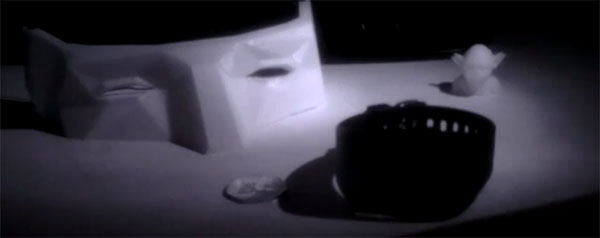
After months of promises, the Raspberry Pi camera is finally heading out to hackers and makers across the world. Of course the first build with the Pi cam to grace the pages of Hackaday would be removing the IR filter, and it just so happens [Gary] and his crew at the Reading hackerspace are the first to do just that.

As [Gary] shows in his video, the process of removing the Pi cam’s IR filter is extremely fiddly.  Getting the filter out of the camera involves removing the sensor, gently cutting it open with a scalpel, and finally gluing the whole thing back together with a tiny bit of superglue. Not for the faint of heart, and certainly not for anyone without a halfway decent bench microscope.

If you’re looking for a Raspberry Pi-powered security camera, game camera, or something for an astronomy application, this is the way to make it happen. You might want to be careful when removing the IR filter; [Gary] broke one camera on their first attempt. They got it to work, though, and the picture quality looks pretty good, as seen in the videos below.

Continue reading “Adding Night Vision To The Raspberry Pi Camera”
Detecting Galactic Rotation With Software Defined Radio

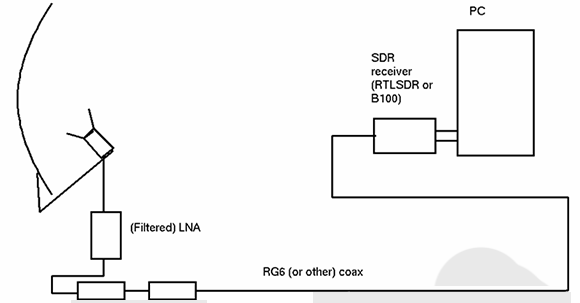
Last summer in the heyday of software defined radio via USB TV tuners we asked hackaday readers a question: Is anyone using everyone’s favorite method of SDR for radio astronomy? It took nearly a year, but finally there’s an awesome project to turn a USB TV tuner into a radio telescope. It’s from the fruitful mind of [Marcus Leech] (PDF warning), and is good enough to detect the rotation of the galaxy with a three-foot satellite dish.

News of [Marcus]’ work comes to us from [Carl] over at RTL-SDR.com who has been keeping tabs on the advances of building a radio telescope in a backyard. He’s been collecting a lot of interesting tidbits including this gif showing an arm of the galaxy entering and leaving [Marcus]’ telescope’s field of view over the course of a few hours.

Not only can [Marcus]’ telescope record continium measurements – basically, a single-pixel camera sensitive to only one frequency – it can also produce spectral plots of the sky. Combine the ability to measure multiple frequencies at the same time with the Doppler effect, and [Marcus] can measure the rotation of the galaxy with a USB TV tuner. That’s just awesome in our humble opinion.

If you already have an RTL-SDR TV tuner and a largish satellite dish, [Marcus]’ project should be fairly inexpensive to replicate; the feed assembly is made out of a coffee can, the amplifiers are repurposed satellite television equipment, and all the software – [Marcus]’ own simple_ra tool for GNU Radio – is open source. Of course with a 3 foot diameter dish, it will be impossible to replicate the data from huge radio telescopes. Still, it’s an impressive piece of work that leaves us searching craigslist for an old C-band dish.

Listening To Aircraft Transponders With A Raspberry Pi

Last year’s big hack was software-defined radio; a small USB TV tuner that could listen in on radio broadcasts anywhere between 64 and 1200 MHz. This year, it’s all about the Raspberry Pi, so it’s surprising we’re only just now seeing a mashup of these two pieces of hardware. [Corq] is using a Raspi and RTLSDR TV tuner to listen in on aircraft transponders, and getting a whole bunch of data from aircraft flying overhead.

Even though the ADS-B decoder [Corq] is using is written for OS X, he’s reading the data coming from the USB TV tuner over the network with a program called Dump1090. This program allows [Corq] to attach his SDR to a Raspbery Pi and put it somewhere the antenna will get good reception – an attic, or an outdoor weatherproof case – and stream data to his desktop over a WiFi or network connection.

With a USB TV tuner and a Raspberry Pi, [Corq] is able read the tail numbers, altitude, latitude, longitude, speed, heading, and even the type of aircraft currently flying over his house. That’s cool enough, but the fact that he can effectively do this over the Internet makes it a brilliant hardware mashup.

Tracking Cicadas With Radiolab And An Arduino

Cicadia

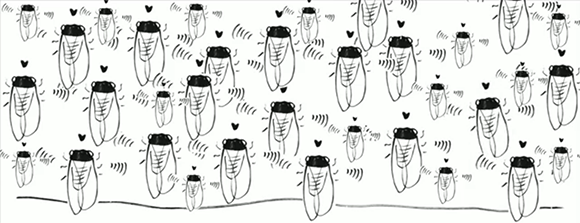
Once every 17 years, a population of cicadas ranging from Connecticut to the Appalachian highlands of North Carolina emerges to annoy everyone within earshot. The last time east coasters saw this brood was in 1996, making 2013 yet another year of annoying insect pests. The only question is, when will we start to see this year’s cicada brood?

Radiolab, the awesome podcast and public radio show, has put together an awesome project that asks listeners to track when the cicadas in their area will emerge. Cicadas generally enter their loud and obnoxious adult stage when the ground temperature 8 inches below the surface reaches 64º F. Armed with an Arduino, thermistor, and a few wires and resistors, any Radiolab listener can upload soil temperature data to Radiolab servers where all the data will be correlated with documented cicada sightings.

After following the page’s instructions for wiring up a bunch of LEDs and a thermistor to an Arduino, just upload the most well-commented code we’ve ever seen and go outside to take soil temperature measurements. The temperature is displayed in a pseudo-binary format on nine LEDs. To decode the temperature without counting by powers of two, Radiolab has an online decoder that also allows you to upload your data and location.

Ask Hackaday: What Are We Going To Do With The New Kinect?

kinect

Yesterday Microsoft announced their new cable box, the Xbox One. Included in the announcement is a vastly improved Kinect sensor. It won’t be available until next Christmas, but now the question is what are we going to do with it?

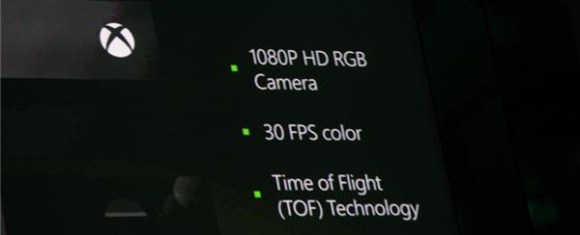
From what initial specs that can be found, the new version of the Kinect will output RGB 1080p video over a USB 3.0 connection to the new Xbox. The IR depth camera of the original Kinect has been replaced with a time of flight camera – a camera that is able to send out a pulse of light and time how long it takes for photons to be reflected back to the camera. While there have been some inroads into making low-cost ToF cameras – namely Intel and Creative’s Interactive Gesture Camera Development Kit and the $250 DepthSense 325 from SoftKinetic – the Kinect 2.0 will be the first time of flight camera you’ll be able to buy for a few hundred bucks at any Walmart.

We’ve seen a ton of awesome Kinect hacks over the years. Everything from a ‘holographic display’ that turns any TV into a 3D display, computer vision for robots, and a 3D scanner among others. A new Kinect sensor with better 3D resolution can only improve existing projects and the time of flight sensor – like the one found in Google’s driverless car – opens up the door for a whole bunch of new projects.

So, readers of Hackaday, assuming someone can write a driver in a few days like the Kinect 1.0, what are we going to do with it?

While we’re at it, keep in mind we made a call for Wii U controller hacks. If somebody can crack that nut, it’ll be an awesome remote for robots and FPV airplanes and drones.

Adding Stereo To Monophonic Audio

board

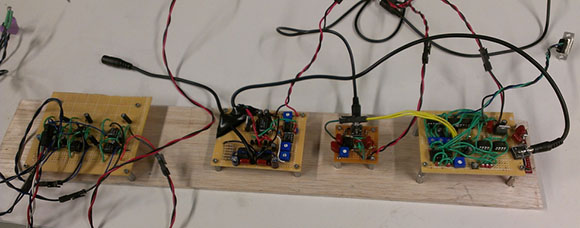
A lot of awesome stuff happened up in [Bruce Land]’s lab at Cornell this last semester. Three students – [Pat], [Ed], and [Hanna] put in hours of work to come up with a few algorithms that are able to simulate stereo audio with monophonic sound. It’s enough work for three semesters of [Dr. Land]’s ECE 5030 class, and while it’s impossible to truly appreciate this project with a YouTube video, we’re assuming it’s an awesome piece of work.

The first part of the team’s project was to gather data about how the human ear hears in 3D space. To do this, they mounted microphones in a team member’s ear, sat them down on a rotating stool, and played a series of clicks. Tons of MATLAB later, the team had an average of how their team member’s heads heard sound. Basically, they created an algorithm of how binarual recording works.

To prove their algorithm worked, the team took a piece of music, squashed it down to mono, and played it through an MSP430 microcontroller. With a good pair of headphones, they’re able to virtually place the music in a stereo space.

The video below covers the basics of their build but because of the limitations of [Bruce]’s camera and YouTube you won’t be able to experience the team’s virtual stereo for yourself. You can, however, put on a pair of headphones and listen to this, a good example of what can be done with this sort of setup.

Continue reading “Adding Stereo To Monophonic Audio”

Meet The 2013 LayerOne Conference Badge

badge_2013-1838

The LayerOne security conference is fast approaching and [charliex] is doing his best to put the finishing touches on this year’s conference badge.

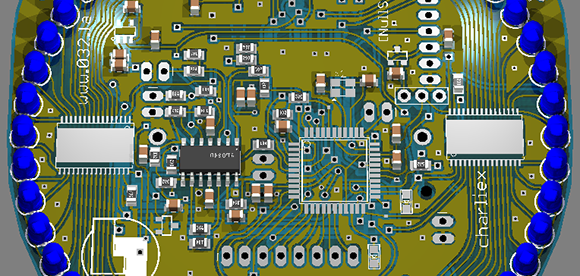
Around the perimeter of the badge is 48 LEDs driven by two LED drivers. This allows for some crazy hardware hacking to create anything from a TV-B-GONE to a bulbdial clock. There’s also a few extra switches and sensors that can be hacked to do some interesting things, but where this badge really shines is the addition of an OLED display, allowing it to transform into an XMEGA Xprotolab, a small oscilloscope, spectrum analyzer, and frequency generator. Yes, this badge can be hacked, but it’s also a tool for hacking.

There’s an impressive amount of work that went into this badge, a feat even more impressive given the fact that the LayerOne conference is this weekend and the PCBs for these badges won’t arrive until tomorrow. We’ll be the first to say we’re masters of procrastination, but [charliex] really cut it close here.