N64 In An N64 Controller

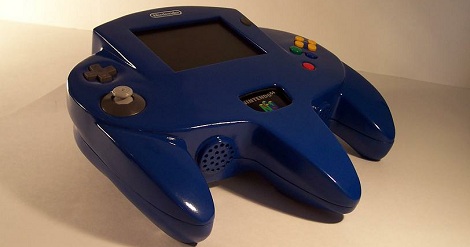
We’ve seen portable N64s before, but none were at the level of [Bungle]’s oversized N64 controller casemod.

Instead of the usual ‘sanding Bondo and gluing styrene’ method we’ve seen in other casemods, [Bungle] decided to make a silicone mold with a positive master. Not only did [Bungle] end up with a case indistinguishable from something produced in a factory, but the molding process left him with more internal room and the ability to make identical duplicates of his over sized controller.

The electronics are the standard fare – a slightly modified N64 with a PSone LCD screen. Because the rumble and memory packs are built in to the body of the gigantic controller, [Bungle] added a multifunction pak to provide ports for power, brightness controls, a/v, and a second controller.

This is an amazing build that really steps up the game for console modders. You can check out [Bungle]’s demo video after the break.
Continue reading “N64 In An N64 Controller”

Building A Radio Telescope For A School Science Project

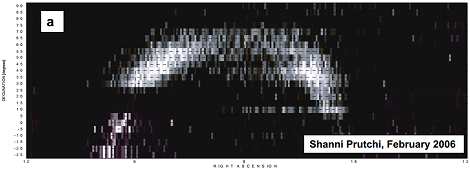
The image above is a picture of  Hydrogen emissions from our galaxy. The cool thing about this picture is it wasn’t taken with millions of dollars worth of equipment; instead, only a few hundred dollars worth of ham radio gear was needed to get a picture of the Milky Way. [Shanni Prutchi], with the help of her dad [David] built this radio telescope in 5th grade, and even gave a presentation on this build at the National Radio Astronomy Observatory.

Instead of a gigantic satellite dish, [Shanni] used a loop yagi antenna to collect radio signals in the 1420 MHz band. These signals are amplified, filtered, and sent to an ICOM IC R-7000 receiver specially modified by [Shanni]’s dad for radio astronomy.

After her telescope saw first light, [Shanni] and [David] decided to use their brand new toy to detect the passage of the sun. At around 10:00 am they pointed the telescope at where the sun would be at 1:30 pm. For the next few hours, the telescope gathered and integrated radio signals to make an awesome graph. Yep, [Shanni]’s scope can detect radio waves coming directly from the sun.

Like a lot of us, [Shanni] was very much influenced by the movie Contact, something we brought up last week in a post on software-defined radio telescopes. This telescope was built in 2005, meaning [Shanni] couldn’t take advantage of any of the new advances in cheap software radios. We’re still waiting for someone to throw a Realtek SDR telescope together, so if you’ve got one send it in

Communicating From Inside Your Dreams

Over the last few years, [Michael] has been working on the Lucid Scribe project, an online sleep research database to document lucid dreams. This project uses a combination of hardware and software to record rapid eye movements while sleeping. Not only is [Michael] able to get his computer to play music when he starts dreaming (thus allowing him to recognize he’s in a dream), he can also communicate from within a dream by blinking his eyes in Morse code.

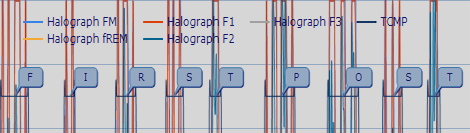
According to the Lucid Scribe blog, [Michael] and other researchers in the Lucid Scribe project have developed motion-sensing hardware capable of detecting heartbeats. This equipment is also sensitive enough to detect the Rapid Eye Movements associated with dreaming. This hardware feeds data into the Lucid Scribe app and detects when [Michael] is dreaming. Apparently, [Michael] has been practicing his lucid dreaming; he’s actually been able to move his eyes while dreaming to blink our Morse code. The first message from the dreamworld was, of course, “first post”. [Michael] used ‘first post’ to debug his system, but he has managed to blink ‘S’ from a dream. That should improve after he works on his Morse and lucid dreaming skills.

You may now begin referencing Inception in the comments.

SNES-001 Advance Puts Displays In The Controllers

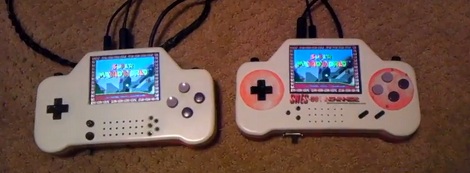
Twenty years ago, [Downing] would fight with his siblings over who got to watch TV. Obviously, this gave him the idea of putting a television inside his Super Nintendo controller, but at he tender age of 12, [Downing] had neither the experience nor skills to make that happen. Now that he’s older, and much less impressed by the Sega Nomad, [Downing] made his dream a reality.

Reading over [Downing]’s madebybacteria forum thread, he began the build by adding two controller ports and painting the system a classic Famicom red and white. The prominent feature of [Downing]’s design – a display in each controller – are connected to the console through a second pair of SNES controller ports. Internally, the video signal generated by the SNES is broken out to each controller; the controller displays are just a small mirrored version of whats sent to the TV.

Like [Downing]’s previous Genesis portable, the SNES-001 is a master work of Bondo and vacuum forming. After the break you can see a few demos of what this console mod can do.

Continue reading “SNES-001 Advance Puts Displays In The Controllers”

Getting Root On A Sony TV

The Sony Bravia series of HDTVs are a great piece of kit; they’re nice displays that usually have enough inputs for the craziest home theatre setups. These TVs also run Linux, but until now we haven’t seen anything that capitalizes on the fact these displays are wall-mounted Linux boxen. [Sam] sent in an exploit to root any Bravia TV – hopefully the first step towards replacing our home media server.

The exploit itself is a regular buffer overflow initialized by a Python script. The script sets up a Telnet server on any Sony Bravia with a USB port, and provides complete root access. [Sam] was able to get a Debian install running off a USB drive and all the Debian programs run correctly.

If you have a Bravia you’d like to test [Sam]’s script on, you’ll need a USB network adapter for the TV and a Telnet client to explore your TV’s file system. Right now there’s not much to do with a rooted Bravia, but at least now running XMBC or other media server on a TV is possible.

If anyone would like to start porting XMBC to a Bravia TV, [Sam] says he’s more than willing to help out. We’re not aware of any HDTV modding communities on the Internet, so if you’re part of one post a link in the comments.

Hackaday Retro Submission: Browsing With An Apple IIc

We’ve had the retro edition of Hackaday up for about a week now, and already a few people have sent in a few neat builds that use an ancient computer to pull this page up. The latest comes from [RetroAppleFanToday] who used an Apple IIc to browse the Internet.

To load our humble retro edition, [RetroAppleFan] used a serial connection between the Apple and a Mac Mini to get a terminal running on the 30-year-old computer. From there, it was a simple matter of running lynx to browse the Internet.

There are a few more retro submissions cataloged on our retro successes page including a NEXT cube. If you have an old computer lying around that can pull up our retro site, don’t feel shy about sending it in; it’s pretty much guaranteed to get a mention.

As far as the development of the retro site is going, we’re posting 5 random stories every day. There’s a script to generate the front page every day, but if we get enough complaints or compliments we may just generate a new front page for every visitor.

A Game Of Skill For The North Carolina Maker Faire

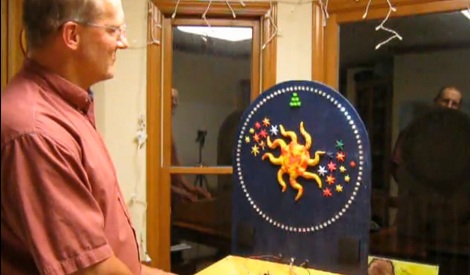
The North Carolina Maker Fare was last weekend, and over the course of the festivities  [Dave] was asked for the documentation for the arcade game he built. It’s a neat build, so we’re very glad he chose to share it with us.

Anyone who has been to an arcade in the last 15 years has seen the game [Dave] was inspired by. The object of the game is to hit a button when the sequentially illuminated lights are in a particular position. [Dave] built his own version out of 90 LEDs and a very tiny FPGA dev board.

The 90 LEDs are controlled by the FPGA using charlieplexing, and are illuminated in sequence when the game starts. A heavy-duty emergency switch button modified into a momentary push button takes a hit whenever the player thinks the LED will land in the ‘jackpot zone.’  If the player wins, a buzzer sounds and much excitement is had by all.

Seeing as how the arcade version of this game is a complete rip off and is impossible to win, we really like [Dave]’s version. You can check out his demo video after the break.
Continue reading “A Game Of Skill For The North Carolina Maker Faire”