Resurrecting A Mac LC For Server Duties

It might just be a case mod, but we love [Eduard]’s take on a modern Macintosh LC (translation). The donor motherboard came from a disused home server, and the LC came from [Eduard]’s childhood memories of playing Glider and The Incredible Machine.

The case was donated from a venerable Macintosh LC, manufactured circa 1990. The original LC had a Motorola 68020 CPU, which [Eduard] upgraded to an Intel Atom board. It was a somewhat tricky build – he adapted a 90 Watt power supply from a piece of old office equipment to power the new Intel board. With a great deal of very careful Dremel work, the old-school Apple logo was modified into a power button for the new computer.

For frequent readers of Hack a Day, it’s no surprise that we’ll grab up any old Apple or Mac build. [Kevin] built a weather station and analog joypad for his Apple IIc, We’ve seen custom Mac ROM SIMMS, and of course [Sprite_tm]’s amazing SE/30 emulation. If you’ve got something that will send our 68k senses tingling, send it on into the tip line.


Earning A Merit Badge With A Pinewood Derby Photo Finish

2/4 store-bought bodies

As a boy scout properly acculturated into the DIY philosophy, [Adam] really wanted to get his hands on the new Inventing merit badge. The merit badge required solving a problem, so of course a pinewood derby instant replay system was the obvious solution.

After thinking through a few solution paths like a radio-controlled camera that follows the cars, [Adam] settled on a system that would replay the pinewood derby cars crossing the finish line.  [Adam]’s father found a cheap and readily available Playstation Eye camera that can record 60fps video for this task. [Adam]  used a laser/photodiode/Arduino setup to detect when a car was crossing the finish line. A bit of Processing code supplied by his father records the relevant 60 frames of video and plays them at 5fps on a projector for the enthralled spectators.

We suspect that a similar setup could be used if [Adam]’s den wanted to try the rain gutter regatta or oft-forgotten space derby next year. Check out [Adam]’s instant replay system after the break, or join us in the comments for the inevitable argument over who had the best pinewood derby car.

Continue reading “Earning A Merit Badge With A Pinewood Derby Photo Finish”

Hackaday Links: February 1, 2012

The only thing he needs now is a micro and RTC

For [Dino]’s 44th Hack A Week extravaganza, he made powered window blinds in five minutes. It’s a simple build with a small gear motor and a bit of tubing to adapt the shaft to the control rod of the blinds. Good job [Dino].

BecauseCamelCaseWillKillYourPinkieFinger

The wonderful [Lizzie] over at LUSTlab realized that typing meta keys really slows down the development process. The result? Foot pedals for the Shift and Command keys. No build log for this one, but it’s just a set of old racing pedals and a disused keyboard.

So much cooler than a potato

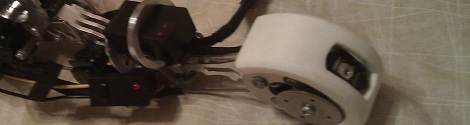
[mdevaev] out of Russia built a fully articulated GLaDOS replica. Here’s the build album and the relevant MLP forum post. This GLaDOS is tiny – probably less than a foot long, but it moves around and speaks (Russian, which is weird). Somebody get us a couple of motorcycle fenders so we can build the 1:1 scale version.

Visualizing a plane of fog

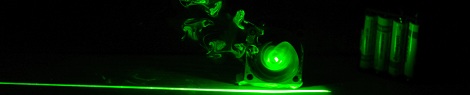
[greg] was looking for a way to visualize the chaotic turbulence of air. He mounted a laser on a computer fan and held some dry ice above the beam. The result looks like it could make for an interesting photography project, but check out the video if you don’t believe us.

We were asking for it

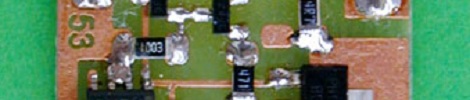
We asked for battery charging circuits that don’t use specialized parts. [Petr] found this one that only uses few transistors, a MOSFET and a voltage regulator. In one of the Hackaday comments, [atomsoft] had the idea of putting a USB plug on the traces to save a bit in component costs. [mohonri] said he designed one, but we have yet to see it. Perhaps next links post…

Telegraph Key Makes For A Fantastic Twitter Input

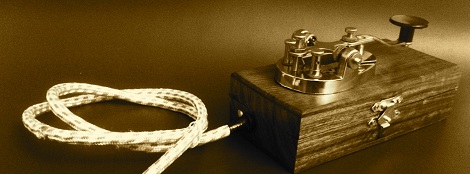
In the interests of interface archaeology, [Martin] sent in the Tworse Key, a telegraph key that posts to Twitter using Morse code. It’s a fantastic build that nearly looks like something out of the 1900s.

We’ve seen a ton of Morse keyboards over the years, but never one so well-engineered for a single purpose. The guts and brains of the Tworse Key is an Arduino Ethernet that connect to Twitter over the API. The Tworse Key automagically posts all the Morse messages to Twitter. The Tworse Key may have fallen off the table a few times in the past 24 hours, but we do see a few purposeful messages like ‘sos’ and [Bell]’s preferred telephone salutation.

We could say that nobody uses straight telegraph keys anymore, but outside a few hardcore CW HAM radio guys nobody uses Morse anymore. This isn’t meant to be used as an everyday input device, though. It’s more of an exercise in interface archaeology. That being said, an iambic key would be a far more ergonomic solution. Check out the video of the Tworse Key after the break.

Continue reading “Telegraph Key Makes For A Fantastic Twitter Input”

A SOPA We Still Can’t Get Behind

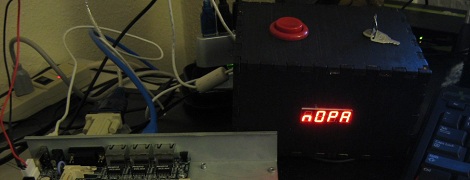
[Brad] had an extremely productive January 18th. Considering how many websites went dark to protest SOPA, we can’t blame him. While considering what he could get done if popular Internet time sinks went dark on command, [Brad] thought of the Stop Online Productivity Avoidance box. This build will redirect all traffic to sites like reddit, hacker news, and (gasp!) hack a day to a simple web page that asks the eternal question, “shouldn’t you be working right now?”

The box has two modes: in SOPA mode, the whole Internet is at [Brad]’s fingertips. In NOPA mode, an Arduino communicates with a Python script running on the router to pull up an Internet blacklist. A simple button would be too easy to override, so there’s a ‘nuclear mode’ that shuts off these time sinks for one hour. The only way around the blacklist is to restart the router, a process that takes 15 minutes and will kill the entire Internet for the duration. Not something you’d like to do if you’re slightly bored.

All the code for the SOPA box is up on github and you can check out [Brad]’s demo of the SOPA box after the break.

Continue reading “A SOPA We Still Can’t Get Behind”

Adding Visuals To Chiptune Performances

If you’ve never been to a chiptune show – yes, they exist – you’ve noticed the awesome visuals behind the performers that are usually displayed with a glitching NES. If it’s a really good show, that 8-bit visualization will be in sync with the music and may actually serve as a lo-fi spectrum analyzer. [Andy] came up with his own visualization system for a Sega Genesis or Megadrive. With 16 bits behind his build, we’ll say if far surpasses the lowly NES.

For his visualization, [Andy] feeds audio into an ATMega328 and the ever-popular MSGEQ7 seven-band graphic equalizer IC. The output from the EQ goes straight to the second controller input of a Sega Nomad [Andy] had lying around that is running a custom ROM for his show. The ROM is programmed in tandem with the microcontroller project to serve as a spectrum analyzer for his shows.

You can check out [Andy]’s visualization with the chiptunes of Danimal Cannon after the break. We would prefer a demo featuring An0vA and the code for the microcontroller, but it’s still a very nice demo indeed.

Continue reading “Adding Visuals To Chiptune Performances”