Pocket Cheat Sheets For Electronics

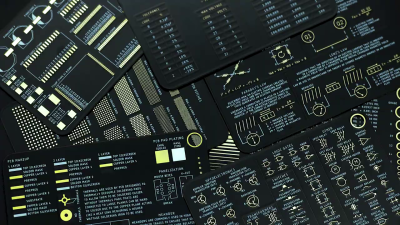
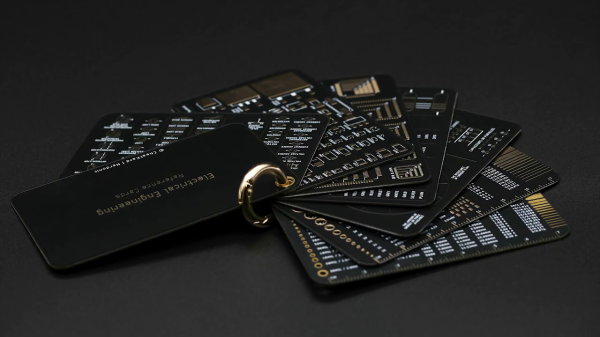
What started as business cards for [Nerdonic]’s engineering clients unexpectedly expanded into a project in its own right. A CheatKard set consists of seven electronics cheat sheets made in the style of PCB rulers. Sized at 80 mm x 50 mm, they should fit in your business card holder or wallet regardless of the standard in your country. Alternatively, the set can be held together with a small ring in the top corner. The cards are made from fiberglass PCB stock, 0.6 mm thick with gold plating and matte black solder mask. The stackup goes like so:

  • Cover
  • Measurements
  • Schematic Symbols
  • Component Values
  • Footprints, SMD 1
  • Footprints, SMD 2
  • PCB Design
  • Laws and Theory

Even before shipping this electronics set, [Nerdonic] has already been asked to make sets of CheatKards for other fields, such as photography, chemistry, antenna design, mathematics, etc. While these aren’t as comprehensive as the Pocket Ref book from years gone by, we like a good cheat sheet. If you want to get a set, check out [Nerdonic]’s Kickstarter project which was funded within hours of going live, and see the short video clip below the break. He also makes a pledge to plant one tree in the Amazon rainforest for each set he sells.

Do you have any favorite cheat sheets or cheat sheet making techniques? Do you prefer your cheat sheets to be physical or stored on your computer? Share your comments down below.

Continue reading “Pocket Cheat Sheets For Electronics”

Sixteen Channel Retro Rotary Fader

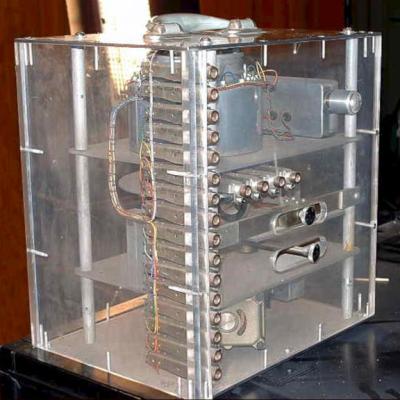
Musician and electronic musical machine builder [Sam Battle] has recreated the unusual Crystal Palace Audio Fader over at Look Mum No Computer. The Crystal Palace was a rotary fader developed by engineer Dave Young at the BBC Radiophonic Workshop back in the late 1960s. Doctor Who fans might recognize it from the “The Krotons” series theme music. It’s a wild mechanical mixer, which fades between sixteen different inputs to produce its output by using a variable speed rotating pickup.

Dave Young’s Crystal Palace

After Young built the prototype, three of these were made and put into cases cut out of scrap plexiglass) from a dumpster — hence they became known as Crystal Palaces after the 1851 glass and iron structure of the same name.

[Sam] decides to build this using some inductors and an old tape head. After proving out the concept on a breadboard, he mounts sixteen inductors on a 3D-printed circular frame. The rotating pickup transfers the signal via slip-rings at the top. An array of input jacks and level pots are mounted on the enclosure’s face plate, which contains a vector board full of op amps that drive the coils. Strictly speaking, the original fader used capacitive coupling, not inductive, but that doesn’t detract at all from this project. And as he states upfront, he intentionally didn’t dig too deep into the original, so as to put his own spin on the design.

Continue reading “Sixteen Channel Retro Rotary Fader”

Wires Vs Words — PCB Routing In Python

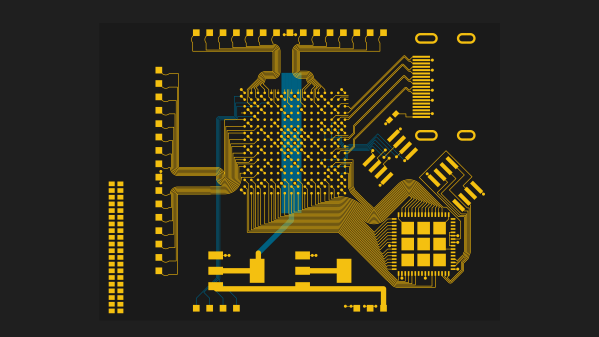
Preferring to spend hours typing code instead of graphically pushing traces around in a PCB layout tool, [James Bowman] over at ExCamera Labs has developed CuFlow, a method for routing PCBs in Python. Whether or not you’re on-board with the concept, you have to admit the results look pretty good.

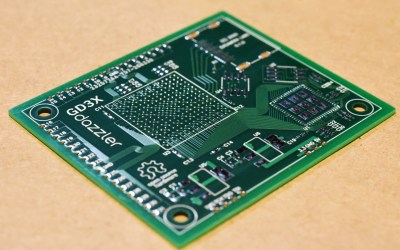
GD3X Dazzler PCB routed using CuFlow

Key to this project is a concept [James] calls rivers — the Dazzler board shown above contains only eight of them. Connections get to their destination by taking one or more of these rivers which can be split, joined, and merged along the way as needed in a very Pythonic manner. River navigation is performed using Turtle graphics-like commands such as left(90) and the appropriately named shimmy(d)that aligns two displaced rivers. He also makes extensive use of pin / gate swapping to make the routing smoother, and there’s a nifty shuffler feature which arbitrarily reorders signals in a crossbar manner. Routing to complex packages, like the BGA shown, is made easier by embedding signal escapes for each part’s library definition.

We completely agree with [James]’s frustration with so many schematics these days being nothing more than a visual net lists, not representing the logical flow and function of the design at all. However, CuFlow further obfuscates the interconnections by burying them deep inside the wire connection details. Perhaps, if CuFlow were melded with something like the SKiDL Python schematic description language, the concept would gain more traction?

That said, we like the concept and routing methodologies he has implemented in CuFlow. Check it out yourself by visiting the GitHub repository, where he writes in more detail about his motivation and various techniques. You may remember [James] two of his embedded systems development tools that we covered back in 2018 — the SPI Driver and the I2C driver.

Hershey Fonts: Not Chocolate, The Origin Of Vector Lettering

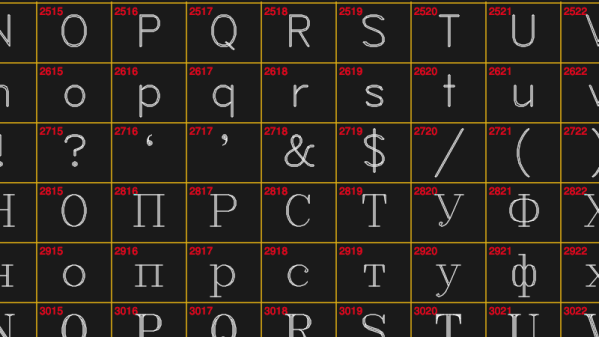
Over the past few years, I kept bumping into something called Hershey fonts. After digging around, I found a 1967 government report by a fellow named Dr. Allen Vincent Hershey. Back in the 1960s, he worked as a physicist for the Naval Weapons Laboratory in Dahlgren, Virginia, studying the interaction between ship hulls and water. His research was aided by the Naval Ordnance Research Calculator (NORC), which was built by IBM and was one of the fastest computers in the world when it was first installed in 1954.

The NORC’s I/O facilities, such as punched cards, magnetic tape, and line printers, were typical of the era. But the NORC also had an ultra-high-speed optical printer. This device had originally been developed by the telecommunications firm Stromberg-Carlson for the Social Security Administration in order to quickly print massive amounts of data directly upon microfilm.

Continue reading “Hershey Fonts: Not Chocolate, The Origin Of Vector Lettering”

Serial Silicone Molding

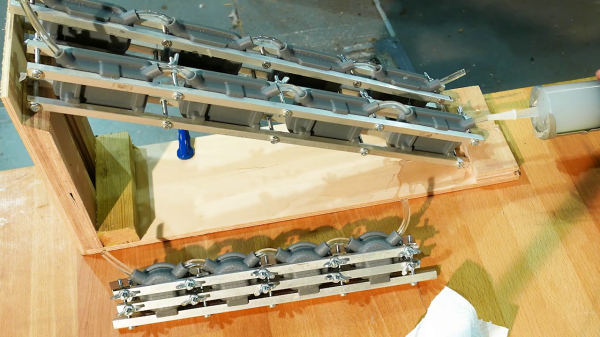
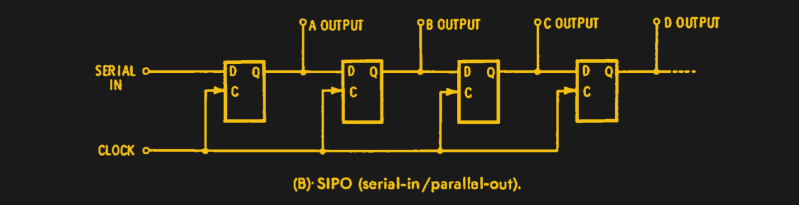
The techniques for making single-digit quantities of custom molded parts don’t scale well when you need to make dozens, as [Kevin Holmes] discovered. He needed to make 80-some sets of a silicone motor mount, and the one-up mold process was not going to work. He explores several solutions, which he rejects as being too complicated. Finally [Kevin] comes up with the idea of daisy-chaining banks of molds clamped together with rails of stock metal bars. It’s a pretty nifty process to watch and you can check the video out below, which is not unlike a very slow 7495 four-bit shift register.

Even though the silicone he uses is clear, pay attention and you can still see the carry-out as it propagates from mold to mold. He manually performs the nibble carry operation from one bank to the next — we wonder if he could cascade these banks, and inject all 80 in one really big squeeze?

Why would someone need 80 sets of silicone rubber motor mounts, you may ask? Well, you may remember the 4-mation 3D zoetrope that we wrote about back in 2018. [Kevin] is one of the founders of this mesmerizing project, and it would seem that their Kickstarter project has been successful. As he demonstrates in the video below, without some type of noise dampening mounts, a rumble from the motor is amplified through the stage of the zoetrope. If you have any favorite mold-making tips for small batch manufacturing, let us know in the comments below. Thanks to [George Graves] for sending this tip our way.

Continue reading “Serial Silicone Molding”

South Korean Mapping Satellite Reaches Orbit

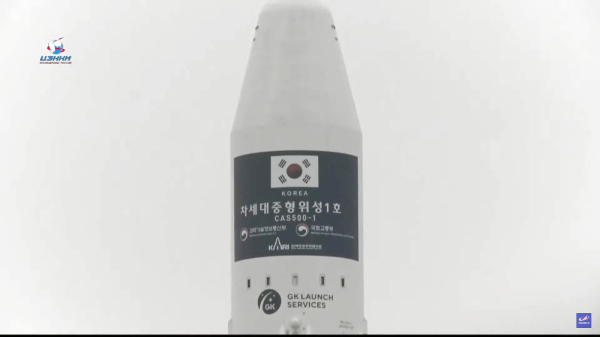
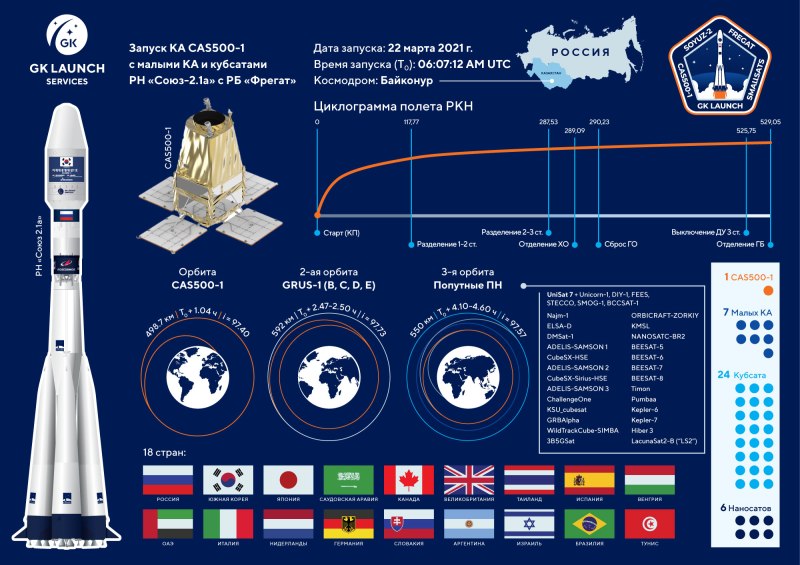
South Korea’s space program achieved another milestone yesterday with the launch of the first Compact Advanced Satellite 500 (CAS500) in a planned series of five vehicles. A second-generation Russian Soyuz 2.1a lifted the Korean-made CAS500-1 from historic Baikonur Cosmodrome in southern Kazakhstan and successfully placed it into a 500 km sun-synchronous orbit, inclined by 97.7 degrees or 15 orbits/day. Living up to its reputation as a workhorse, the Soyuz then proceeded to deposit multiple other satellites into 600 km and 550 km orbits. The satellite is pretty substantial, being 2.9 m tall and 1.9 m diameter and topping the scales at 500 kg. (Don’t be confused, like we were, by this Wikipedia article that says it is a 1.3 kg CubeSat.)

South Korea already has over a dozen satellites in orbit, and the CAS500 adds a modular space platform to the mix. It was designed by the Korea Aerospace Research Institute (KARI) to provide a core backbone which can be easily adapted to other missions, not unlike a car manufacturer that sells several different models all based on the same underlying chassis. Another down-to-earth goal of the CAS500 program was to foster the transfer of core technologies from state-owned KARI to private industry. We wonder how such figures are calculated, but reportedly 91.3% of CAS500-1 was made in Korea. Subsequent flights will further involve local services and industry.

The purpose of the first two satellites is to provide images to the private sector, for example, online mapping and navigation platforms. How popular this will be is yet to be determined — as one local newspaper notes, the 2 meter image resolution (50 cm in monochrome) pales in comparison to Google’s advertised 15 cm resolution. The next three satellites will focus on space science imagery.

The Soyuz launch is shown below, and this short video clip from KARI shows a nice animation of the satellite. Try not to cringe at the simulated whooshing sound as two satellites pass each other in the vacuum of space — turn down the volume if you need to.

Continue reading “South Korean Mapping Satellite Reaches Orbit”

DIY I2C Tester

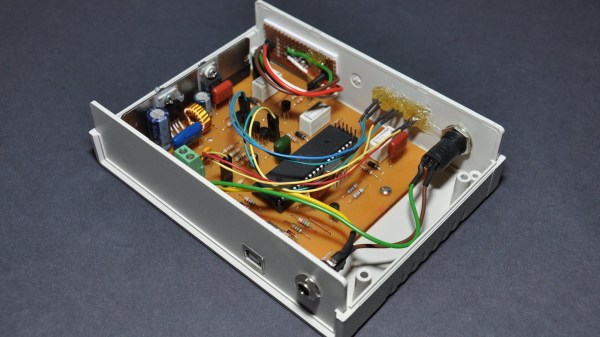
[Dilshan] built a dedicated I2C tester which allows for I2C bus control over USB using simple commands such as init, read, write, etc. The Linux kernel has had I2C driver support for a couple of decades, but you’ll be hard pressed to find a computer or laptop with a I2C connector (excluding Bunnie Huang’s Novena hacker’s laptop, of course). This tester does require a Linux host, and his programs use libusb on the computer side and V-USB on the embedded side.

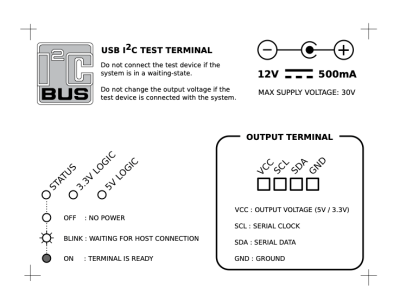
[Dilshan] put a lot of time into building this project, and it shows in the build quality and thorough documentation. With its single-sided PCB and all thru-hole construction, it makes a great beginner project for someone just getting into the hobby. At the heart of the tester is an ATmega16A in a 40-pin PDIP package (despite the Microchip overview page calling it a 44-pin chip), supported by a handful of resistors and transistors. Schematics are prepared in KiCad, code is compiled using gcc and avr-gcc, and he provides a label for the enclosure top. The only thing missing is information on the enclosure itself, but we suspect you can track that down with a little sleuthing (or asking [Dilshan] himself).

If you use I2C quite a lot, give this project a look. Easy to build, useful in the lab, and it looks nice as well. We have featured [Dilshan]’s work over the years, including this logic pattern generator and his two-transistor-on-a-breadboard superheterodyne receiver.