Hackaday Podcast Episode 256: 0, 256, 400, 0x100, And 10000000

For this week’s episode, we did something super special — we all convened to answer your burning questions about your hosts, both as hackers and as humans. We kick things off with a segment featuring a hearty round-table discussion between Elliot, Al, Dan, Kristina, and Tom. What’s on our benches? What do we type on? Go find out!

None of us figured out What’s That Sound though a few of us had some creative guesses. Can you guess the sound? There could be a t-shirt in it for ya.

Kristina and Elliot went on to have a normal podcast too, but since the round table section went so long, we’ll process up that section and put it out early next week.

Check out the links below if you want to follow along, and as always, tell us what you think about this episode in the comments!

Download this epic monument of podcasting and savor it for the next 256 weeks.

LEGO Coin Sorter Is So Money

When it comes to LEGO and sorting, the idea is usually to sort bricks by color, which is a great way to help keep your sanity. And if you want to buy more, you may need to save your pennies and so on. What better way for worlds to collide than to build a working LEGO coin sorter?

[brickstudios]’ sorter does it all — pennies, nickels, dimes, quarters, half-dollars, and dollars. As with most coin sorters, the idea is to differentiate by size. This brings up challenge number one — the fact that a penny is ever-so-slightly bigger than a dime.

[brickstudios] was able to solve this by leveraging the difference between a headlight brick and a regular modified 1X1 with a stud on the side. Later, the same two coins reveal challenge two, which is that if you want to sort the coins in order by value, you have to somehow get the dimes past the pennies and nickels after each has fallen through the chute. Same deal with the giant half-dollar and smaller dollar coins.

The basic sub-build is a pair of tile rails on which the coins slide and either fall into the hole or keep going based on value. Once [brickstudios] had all the coins falling just right, it was time to address the value vs. size issue. Essentially, they solved this by building a ramp that turns the dimes and dollars and gets them to the right spots. Be sure to check out the build video after the break.

We are constantly amazed by the things people can make out of LEGO, like this hydroelectric dam or this hydraulic excavator. Have you made something amazing? Let us know!

Continue reading “LEGO Coin Sorter Is So Money”

Altoids Tin Keyboard Is A Breath Of Fresh Air

Well, here’s a fresh idea! [flurpyflurples] is back from hiatus with the Mintboard, a 40% that fits inside of an Altoids tin. Who could ask for more than a rugged little Bluetooth keyboard with a built-in cover that fits in your pocket?

This build started with meticulously measuring the tin to figure out what kind of switches could be used. At first, this was going to be a 60% keyboard, but after a lot of design decisions and switch comparisons, [flurpyflurples] settled on a certain micro switch spaced at 7.3mm for a 40% layout. Then it was time to design a PCB.

Although [flurpyflurples] tends to use Arduino Pro Micros in their builds, they went with the Nice! Nano this time for the Bluetooth capabilities. This means that they had to program it with ZMK instead of QMK, but found that QMK knowledge transfers rather nicely.

Let’s talk about those lovely legends. The keycaps are 3D printed of course, and the legends were cut out on a Cricut machine. The best part is that sealant — [flurpyflurples] used a few drops of UV nail polish top coat and cured it with light.

We think this looks and sounds fantastic, and would really like to know how to get such clean cutouts. According to [flurpyflurples] and the end of the build/demo video you’ll find below the break, the action is a lot like a Blackberry keyboard.

Continue reading “Altoids Tin Keyboard Is A Breath Of Fresh Air”

Flat-Pack Multi-Tool Has Many Dimensions

Sometimes, you just have to see whether something can be done. Such is the case with [ToolTechGeek]’s flat-pack metal multi-tool build. Can an entire multi-tool be made with only flat pieces of laser-cut metal and fasteners? It would seem so, yes. And quite nicely, too, as you’ll see in the video after the break.

[ToolTechGeek] started by designing all the parts in Inkscape, and then made a few 3D printed versions to check fitment before committing to laser-cut metal. Once they had the pieces cut, everything came together nicely except for a few tabs that connect some of the parts together. These just had to be filed down a bit.

So now, [ToolTechGeek] has a handy set of pliers, flat- and Phillips-head screwdrivers, a knife, and a bottle opener all in one place. Although the pliers don’t have teeth, they still do a fine job of removing nuts and the like. Be sure to check out the final product and see it get put to the test.

No use for such a thing? Maybe you’d prefer an NFC multi-tool.

Continue reading “Flat-Pack Multi-Tool Has Many Dimensions”

How Much Longer Will Cars Have Cigarette Lighter Ports?

Depending on the age of your car, it might contain a round 12 V power outlet in the dash, or possibly in the elbow compartment. And depending on your own age, you might know that as the cigarette lighter port. Whereas this thing used to have a single purpose — lighting cigars and cigarettes via hot coil — there are myriad uses today, from charging a phone to powering a dash camera to running one of those tire-inflating machines in a roadside emergency.

But how did it come to be a power source inside the vehicle? And how long will it stick around? With smoking on the decline for several decades, fewer and fewer people have the need for a cigarette lighter than do, say, a way to charge their phone. How long will the power source survive in this configuration?

Continue reading “How Much Longer Will Cars Have Cigarette Lighter Ports?”

Illustrated Kristina with an IBM Model M keyboard floating between her hands.

Keebin’ With Kristina: The One With The Typewriter Orchestra

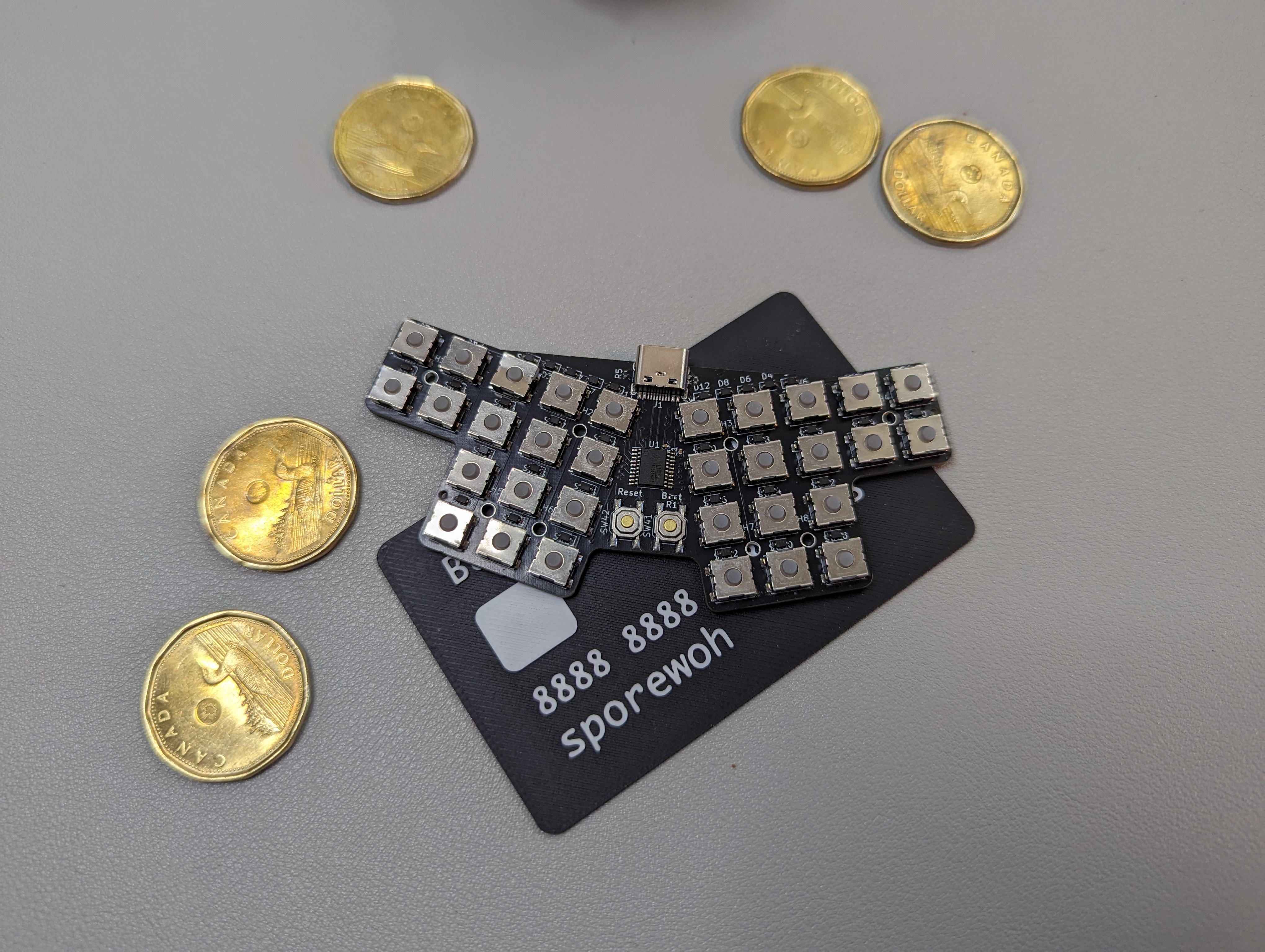
Have you ever wished you had more control over what goes into a kit keyboard build? Like, a whole lot more control? Well, that’s the idea behind the Akruvia 12×4 Playground by [iketsj].

Image by [iketsj] via YouTube

This is a 48-key ortholinear keyboard, but other than that, it’s a complete blank slate. The kit includes the PCB, diodes, RGB LEDs, and Kailh Choc V1 hot swap sockets, which is really the only choice you don’t have in the matter.

All the rest is up to you, thanks to a generous prototyping area that wraps around three sides of the keys. Bring your own microcontroller and anything else that sounds useful, like displays, rotary encoders, gesture sensors, pointing devices, you name it.
You could even magnetically link a macro pad to one side, as [iketsj] teases in the intro video. [iketsj] has made the kit available through links on their website, and you’ll find a product guide there as well.

Continue reading “Keebin’ With Kristina: The One With The Typewriter Orchestra”

Ballpoint Switch Is Oh-So Satisfying

Alright, here’s your quick and dirty hack for the day. The astute among you may recall [Peter Waldraff]’s bookshelf train build of a few days ago, and the fact that he used a switch made from a dead ballpoint pen to light up the scene. Fortunately, [Peter] wrote in to give us the details of this low-voltage sub-build, which you can see in the video after the break.

Essentially, [Peter] starts by making a shortened version of the pen. He modifies nearly every bit of it, including cutting down the ink cartridge, so if you try this, make sure the thing is all dried up first. Then, as he is screwing the point holder back on the barrel, he wraps elastic cord around the inside barrel in lieu of having sewing thread lying around. This cord along with some hot glue will hold a pair of paper clips to the sides of the point holder. When the pen is clicked into the writing position, it makes a connection between the paper clips and closes the circuit on whatever is wired into it.

What types of little hacks like this have gotten you through the build? Let us know in the comments, or better yet, write it up and drop us a tip. By the way, here is that bookshelf train build in case you missed it.

Continue reading “Ballpoint Switch Is Oh-So Satisfying”