The Legacy Of The Floppy Still Looms Over Windows

We no longer use floppy disks on the vast majority of computers, but a recent Old New Thing blog post from Microsoft sheds light on one of their possible unexpected legacies. It seems Windows disk cache items expire after two seconds, and as the post explains this has its origin in the development of MS-DOS 2.0.

Disks, especially floppy disks, are slow compared to computer memory. A disk cache is a piece of memory into which the operating system puts frequently loaded items to speed up access and avoid its having to repeatedly access the disk. They have an expiry time to ensure that the cache doesn’t become clogged with data that hasn’t been needed for a while.

IBM PC floppy drives didn’t implement any form of notification for a disk eject, so it became quite possible for a disk to be ejected while the operating system still believed cached data from it to be valid. Thus a pair of Microsoft engineers tried their hardest to swap floppy discs as fast as they could, and it was discovered to be an impossible task in under two seconds. This became the cache expiry time for a Microsoft OS, and thus we’re told the floppy’s legacy lives on as more than just the ‘save’ icon.

As this is being written the Internet is abuzz with a viral Tweet about railroad gauges having an origin in the width of a Roman horse, that rail historians are debunking with a reference to the coal tramways of [George Stephenson’s] Northern England. It’s thus sometimes dangerous to take simple soundbite origin stories at face value, but since in this case our source is Microsoft themselves we think we can take it as being close to the horse’s mouth. Even if it isn’t a Roman horse.

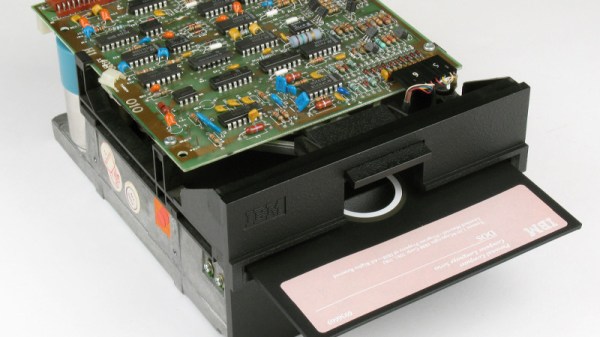
IBM floppy drive image: Michael Holley [Public domain].

What On Earth Is A Pickle Fork And Why Is It Adding To Boeing’s 737 Woes?

It’s fair to say that 2019 has not been a good year for the aircraft manufacturer Boeing, as its new 737 MAX aircraft has been revealed to contain a software fault that could cause the aircraft to enter a dive and crash. Now stories are circulating of another issue with the 737, some of the so-called “Pickle forks” in the earlier 737NG aircraft have been found to develop cracks.

It’s a concerning story and there are myriad theories surrounding its origin but it should also have a reassuring angle: the painstaking system of maintenance checks that underpins the aviation industry has worked as intended. This problem has been identified before any catastrophic failures have occurred. It’s not the story Boeing needs at the moment, but they and the regulators will no doubt be working hard to produce a new design and ensure that it is fitted to aircraft.

The Role of the Pickle Fork

For those of us who do not work in aviation though it presents a question: what on earth is a pickle fork? The coverage of the story tells us it’s something to do with attaching the wing to the fuselage, but without a handy 737 to open up and take a look at we’re none the wiser.

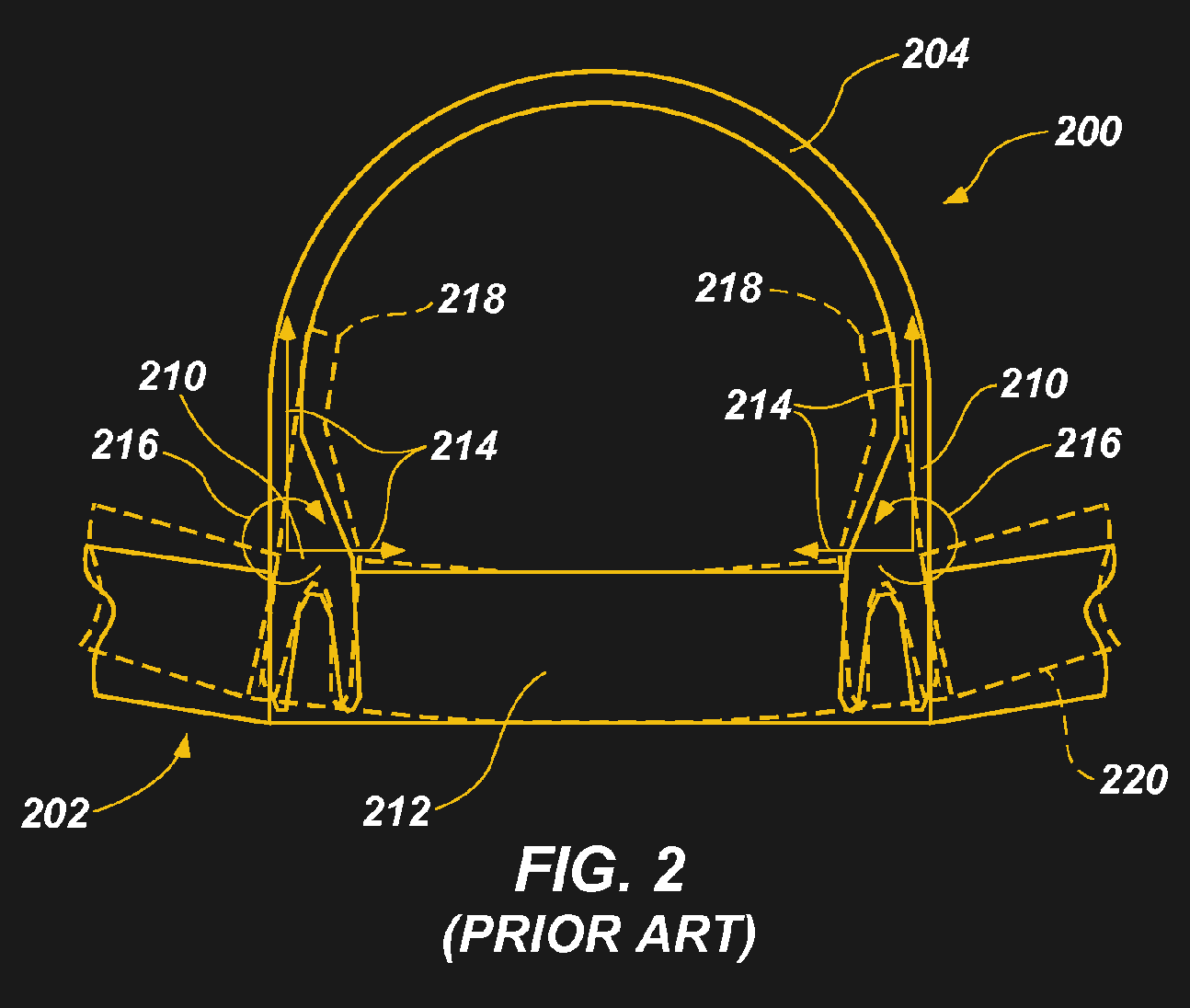
Fortunately there’s a comprehensive description of one along with a review of wing attachment technologies from Boeing themselves, and it can be found in one of their patents. US9399508B2 is concerned with an active suspension system for wing-fuselage mounts and is a fascinating read in itself, but the part we are concerned with is a description of existing wing fixtures on page 12 of the patent PDF.

A cross-section of the aircraft wing fixing, in which we've highlighted the role of the pickle forks. (Boeing)
A cross-section of the aircraft wing fixing, in which we’ve highlighted the role of the pickle forks. (Boeing)

The pickle fork is an assembly so named because of its resemblance to the kitchen utensil, which attaches firmly to each side of the fuselage and has two prongs that extend below it where they are attached to the wing spar.

For the curious engineer with no aviation experience the question is further answered by the patent’s figure 2, which provides a handy cross-section. The other wing attachment they discuss involves the use of pins, leading to the point of the patented invention. Conventional wing fixings transmit the forces from the wing to the fuselage as a rigid unit, requiring the fuselage to be substantial enough to handle those forces and presenting a problem for designers of larger aircraft. The active suspension system is designed to mitigate this, and we’d be fascinated to hear from any readers in the comments who might be able to tell us more.

We think it’s empowering that a science-minded general public can look more deeply at a component singled out in a news report by digging into the explanation in the Boeing patent. We don’t envy the Boeing engineers in their task as they work to produce a replacement, and we hope to hear of their solution as it appears.

[via Hacker News]

[Header image: AMX Boeing 737 XA-PAM by Jean-Philippe Boulet CC-BY 3.0]

A CIA In 74HCT

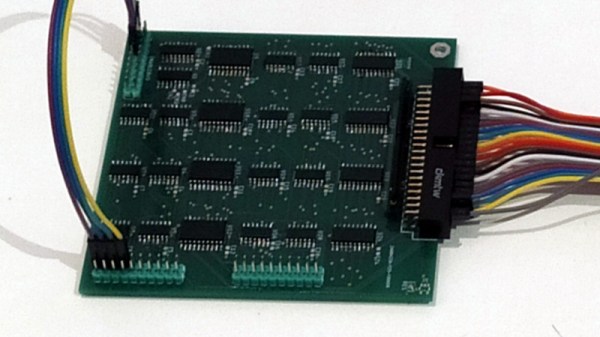
If you owned a classic Commodore home computer you might not have known it at the time, but it would have contained a versatile integrated circuit called the MOS6526. This so-called CIA chip, for Complex Interface Adaptor, contained parallel and serial ports, timers, and a time-of-day counter. Like so many similar pieces of classic silicon it’s long out of production, so [Daniel Molina] decided to replicate a modern version of it on a PCB using 74HGT CMOS logic.

The result will be a stack of boards board that appear to be about the size of a 3.5″ floppy disk covered in surface-mount 74 chips, and connected to the CIA socket of the Commodore by a ribbon cable. The base board is the only one completed so far and contains the data direction registers and parallel ports, but the succeding boards will each carry one of the chip’s other functions.

It seems rather odd to use so much silicon to recreate a single chip, but the point is not of course to provide a practical CIA replacement. Instead it’s instructive, it shows us how these interfaces work as well as just how much circuitry is crammed into the chip. It’s no surprise that it’s inspired by the C74 Project, a TTL 6502 processor that we featured last year.

Gatwick Drone Incident: Police Still Clueless

Quietly released and speedily buried by Parliamentary wrangles over Brexit is the news that Sussex Police have exhausted all lines of inquiry  into the widely publicised drone sighting reports that caused London’s Gatwick Airport to be closed for several days last December. The county’s rozzers have ruled out 96 ‘people of interest’ and combed through 129 separate reports of drone activity, but admit that they are no closer to feeling any miscreant collars. There is no mention of either their claims at the time to have found drone wreckage, their earlier admissions that sightings might have been of police drones, or even that there might have been no drone involved at all.

Regular readers will know that we have reported extensively the sorry saga of official reactions to drone incidents, because we believe that major failings in reporting and investigation will accumulate to have an adverse effect on those many people in our community who fly multi-rotors. In today’s BBC report for example there is the assertion that 109 of the drone sightings came from “‘credible witnesses’ including a pilot and airport police” which while it sounds reassuring is we believe a dangerous route to follow because it implies that the quality of evidence is less important than its source. It is crucial to understand that multi-rotors are still a technology with which the vast majority of the population are still unfamiliar, and simply because a witness is a police officer or a pilot does not make them a drone expert whose evidence is above scrutiny.

Whichever stand you take on the drone sightings at Gatwick and in other places it is clear that Sussex Police do not emerge from this smelling of roses and that their investigation has been chaotic and inept from the start. We believe that there should be a public inquiry into the whole mess, so that those embarrassing parts of it which they and other agencies are so anxious to quietly forget can be subjected to scrutiny. We do not however expect this to happen any time soon.

Keystone Kops header image: Mack Sennett Studios [Public domain].

LEDs Light The Way To This Backdoor

A curious trend for some years in the world of PC hardware has been that of attaching LEDs to all the constituent parts of a computer. The idea is that somehow a gaming rig that looks badass will somehow be just a little bit faster. As [Graham  Sutherland] discovered when he wanted to extinguish the LEDs on his new Gigabyte graphics card, these LEDs can present an unexpected security hazard.

The key to their insecurity comes in the Gigabyte driver. This is a piece of software that you would normally expect to be an abstraction layer with an interface visible to your user level privilege, and a safe decoupling between that and the considerably more security sensitive hardware layer from which the LED bus can be found. Instead of this, the Gigabyte driver is more of a wrapper that simply exposes the LED bus directly to the user level. It’s intended that user-level code can easily bit-bang WS2812 LEDs without hinderance, but its effect is to provide a gaping hole in the security layers intended to keep malicious code away from the hardware. The cherry on the cake is provided by the discovery of a PIC microcontroller on the bus which can be flashed with new code, providing an attacker with persistent storage unbeknownst to the operating system or CPU.

The entire Twitter thread is very much worth reading whether you are a PC infosec savant or a dilettante, because not only should we all know something about the mechanisms of PC backdoors we should also be aware that sometimes a component as innocuous as an LED can be a source of a security issue.

Thanks [Slurm] for the tip.

Gigabyte motherboard picture: Gani01 [Public domain].

A Crane Fit For Any Workshop

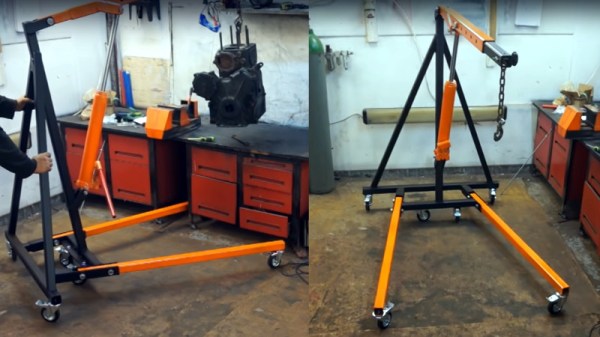
Sometimes we will encounter items in our workshops that are a little bigger than we bargained for. An engine block, an anvil, or a particularly substantial machine tool. Lifting these things may be possible, but doing so risks injury, perhaps a hernia or worse. For these moments a particularly well-appointed workshop will include a small crane, and [Workshop from scratch] has posted a video that we’ve placed below the break showing the construction of a particularly nice model.

The fabrication of a crane is not in itself a difficult task, in that most metalwork-minded readers could probably make one. What’s appealing about this video is the sense of gratification at watching metalwork being done well, and that while he does use a bandsaw and a drill press there’s not a lot in the video that couldn’t be done with more basic tools. The result is a handsome item that is probably better than many commercial offerings, though the gut feeling here is that the pivot points would have been better made with a sleeve and pin rather than a threaded bolt. The lifting effort comes from an off-the-shelf hydraulic ram.

Cranes feature here surprisingly rarely, but at least we’ve brought you a balcony crane.

Continue reading “A Crane Fit For Any Workshop”

Is A Cheap Inverter Welder Worth It?

We’ve all seen cheap welders for sale from the usual online sources, small inverter stick welders for a very tempting price. But are they any good? When my local supermarket had one in its offers aisle, I took the plunge and placed it in my cart alongside the usual week’s supply of Marmite. That was some time around the start of the year.

Does Your Supermarket Sell Welders?

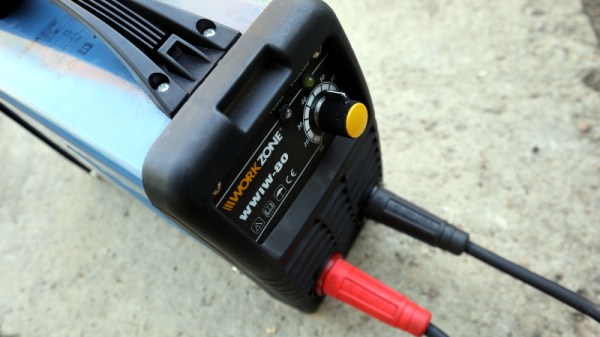
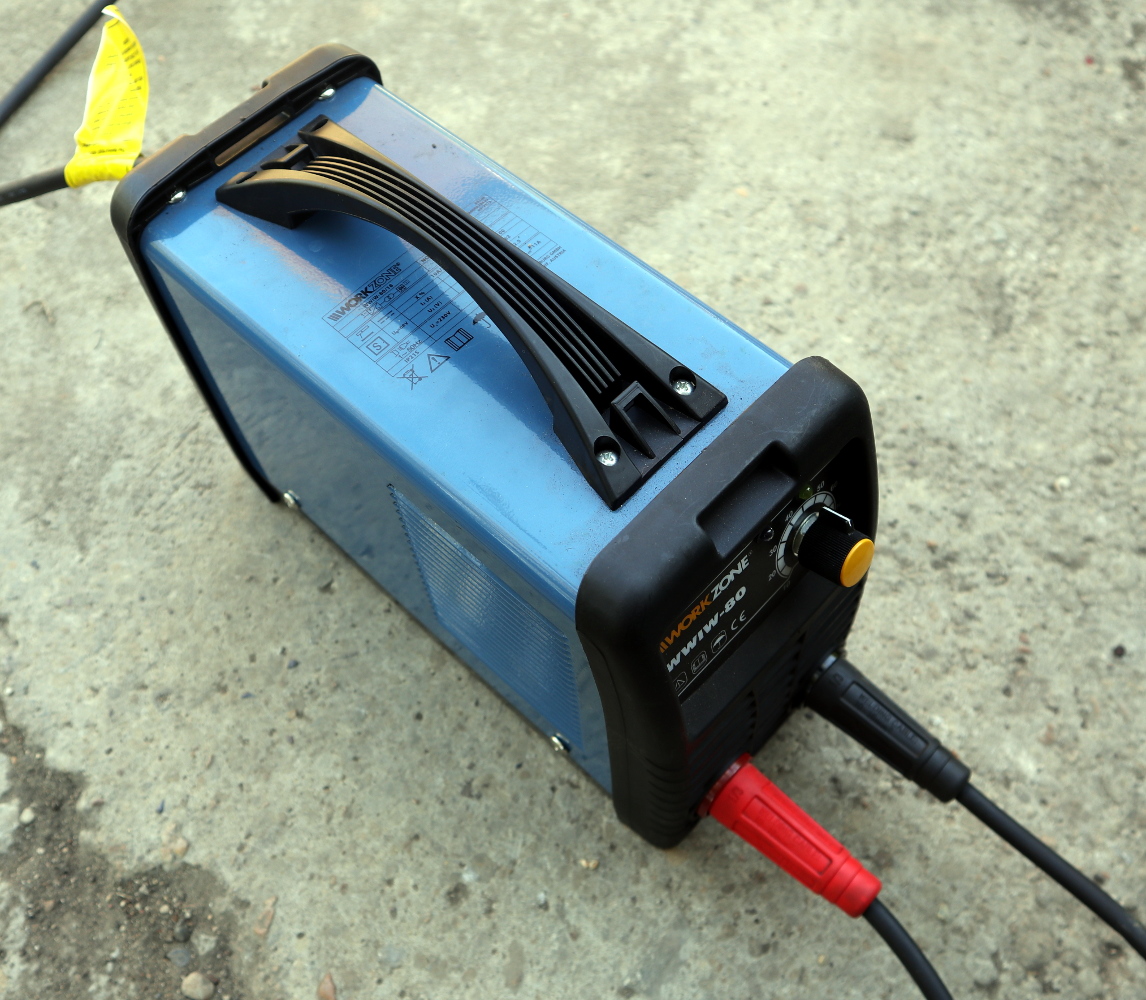
My Workzone welder from the supermarket.

What I’d bought from my local Aldi was a Workzone WWIW-80, an 80 A unit that had cost me somewhere just over £60 (about $75), and came with welding leads and a rather poor quality face shield. The German discount supermarket chains specialise in periodic offers on all kinds of interesting things, so a very similar unit has also been for sale with a Parkside brand from their competitor Lidl. These small inverter welders are fairly generic, so they can be found with a variety of brands and specifications at a lower price online if you don’t mind forgoing the generous Aldi 3 year guarantee. The cheapest I’ve seen was about £35, or $44, but that price included only the inverter, without welding leads.

As a working blacksmith my dad has had a high-quality inverter welder since the 1990s, so my frame of reference is based upon that. He tried one of the first tiny inverters when they originally came to market in the last decade, but it couldn’t take the demands of a professional welder and packed up. I thus didn’t have high expectations of this unit, but I needed one of my own and for the price it was worth the punt. I’ve used it for occasional general purpose heavy welding tasks, repairing bits of farm machinery and fittings, and rebuilding some steps on a narrowboat in 7 mm plate. It’s acquitted itself well in those tasks, in that I am not a skilled welder and my work isn’t the tidiest, but it’s allowed me to do a satisfactory job.

Continue reading “Is A Cheap Inverter Welder Worth It?”