CampZone 2019 Badge Is Begging To Become A Huge Billboard

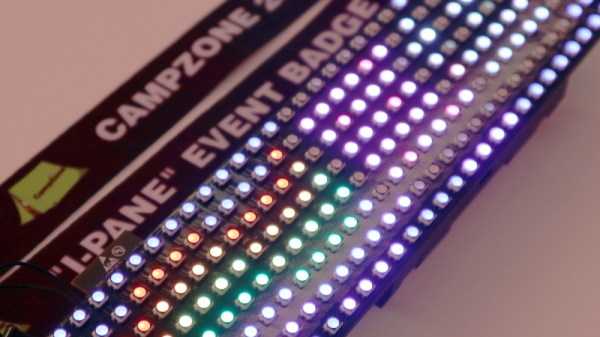
What has 256 full-colour LEDs, everyone’s favorite Lithium battery form factor, wireless connectivity, and hangs around your neck? It’s the CampZone 2019 badge that turns all attendees into a really fun billboard — but can the attendees hack themselves into one massive display?

One of Europe’s larger events for the gaming community,  CampZone is hosted in Netherlands and runs from July 26th to August 5th. It’s a typical large summer camp, and caters for those who intersect gaming and hacking with HackZone, a decent sized hacker camp within a camp. I’ve been fortunate enough to get my hands on a CampZone 2019 badge, dubbed the I-Pane, let’s take a look at what they managed to pack into this electronic conference badge.

Continue reading “CampZone 2019 Badge Is Begging To Become A Huge Billboard”

Forget The Walkman: It’s The Headphones

Forty years ago this month, a product was launched  in Japan that would have such a huge impact on the consumer electronics market that we are still using its descendants today. The story goes that one of the Sony founders would listen to music while traveling for the business, and found the company’s existing products cumbersome and awkward so asked his engineers to design something more convenient.

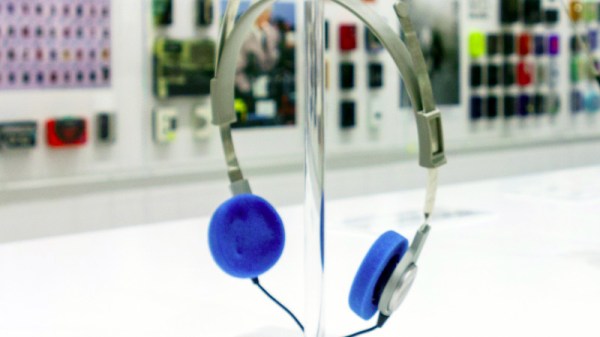
The resulting prototype became the Sony MDL-3L2, a set of miniaturised hi-fi headphones with distinctive foam earpads and a sliding metal headband that in total weighed an astoundingly svelte 45 g. It was paired with a cassette player called a “Walkman” derived from the company’s existing recorder that had been intended for journalists, and went on to sell in the millions. The market for headphones would never be the same again, and if you have a set of lightweight cans in your possession then this was their revolutionary progenitor.

But Hang On, What’s So Special About Headphones?

You probably won’t have heard the Walkman’s 40th anniversary described in those terms in the various reports covering the event, because of course the social impact of the portable music player rather than its headphones is what people remember. The joy of making a mix tape, of listening to The Human League on the bus, and of the adult disapproval of anything involving Kids Having Fun. Previously, music had been a static affair involving bulky record players, but now it could be taken anywhere. The other youth audio icon of that era, the boombox, simply couldn’t match the Walkman, and everybody wanted one.
Continue reading “Forget The Walkman: It’s The Headphones”

Making Instant Ramen A Bit More Instant

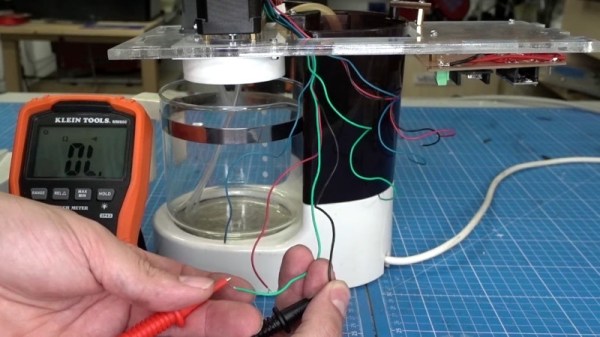
Instant ramen, the favoured repast of the impecunious would-be tech genius! It’s cheap, of dubious nutritional value, and it only takes a minute to cook. But what if you are in the creative Zone to the extent that five minutes to boil water is too much? For that you need an automatic ramen cooker, which is what [Mayermakes] has created from an upcycled electric filter coffee maker.

A filter coffee maker is a surprisingly effective instant ramen cooker without modification, in that it already contains a hotplate and water boiler to dribble hot water on some noodles. But it lacks any means of adding the seasoning or the essential hot sauce, so he created a 3D-printed rotating hopper driven by a stepper motor, and a servo driven syringe, while coffee maker itself is given a solid state relay to switch it on.

Controlling the show is an Arduino MKR board, which serves up a web interface with the option of ramen as it comes, or ramen with hot sauce. The result is an automated pot of $0.49 noodles that will set no gourmet’s heart a-flutter. Then again, fine dining is not why instant ramen exists.

This appears to be our first ramen-cooking coffee pot, but we have seen a guitar made from noodles!

Continue reading “Making Instant Ramen A Bit More Instant”

A New Motherboard For Amiga, The Platform That Refuses To Die

If you go out and buy a computer right now, how many choices do you really have? Generally speaking, there’s PC or Mac. If we were being generous you could consider Chromebook and perhaps even mobile, but let’s be honest, computing is a two-party system with the ability to dump the OS and run Linux as the obvious third-party disruptor. It wasn’t always like this.

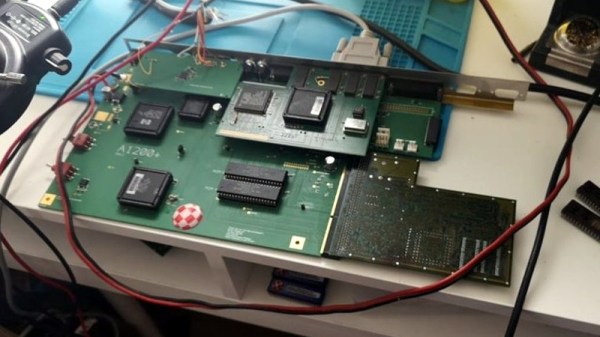
In the early years of personal computing there were a slew of serious contenders. A PC, a Mac, an Atari ST, an Amiga, and several more that all demanded serious consideration on the general purpose desktop computer market. Of all these platforms, the Amiga somehow stubbornly refuses to die. The Amiga 1200+ from [Jeroen Vandezande] is the latest in a long procession of post-Commodore Amigas, and as its name suggests it provides an upgrade for the popular early-1990s all-in-one Amiga model.

It takes the form of a well-executed open-source PCB that’s a drop-in replacement for the original A1200 motherboard. CPU, RAM, and video are broken out onto daughterboards, with PCMCIA replaced by an SD card slot. The catch: it does require all the custom Amiga chips from a donor board.

The original Amiga 1200 was a significant upgrade to the architecture of the 1980s originals, and this certainly provides a much-needed enhancement to its underwhelming 68EC020 processor. It’s fair to say that this is the Amiga upgrade we’d all have loved to see in about 1996 rather than waiting until 2019. It’s still a delight for a retrogaming enthusiast; many of those who keep it alive remember the Amiga was the best multimedia platform that could be had for a few glorious years.

We’ve brought you a host of Amiga projects over the years, including the resurrection of an A500 and of course another A1200 PCB.

Thanks to [Eric Hill] for the tip.

The Case Of The Vintage Computer, The Blown Fuse, And The Diode

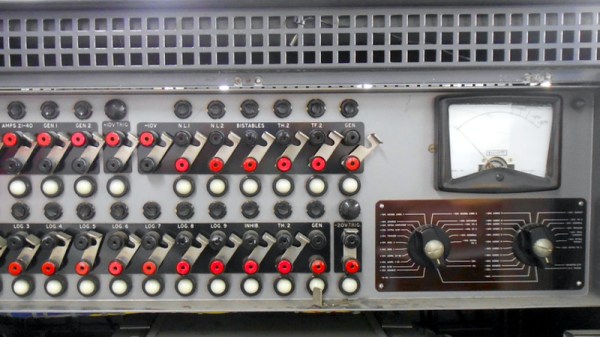
If you are the operator of a vintage computer, probably the only one of its type remaining in service, probably the worst thing you can hear is a loud pop followed by your machine abruptly powering down. That’s what happened to the Elliott 803B in the UK’s National Museum Of Computing, and its maintainer [Peter Onion] has written an account of his getting it back online.

The Elliott is a large machine from the early 1960s, and because mains supplies in those days could be unreliable it has a rudimentary UPS to keep it going during a brownout. A hefty Ni-Cd battery is permanently hooked up to a charger that also serves as the power supply for the machine, ensuring that it can continue to operate for a short while as the voltage drops. A spate of fuses had blown in this power supply, so we’re taken through the process of fault-finding. Eventually the failure is found in a rectifier diode, the closest modern equivalent is substituted, and after testing the machine comes back to life.

We’re used to reading these stories from the other side of the Atlantic, so we welcome TNMOC saying that this is the first of a series of technical posts on their work. We visited the museum back in 2016, and also featured its famous recreated Colossus.

A Microwave Kiln, From Scratch

We are normally told that microwave ovens are strictly for food only, and that anything else will cause all sorts of bad things to come our way. There can be few readers who haven’t at some time seen the shower of sparks when an inadvertent metallic object finds its way onto the turntable.

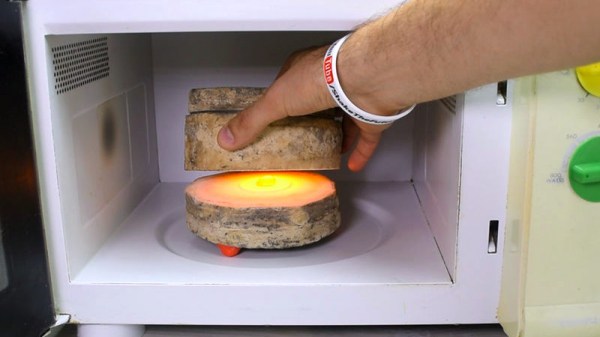
A particularly useful non-food application for a microwave oven comes in the form of the small kilns sold for glass fusing. These are ceramic cylinders coated internally with silicon carbide, and [ShakeTheFuture] shows us how to make your own.

Key to the process is ceramic fibre insulation, which is bonded both to itself and to the fused silicon carbide grit by a cured solution of waterglass, sodium silicate. The result can easily reach the required temperature for fusing glass, but also has an application in burning out surplus wax or PLA from a plaster mould. It’s particularly interesting to see the technique with the waterglass in action, and you can see a run-down of the whole thing in the video below the break.

Continue reading “A Microwave Kiln, From Scratch”

Blacksmithing For The Uninitiated: Curves And Rings

You know the funny looking side of the anvil? That’s where the best curves come from. It’s called the anvil horn and is the blacksmith’s friend when bending steel and shaping it into curves.

The principle of bending a piece of steel stock is very easy to understand. Heat it up to temperature, and hammer it over a curved profile to the intended shape. A gentler touch is required than when you are shaping metal. That’s because the intent is to bend the metal rather than deform. Let’s take a look!

Continue reading “Blacksmithing For The Uninitiated: Curves And Rings”