DietPi Releases 8.12 With Support For The Rockchip RK3588 SoC

This month DietPi released version 8.12 of this SBC-oriented Linux distribution. Most notable is the addition of support for the NanoPi R6S and the Radxa ROCK 5B SBCs. The ROCK 5B features the new flagship Rockchip RK3588 SoC with quad Cortex-A76 and quad Cortex-A55. What makes DietPi interesting as an operating system for not just higher end SBCs but also lower-end SBCs compared to options like Debian, Raspberry Pi OS and Armbian is that it has a strong focus on being the most optimized. This translates in a smaller binary size, lower RAM usage and more optimized performance.

The DietPi setup experience is as straightforward as with the aforementioned options, except that right from the bat you get provided with many more options to tweak. While the out of the box experience and hitting okay on the provided defaults is likely to be already more than satisfactory for most users – with something like the optional graphical interface easy to add – enterprising users can tweak details about the hardware, the filesystem and more.

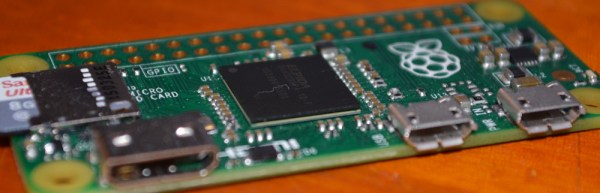
When we set up DietPi on a Raspberry Pi Zero, it definitely feels like a much more light-weight experience than the current Debian Bullseye-based Raspberry Pi OS. Even though DietPi is also based on Debian, it leaves a lot more RAM and storage space free, which is a definite boon when running on a limited platform like a Raspberry Pi Zero. Whether it’s polite to state in public or not, DietPi definitely rubs in that many standard SBC images are rather pudgy these days.
Connecting Commercial 433 MHz Sensors To MQTT And Home Assistant With RTL-SDR

When [Elixir of Progress] was looking at setting up environmental sensors around their home to keep track of temperature, humidity and such, the obvious ideas of using WiFi-connected sensors didn’t work due to lack of WiFi range. Although Zigbee (Z-wave) sensors have longer range than WiFi, they are decidedly more expensive, proprietary and require a special transceiver hub. That’s where 433 MHz sensors for weather stations come into the picture.

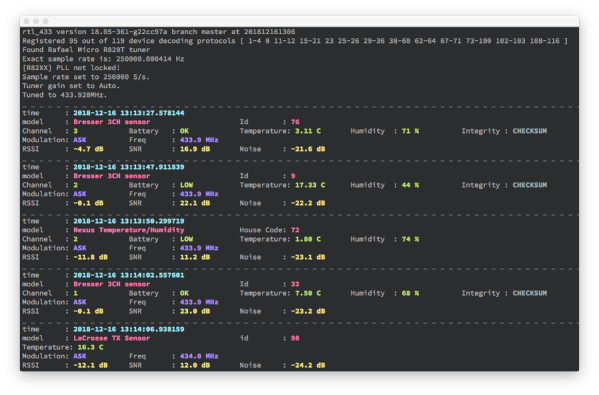
The idea is simple: virtually all of those sensors – many of them rated for outdoor use – use the unlicensed 433 MHz spectrum that can easily be captured using cheap RTL-SDR (software defined radio) USB dongles. With the data stream from these sensors captured, the open source rtl_433 project enables automatic decoding of these data streams for a wide range of supported sensors.

While Realtek RTL2832-based and other RTL-SDRs can be found for quite cheap, it should be noted that these can run quite hot. Rather than heatsinking the IC, for this project it was elected to only listen sporadically and allow the RTL-SDR receiver to cool down in between listening sessions.

Getting the data from there into Home Assistant, InfluxDB or similar is easy, as rtl_433 can output the decoded data directly to an Influx database, MQTT broker as well as other formats. In this case, the data was sent via MQTT with the Home Assistant instance configured to treat these MQTT topics as sensors. With each sensor’s location carefully registered, this allows for setting up a dense, very low-power network of 433 MHz sensors for monitoring and home automation purposes.

Turning A Microchip MPLAB Snap Into A UDPI AVR Programmer

The Unified Program and Debug Interface (UPDI) is Microchip’s proprietary interface for programming and on-chip debugging, and has become the standard on AVR MCUs after Microchip’s purchase of Atmel. Being a proprietary interface means that even entry-level programmers like the Atmel-ICE are rather expensive at over $100. That’s when for [Scott W Harden] the question arose of whether the much cheaper MPLAB Snap board (~$34) could be used as well for AVR UDPI purposes.

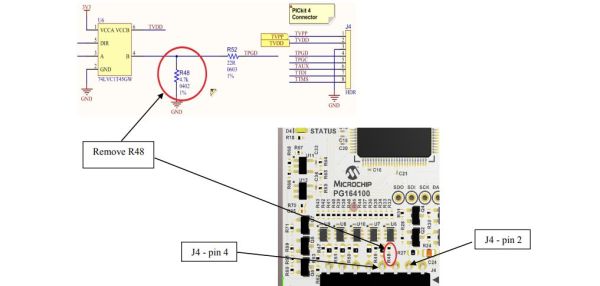
The stages of grief that [Scott] went through before he had it working involved among others the updating of the MPLAB Snap board firmware, getting yelled at by the Microchip Studio IDE when attempting to use the Snap for AVR MCU programming, and ultimately fixing the board following the relevant Microchip Engineering Technical Note (ETN #36) that specifies the removal of a 4.7 kΩ pull-down resistor (R48) on the Snap board. This allows the UDPI line to be pulled high by the MCU.

As the ETN notes, an external pull-up may also be used to override the pull-down, which would leave the ICSP functionality of of the Snap intact. As [Scott] mentions in his conclusion, it feels as if UDPI AVR support with the Snap is really an afterthought for Microchip. Meanwhile there are also more DIY solutions as [Scott] adds, which are useful for just flashing the MCU. An example is with a USB-TTL serial adapter and pymcuprog.

The problem with DIY solutions like jtag2updi, ftdi2updi, and their kin is the effort required to assemble them, and the uncertainty of long-term support as the UPDI ecosystem keeps evolving with new devices and new features. The MPLAB Snap with resistor mod may be just that middle ground between an Atmel-ICE and reverse-engineered OSS projects.

(Featured image: MPLAB Snap resistor mod illustrated, from Microchip ETN #36)

Laser Fusion Ignition: Putting Nuclear Fusion Breakthroughs Into Perspective

This month the media was abuzz with the announcement that the US National Ignition Facility (NIF) had accomplished a significant breakthrough in the quest to achieve commercial nuclear fusion. Specifically, the announcement was that a net fusion energy gain (Q) had been measured of about 1.5: for an input of 2.05 MJ, 3.15 MJ was produced.

What was remarkable about this event compared to last year’s 1.3 MJ production is that it demonstrates an optimized firing routine for the NIF’s lasers, and that changes to how the Hohlraum – containing the deuterium-tritium (D-T) fuel – is targeted result in more effective compression. Within this Hohlraum, X-rays are produced that serve to compress the fuel. With enough pressure, the Coulomb barrier that generally keeps nuclei from getting near each other can be overcome, and that’s fusion.

Based on the preliminary results, it would appear that a few percent of the D-T fuel did undergo fusion. So then the next question: does this really mean that we’re any closer to having commercial fusion reactors churning out plentiful of power?

Continue reading “Laser Fusion Ignition: Putting Nuclear Fusion Breakthroughs Into Perspective”

Getting Root On A Chinese IP Camera

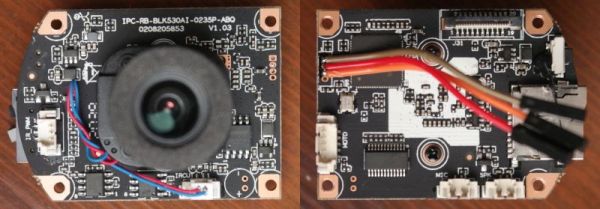
With so many cheap network-connected devices out there being Linux-powered, it’s very tempting to try and hack into them, usually via a serial interface. This was the goal of [Andrzej Szombierski] when he purchased a cheap Chinese IP camera using an XM530 ARM-based SoC to explore and ultimately get root access on. This camera’s firmware provides the usual web interface on its network side, but it also has a UART on its PCB, courtesy of the unpopulated four-pin header.

Merely firing up a serial terminal application and connecting to this UART is not enough to get access, of course. The first obstacle that [Andrzej] struggled with was that U-Boot was configured to not output Linux kernel boot messages. After tackling that issue with some creative hacking, the next challenge was to figure out the root password, using a dump of the firmware image, which led to even more exploration of the firmware and the encoding used for the root password.

Even if some part of these challenges were possibly more accidental than on purpose by the manufacturer, it shows how these SoC-based Linux devices can put up quite a fight. This then leaves the next question, of what to do with such an IP camera after you have gained root access?

Asbestos: The Miracle Mineral Of Our Worst Nightmares

For much of the 19th and 20th century, the mining and use of asbestos saw near-constant growth, with virtually every material used in the construction of homes, offices, ships, road networks and industries featuring this miraculous mineral in some fashion. Some of these materials would contain only a few percent asbestos mineral as a binder, while others would be mostly or entirely composed out of asbestos.

What had begun as mostly a curiosity thousands of years prior was now turning into the material that was helping propel humanity into an era of hitherto unknown levels of prosperity and technological progress. It seemed as if the addition of even just a bit of asbestos would make houses weather- and fireproof, make concrete and asphalt nearly indestructible and add just that little bit of zing to tiling and interior decorations, as well as rigidity to the predecessor to today’s plastics: bakelite. Continue reading “Asbestos: The Miracle Mineral Of Our Worst Nightmares”

Hackerboards: Making Finding The Right Single-Board Computer Easy

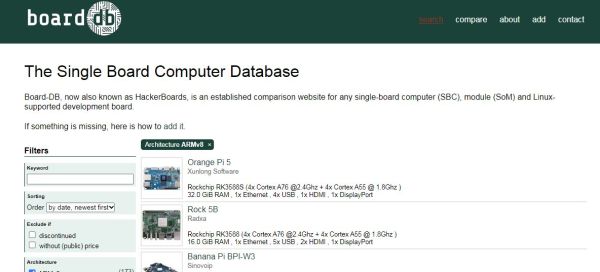
The great thing about the wide availability of single-board computers (SBCs) is that it offers such a large selection of options, in terms of CPU performance, GPU features, RAM size, I/O options and much more. This is however also the largest issue, especially with the annual surge of new boards with new feature sets. Trying to make sense of all these offerings is the recently overhauled Board-DB, also known as Hackerboards.

As [Martijn Braam] explains in the blog post on the changes, a major upgrade over the old Hackerboards (which we covered in 2016) is a far more extensive set of parameters that can be filtered against. This makes a fine-grained selection of detailed features significantly easier, which is also reflected in the technical specifications comparison feature. With over 450 active entries there are a lot of boards that can already be filtered on, but manufacturers are invited to take up contact to add further entries, which should keep the list up to date.

Incidentally, if you’d like to know how [Martijn] gets those gorgeous PCB photographs, he wrote a whole a separate write-up that goes over his camera setup.

Thanks to [Vlad] for the tip.