Custom Driver Board For Paintball Gun

custom-driver-circuit-for-paintball

[Gabe’s] been wanting to do some embedded development for years, and his other hobby of playing paintball recently provided him with a test project. He’s been working on a custom driver board for his paintball gun.  Don’t be confused by the name, GCode is a mash-up of his name and the fact that he wrote the code for the project. It has nothing to do with the G Code CNC language.

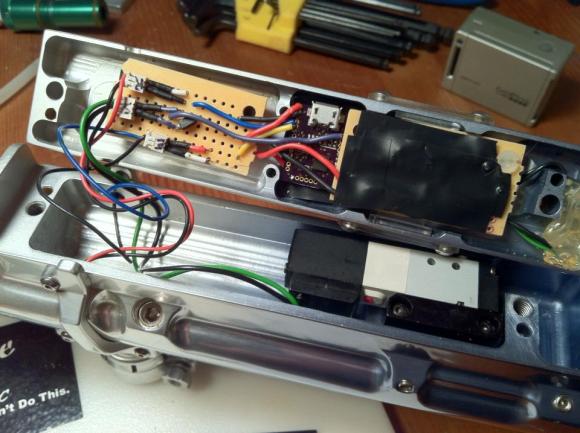
At first this might seem like a trivial hack, but this Viking paintball gun has some serious velocity and throughput so he needs a reliable control that won’t just start shooting randomly. Another thing that [Gabe] took into consideration was monitoring the loading process to make sure the paintball is full seated before firing. All of this is handled by that tiny little Femtoduino board. it interfaces with the guns hardware using the connector board mounted above it.

There are several videos sprinkled throughout the build log. But we found the officially sanctioned 12.5 balls per second mode and the ridiculously fast auto-fire clips the most interesting. It should come in handy when on the run from paintball shotgun wielding opponents.


Continue reading “Custom Driver Board For Paintball Gun”

Raspberry Pi Tor Proxy Lets You Take Anonymity With You

pi-tor-proxy

Your web traffic is being logged at many different levels. There are a few different options to re-implement your privacy (living off the grid excluded), and the Tor network has long been one of the best options. But what about when you’re away from you home setup? Adafruit has your back. They’ve posted a guide which will turn a Raspberry Pi into a portable Tor proxy.

The technique requires an Ethernet connection, but these are usually pretty easy to come by in hotels or relatives’ homes. A bit of work configuring the Linux network components will turn the RPi into a WiFi access point. Connect to it with your laptop or smartphone and you can browse like normal. The RPi will anonymize the IP address for all web traffic.

Leveraging the Tor network for privacy isn’t a new subject for us. We’ve looked at tor acks that go all the way back to the beginnings of Hackaday. The subject comes and goes but the hardware for it just keeps getting better!

HackIt: Sony Invites You To Hack Its SmartWatch Firmware

sony-smartwatch-hacking

This is Sony’s smart watch, which has been around for a while now. It’s designed for use with your Android phone, and has always included an SDK that allows app developers to interact with it. But now Sony is taking it one big step further. They’ve published everything you need to know to hack your own firmware for the SmartWatch.

The navigation scheme for that articles includes five menu items at the bottom which you’ll want to dig through. The most interesting to us was the one labeled “SmartWatch hacker guide”. It lays bare the hardware used in the watch and how it’s peripheral component connect to each other. This starts with the STM32 (ARM) microcontroller that drives the watch. It goes on to document how the screen is addressed (SPI1) including the pin to turn it on and off. The same goes for the Bluetooth, accelerometer, buzzer, and touch sensors.

Firmware is updated via USB using Device Firmware Upgrade (DFU) mode. We don’t don’t see any way to connect an on-chip debugger. We searched to see if there is a JTAG port on the circuit board and it sounds like getting the watch apart without breaking it is pretty tough.

Now that you don’t need to stick to what Sony had planned for the device, what do you want to do with your strapless wristwatch?

[Thanks Brian]

Machining Beer Can Solder Stencils

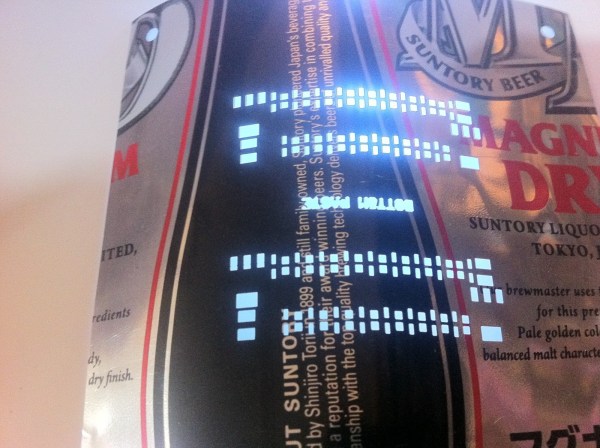
This is a solder paste stencil machined from a beer can. [Simon Ludborzs] spent quite a bit of time dialing in his process to get to this point. Note the nice crisp edges of the openings. That’s a big change from his first attempt.

When looking for a way to make his own stencils he considered two options: plastic and aluminum. He produced both (more about the plastic stencil and his reflow process is discussed in this post). Plastic is a bit easier to work with since it lays flat. But it proves to be too thick. After applying paste with a squeegee there’s way too much solder on the pads. Aluminum beverage can walls are much thinner, depositing less paste.

We’ve seen soda cans used in the past, but they were produced through an etching process. [Simon] cut these holes using a CNC mill. This required a bit of futzing to figure out the right settings. For instance, he used Altium to produce CAM files from his circuit design. But the program is set up to mill the outside of traces, resulting in openings that are too large. He fixed this by setting the pasted expansion rule in the program to a negative value. The other advantage to using a mill is that he can cut precision tooling holes to ensure proper alignment. You can see them in the upper corners of this image.

Guitarduino Show And Tell

guitarduino-show-and-tell

[Igor Stolarsky] plays in a band called 3’s & Sevens. We’d say he is the Guitarist but since he’s playing this hacked axe we probably should call him the band’s Guitarduinist. Scroll down and listen to the quick demo clip of what he can do with the hardware add-ons, then check out his video explanation of the hardware.

There are several added inputs attached to the guitar itself. The most obvious is the set of colored buttons which are a shield riding on the Arduino board itself. This attaches to his computer via a USB cable where it is controlling his MaxMSP patches. They’re out of the way and act as something of a sample looper which he can then play along with. But look at the guitar body under his strumming hand and you’ll also see a few grey patches. These, along with one long strip on the back of the neck, are pressure sensors which he actuates while playing. The result is a level of seamless integration we don’t remember seeing before. Now he just needs to move the prototype to a wireless system and he’ll be set.

If you don’t have the skills to shred like [Igor] perhaps an automatic chording device will give you a leg up.

Continue reading “Guitarduino Show And Tell”

Wet Spill Vacuum Cleaner Attachment

wet-spill-vacuum-attachment

You’ve got to hand it to [Lou], not only does he know how to build simple items, he also knows how to sell their worth. Here’s a wet spill vacuum cleaner attachment which you can build on the cheap. A picture of the final product fails to have the same impact as his video showing its use in cleaning up a simulated cat disgorging from the carpet.

From the picture we’re sure you’ve already figured out how it work. The air and damp matter come in one side and are dropped into the jar as the air is sucked out the other. [Lou] suggests raiding your recycling bin for the jar. The intake and outflow are both pieces from a PVC P-trap intended for a sink drain. They have a threaded flange which keeps the part from pulling all the way through the 1.5″ holes drilled in the lid.

This is going to work best with a high-flow shop vacuum. So while you’ve got the tools out, why not build a dust separator as well?

Continue reading “Wet Spill Vacuum Cleaner Attachment”

Beck’s Beer Bottle Sound Recording

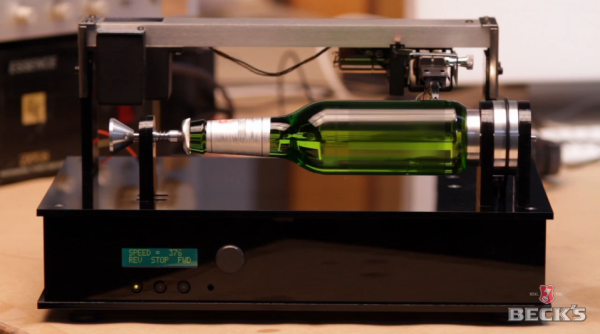
This beer bottle includes recorded audio etched into the glass. But you certainly won’t find half an album included with your next sixer. This is a one of a kind item that took a team of engineers to craft.

The idea comes from Phonographic Cylinders invented by [Thomas Edison]. Analog audio was etched into cylinders made of wax which could then be played by a needle and amplifying horn. The beer bottle is a similar size of cylinder, but etching the audio signal into glass is a horse of a different color. The video below includes a recounting of the development process from the guys who pulled it off. It includes using hard drive parts and special processing filters that remove harmonics introduced by the milling rig.

We’re sure you’ve figured it out by now; this is an advertisement. We say good! This is the kind of advertising we want. It’s topical, well targeted, and worth paying attention to. We felt the same way about the recent Oreo campaign and that Skittles hack. We hope that ad execs will take note of this.

By the way, it is possible to do this stuff at home. Check out the guy who made an Edison Cylinder wedding ring.

Continue reading “Beck’s Beer Bottle Sound Recording”