Iron Man Faux Stained Glass Saves $4k

ironman-faux-stained-glass

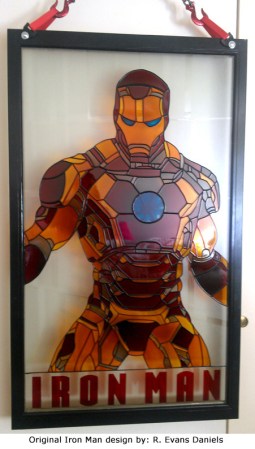
Check out how the light hits this piece of artwork. It’s a very convincing piece of stained glass… except it’s fake. [Sdtacoma] figured out a way to mimic stained glass using a single pane. The inspiration for the project came after seeing a real stained glass panel featuring Iron Man which was available on Etsy for $4500.

Due to popular demand [Sdtacoma] posted an album of the technique he used. Starting with some art found online he made it black and white, blew it up to size (this thing’s about five feet tall) and used posterizer to print it out using multiple sheets of paper.

The frame and pane were found at a recycled building goods store. After cleaning it up he used the paper template to lay out the dividing lines between different colored sections using Liquid Lead. The product had dimension to it (kind of like puffy paint for fabrics) which looks like the lead tracks between panes of stained glass. Once dry the color was added using an eye dropper to apply glass paint.
Build A Bioprinter From Very Old Inkjet Cartridges

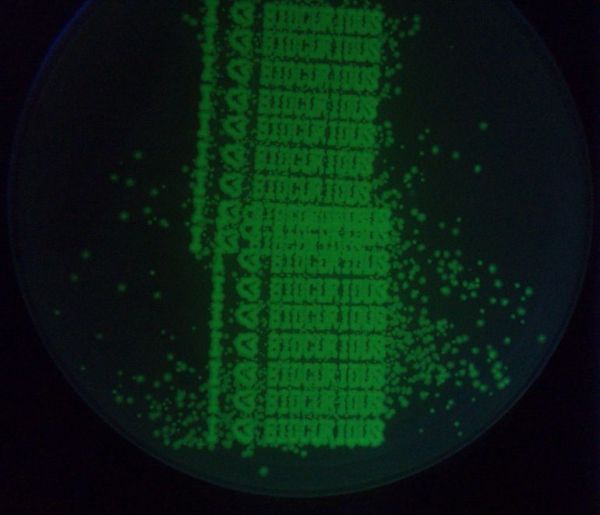
This column of messages was printed with Escherichia coli. That’s the bacteria better known as E. coli which can cause so many problems if it makes its way into our food. But the relative size and the fact that this strain was engineered to glow in the dark makes it a perfect candidate for Bio Printing. We find it even more interesting that it was printed using hacked inkjet and computer parts.

There are legitimate uses for this type of technology. But this project is aimed more at getting the word out about the method and how easy it can be. For us, it’s the close look at modern inkjet print heads that was the most interesting. It turns out that common cartridges have an overly high-resolution for this to work well. In order to get so many dots in such a small area the nozzle openings end up being too small for most biological material to fit through. There is also an issue with a filter built into the silicone technology inside.

The solution was to use the InkShield to drive cartridges from very old printers. This lets the team command the cartridge with an Arduino, making it dead simple to tweak the way the material is deposited. They mounted the cartridge holder (using decades-old technology in the form of HP Deskjet 500 cartridges) on the sled of an optical drive and went from there.

Take a glance at the printer in action in the clip after the break.

Continue reading “Build A Bioprinter From Very Old Inkjet Cartridges”

Sunrise Alarm Clock Mounted Above The Bed

sunrise-alarm-from-led-strips

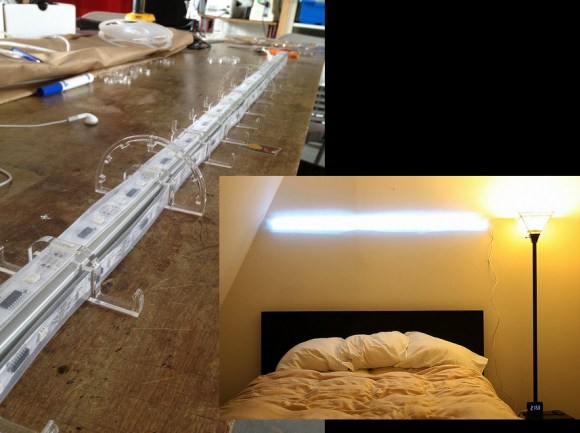
This sunrise alarm clock was made in a bit different form factor than we normally see. Instead of a box next to the bed it’s a bar above the headboard which slowly illuminates every morning. This was [Holly’s] first electronics project. She spent pretty much all summer working on it and accumulated a skill set that included designing for and operating the laser cutter and assembling and programming the electronics.

She didn’t start from square one. The hardware and programming were greatly simplified by the availability of RGB LED strips and the Monochron clock which drives them. [Holly] altered the code to bring up a blueish hue over a 35-minute time period. Since this will be used to wake her at 5:30am she was also obliged to include some backup sounds just in case. But after the project was finished and mounted she forgot to turn them on and was pleasantly surprised that the lights woke her up on time. The mounting bracket seen above uses t-slot rail with laser cut brackets to hold the half-cylinder shade for the sconce. The final product looks fantastic!


Hackaday Links: January 24th, 2013

Raspberry Pi’s answer to the iMac

links-rpi-imac

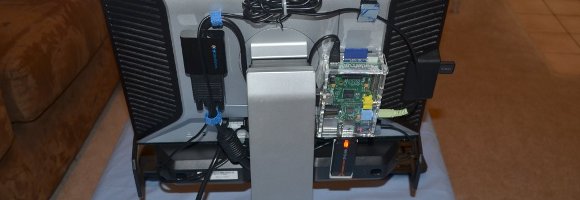
If you always wanted a sweet looking all-in-one computer like an iMac, but without OSX this one’s for you. [Michael Davis] glued everything you need for a Raspberry Pi computer to the back of an LCD monitor.

Dancing Japanese robot shows high creepiness factor

links-dancing-robot

You’ve just got to see this one to believe it. Someone choreographed some seriously lifelike dance moves for this robot. [Thanks – via Dr. GIY’s blog]

Helper script to install MSPGCC

links-mspgcc-install-script

The repositories available to Ubuntu are nice, but if you want to get the newest version of the GCC toolchain for MSP430 microcontrollers you’re going to need to do the compilation yourself. [Jose] is trying to make the process a bit easier with this helper script which download and installs MSPGCC Uniarch.

Easy reset for WRT-54G routers

links-ddwrt-reset-button

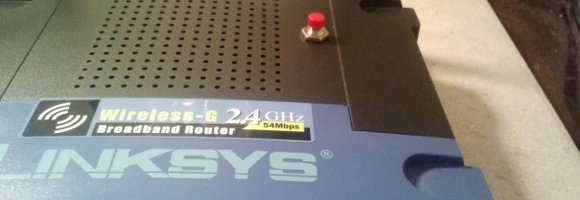
The whole point of the router reset button being hard to press is so you don’t hit it by accident. But the difficulty of getting to it drove [Noah] crazy so he added his own easy to reach replacement.

Camera stabilization tips

links-camera-stabilizers

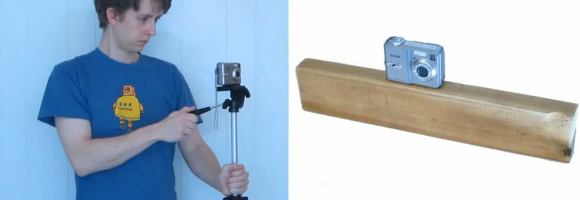
This is a public service to amateur videographers. You don’t need expensive equipment to make a video without nausea inducing shakes. Try out these simple camera stabilization tips. You can use a tripod as a counterweight, or a piece of 2×4 to give the point-and-shoot a dual grip.

Wooden Cargo Bicycle

nearlycomplete

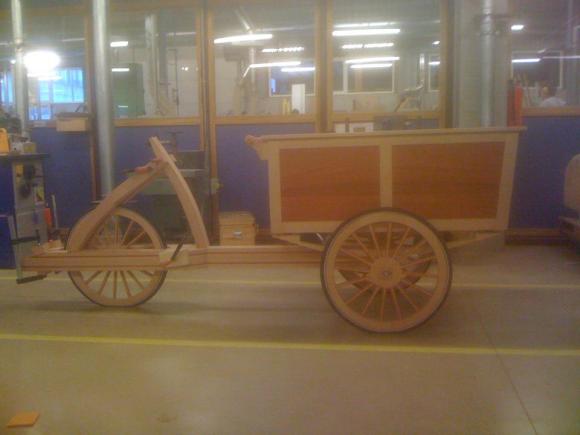
This is a cargo bicycle made almost completely out of wood. [Niels] and three of his classmates built it at Wico Campus Tio, a science and technology school in Dorpsstraat, Belgium. There’s a lot to be impressed by in this build. Sure, the guys concede that not everything is wood. They used metal screws as well as hubs, a crank shaft, and gears from a bicycle (not seen in this image). But everything else was made from Beech or Padouk wood. This includes the leaf springs that help cushion the cargo box from the bumps in the road.

The box itself acts as the handlebars. You can see the bracket which holds one end of a dowel spanning the left side of the box. This image was taken before the seat and cranks were added, but once they’re in place the front axle will turn along with the box for steering.

You can get a good look at the finished bike in the video after the break. You’ll also find a link to the Power Point slides there. Since that presentation is in Dutch we translated the text and pasted it below.

Continue reading “Wooden Cargo Bicycle”

Brake Drum And Plumbing Parts Get You Started With Blacksmithing

brake-drum-forge

If you’ve ever wanted to do some serious metal working you’re going to need a method of heating the stock. Here’s a build that combines a brake drum and some plumbing fittings into an entry-level forge. It’s a pretty cheap start to see if Blacksmithing is for you.

[Asuka] says that the parts cost him around $40. The brake drum was sourced from a local salvage yard for ten bucks. To that he added a shower floor drain plate to keep the fuel from falling into the air inlet. We have doubts about how long that thin metal screen will last once the coal really gets going, but heat rises to who knows? On the bottom of the drum he mounted a pipe flange with some nuts and bolts. Galvanized pipe fittings connect to this to inject air into the forge. Right now he’s using a compressor and some garden hose to fan the flames, but plans to get a fan from the auto salvage for a more permanent setup.

A note for beginners. Blacksmith work can be dangerous. We’d like to point you to this discussion thread about injuries.

Stocker Monitors The Markets

stocker-monitors-the-market

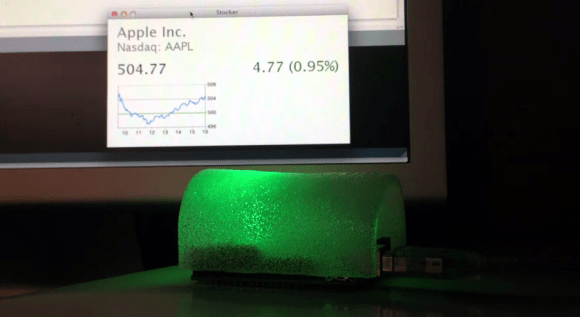
If you can’t help but spend the day checking in on your stock prices this ambient device can help you cope. It monitors how the trading is going and illuminates an LED as feedback. Here the Apple stock is trading up so the light is green. The video after the break shows other stocks trading down, causing it to switch to red.

An Arduino interfaces with the custom application via USB. For now it looks like the two colors are all it’s capable of but we think there’s a lot more potential. Some creative coding could use factors like how much the stock has moved, trading volume, volatility, or a plethora of other data to give feedback. We could see a spectrum of colors (like on a temperature map) used to improve the level of feedback. And if the market really tanks there’s always the ability to add flashing!

The diffuser for the project is quite interesting to us. [Ali Reza Kohani] made it from a leftover scrap of acrylic. The bubbled surface was created with a heat gun before bending the sheet into an arc.

Continue reading “Stocker Monitors The Markets”