Live CD For RFID Hacking On The Go

live_rfid_sniffing_distro

[Milosch] wrote in to tell us that he has recently released a bootable RFID live hacking system – something he has been diligently working on for quite some time. The live distro can be used for breaking and analyzing MIFARE RFID cards, as well as a reasonable selection of other well-known card formats. The release is based off the Fedora 15 live desktop system, and includes a long list of RFID hacking tools, as well as some applications that allow for NFC tag emulation.

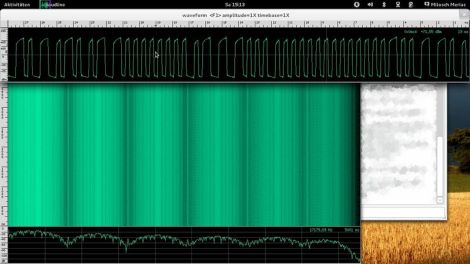
His toolkit also contains a baudline-based LF RFID sniffer package, allowing for a real-time waveform display of low frequency RFID tags. The LF sniffer makes use of a cheap USB sound card, as well as a relatively simple reader constructed from a handful of easy to find components.

We have seen some of [Milosch’s] handiwork before, so we are fairly confident that his toolkit contains just about everything you need to start sniffing and hacking RFID tags. If you’re interested in grabbing a copy of the ISO, just be aware that the live CD is only compatible with 64-bit systems, so older laptops need not apply.

Amazing Hemispherical Omnidirectional Gimbaled Wheel Robot

hemispherical_omnidirectional_gimbaled_wheel_robot

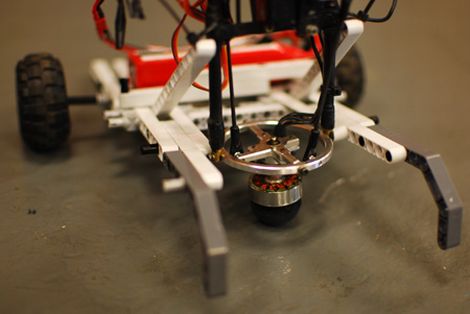
Bradley University grad student [Curtis Boirum] has built a robot which uses quite a unique drive system, one we’re guessing you have never seen before. The robot uses a single motor to drive its hemispherical omnidirectional gimbaled wheel, propelling it across the floor at amazing speeds with uncanny agility.

The robot uses a simple two axis gimbal for movement, which houses a small brushless RC airplane motor. The motor spins a rubber wheel at high speeds, which propels the robot in any direction at the flick of a switch, thanks to a pair of RC servos. When the servos tilt the gimbal, they change which side of the wheel is touching the ground as well as the gear reduction, eliminating the need for a mechanical transmission or traditional steering mechanism.

While he originally thought that he had invented the concept, [Curtis] found that this technology was nearly 100 years old, but that most people had forgotten about it. We’re pretty sure people will remember it this time around. How could you not, after watching the demo video we have embedded below?

We think it’s a great concept, and we can’t wait to see what other robot builders do with this technology.

[via Gizmodo]

Continue reading “Amazing Hemispherical Omnidirectional Gimbaled Wheel Robot”

DIY Guitar Fuzz Pedal

diy_fuzz_pedal

Instructables user and Community Manager [Randy Sarafan] recently put together a tutorial on how to build an ages-old musical standard, the “Fuzz Pedal”. He says that the secret to rocking out is fuzz, so if you can handle both a soldering iron and a guitar, this project is for you.

When you take a close look, the pedal’s components are actually quite simple. The distortion is created by a pair of transistors, which in his case are vanilla NPNs from RadioShack. We have covered other distortion pedal builds before, and they have used germanium transistors to obtain a ‘creamier’ sound – you should be able to swap these cheap ones for uprated models with little trouble.

The handful of components were soldered neatly to a piece of perf board, and placed into a sturdy metal case that looks like it can withstand even the harshest abuse. He’s got schematics and a BOM in his writeup, so all that’s keeping you from a rocking weekend is a little bit of time and a soldering iron – what are you waiting for?

Stick around to see a quick video of [Randy’s] fuzz pedal being built.

Continue reading “DIY Guitar Fuzz Pedal”

ChibiMo – An AVR-based USB Display

chibimo_usb_arduino_external_monitor

[Ko] wanted to add an extra monitor to his computer, but he wasn’t looking for something huge that would sit atop his desk – he desired something smaller, much smaller.

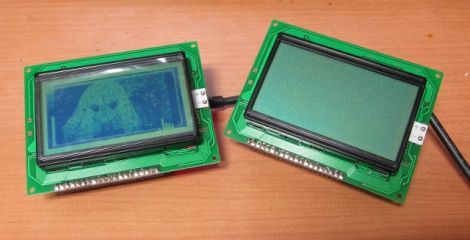
His ChibiMo mini USB monitor is a neat little creation that lets you extend or mirror your Windows desktop onto a tiny 128×64 pixel LCD panel. At first glance you might think that it is too small to be useful, but it is recognized in Windows in the same fashion as any standard monitor. This means that it would be quite easy to load system monitoring software solely on the LCD panel, keeping the clutter off of your main display.

The display is wired to an Arduino like any other standard shield, and is connected to his computer via a USB cable. Once the ChibiMo sketch is uploaded to the Arduino, the display driver needs to be loaded on the PC. This allows you to tweak the ChibiMo’s display settings in Windows’ display manager.

It’s a great concept, one we would love to see explored further. As of right now, the ChibiMo is only supported on x86 versions of Windows XP, and we weren’t able to find source links anywhere on his site. Perhaps there are some talented members of our community who would be interested in taking a whack at it…

[Phillip Torrone] On Why All Makers Should Learn Chinese

phil_torrone_why_every_maker_should_learn_chinese

A while ago when he was working in China, [Phillip Torrone] started learning Mandarin Chinese in order to help him communicate more efficiently with his peers. Unfortunately, once he returned to the US, he slowly started forgetting most of what he had learned. He recently wrote a piece over at Make: explaining why he’s attempting to learn Mandarin once again, and why you as a maker should consider doing the same.

He starts off citing the economic trends which indicate that China’s global GDP share will likely bypass that of the US in a few short years. While the stats might be a bit boring he says, the rise of a new global superpower is nothing to shrug off.

Economic changes aside, he has found that through his workings at Adafruit and other tech companies, he is frequently being exposed to more and more Chinese on a daily basis. Between emails with suppliers, data sheets, and schematics, he says that learning Chinese is a must for makers.

What do you think? Do any of you full-time makers and hackers see the same trend in your jobs? Let us know in the comments.

VU Meter Scarf Lights Up The Night

vu_meter_scarf

[Eli Skipp] wrote in to share a project she has been working on bit by bit, for over a year – an LED VU meter scarf. The project was originally going to be built using a custom PCB, but no matter how long she spent troubleshooting the piece, it just wouldn’t work right. She eventually broke down and purchased a VU meter kit, which worked out quite a bit better than the homebrew version.

The VU meter circuitry is tucked away inside the scarf as she shows in the video below. The LEDs are connected using conductive thread sourced from Lamé Lifesaver, which she says is far more durable than other threads she has tried. After originally testing the VU meter, she was unimpressed by the output of the LEDs, so she swapped them out for brighter ones, which look much better. It looks like it works quite well – we definitely dig the idea of a scarf with a built-in VU meter, even if it was partially built from a kit.

Continue reading to see [Eli] give a quick demonstration and a rundown of the scarf’s construction.

Continue reading “VU Meter Scarf Lights Up The Night”

Humanoid Robot Listens To Music, Plays Along On His Theremin

robot_playing_theremin

Researcher and YouTube user [mspetitegeek] along with her lab mate [Tatsuhiko Itohara] have been fortunate enough to spend some time working with the HRP-2 humanoid robot from Kawada Industries. Their research has seemingly been focused on using the robot to create real-time interactions with humans for entertainment purposes, at the very least.

The program they created allows the HRP-2 to listen and watch its human counterpart while he plays the guitar in order to recognize a beat pattern. Once the robot catches on, it plays along on his Theremin, matching both notes and rhythm perfectly. Since the human operator is clearly playing at a fairly relaxed pace, we are curious to see a demonstration where the robot required to match a snappier tune – it could be quite interesting.

In the meantime, we’re content to just sit back and enjoy the Mogwai-esque tones of the HRP-2 rocking the Theremin.

Keep reading to see a short video of the HRP-2 in action.

Continue reading “Humanoid Robot Listens To Music, Plays Along On His Theremin”