Retrotechtacular: TOPS Runs The 1970s British Railroad

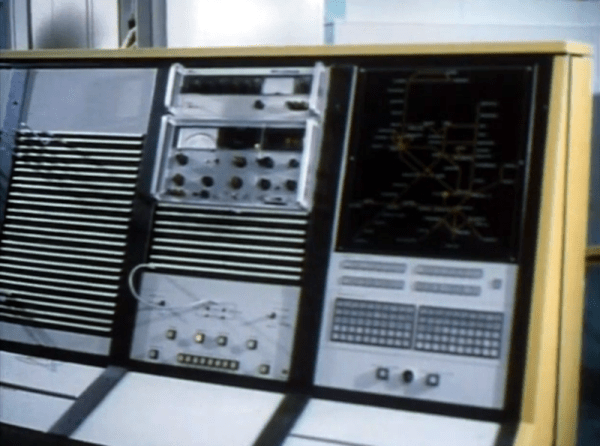
How do you make the trains run on time? British Rail adopted TOPS, a computer system born of IBM’s SAGE defense project, along with work from Standford and Southern Pacific Railroad. Before TOPS, running the railroad took paper. Lots of paper, ranging from a train’s history, assignments, and all the other bits of data required to keep the trains moving. TOPS kept this data in real-time on computer screens all across the system. While British Rail wasn’t the only company to deploy TOPS, they were certainly proud of it and produced the video you can see below about how the system worked.

There are a lot of pictures of old big iron and the narrator says it has an “immense storage capacity.”  The actual computers in question were a pair of IBM System/370 mainframes that each had 4 MB of RAM. There were also banks of 3330 disk drives that used removable disk packs of — gasp — between 100 and 200 MB per pack.

As primitive and large as those disk drives were, they pioneered many familiar-sounding technologies. For example, they used voice coils, servo tracking, MFM encoding, and error-correcting encoding.

Continue reading “Retrotechtacular: TOPS Runs The 1970s British Railroad”
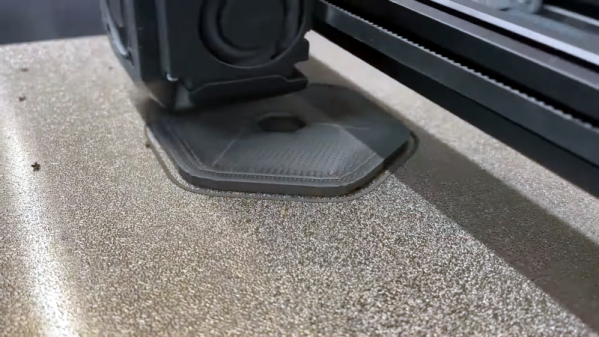
3D Printing With (Ersatz) Moon Dust

When the people of Earth set up bases on the moon, you can imagine that 3D printing will be a key enabling technology. Of course, you could ship plastic or other filament at great cost. But what if you could print with something you can already find on the moon? Like moon dust. NASA thinks it is possible and has been doing tests on doing just that. Now [Virtual Foundry] wants to let you have a shot at trying it yourself. It doesn’t really contain moon dust, but their Basalt Moon Dust Filamet has a similar composition. You can see a video about the material below.

It isn’t cheap, but it is probably cheaper than going up there to get some yourself. At least for now. The company is known for making PLA with various metal and ceramic materials. Like their other filaments, you print it more or less like PLA, although you need a large hardened nozzle, and they suggest a prewarmer to heat the filament before going to the hot end.

Continue reading “3D Printing With (Ersatz) Moon Dust”

Sort Of Electromagnet Attracts Copper, Aluminum

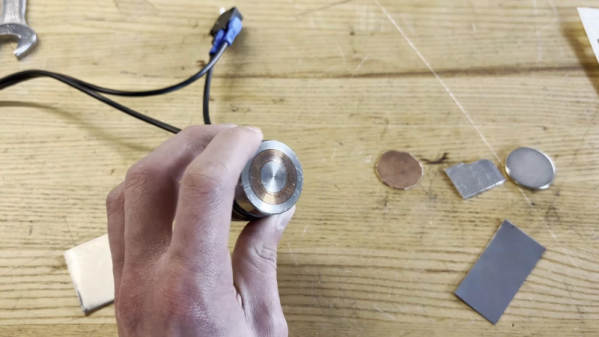
It is a common grade school experiment to wind some wire around a screw, power it up, and watch it pick up paper clips or other ferrous materials. It is also grade school science to show that neither an electromagnet nor a permanent magnet will pick up nonferrous items like copper or aluminum. While technically not an electromagnet, it is possible to build a similar device that will weakly pull on copper and aluminum, and [Cylo] shows us how it works in a recent video you can see below.

The device sure looks like an electromagnet made with magnet wire and a steel core. But when he shows the ends of the core, you’ll see that the side that attracts aluminum has a copper ring embedded in it. The coil is fed with AC.

The magnetic field from the coil induces an opposite field in the copper ring that is out of phase with the exciting field. The two fields combine to produce a force on the metal it interacts with. This is often referred to as a shaded pole, and the same technique can help AC motors self-start as well as hold in relays driven by AC. If you want to see much more about aluminum floating on a magnetic field, check out the 1975 video from [Professor Laithwaite] in the second video below.

You probably have a shaded pole AC motor in your microwave oven. Or, maybe,your old 8-track player.

Continue reading “Sort Of Electromagnet Attracts Copper, Aluminum”

Cosmic Ray Detection At Starbucks?

Want to see cosmic rays? You might need a lot of expensive exotic gear. Nah. [The ActionLab] shows how a cup of coffee or cocoa can show you cosmic rays — or something — with just the right lighting angle. Little bubbles on the surface of the hot liquid tend to vanish in a way that looks as though something external and fast is spreading across the surface.

To test the idea that this is from some external source, he takes a smoke detector with a radioactive sensor and places it near the coffee. That didn’t seem to have any effect. However, a Whimhurst machine in the neighborhood does create a big change in the liquid. If you don’t have a Whimhurst machine, you can rub a balloon on your neighbor’s cat.

Continue reading “Cosmic Ray Detection At Starbucks?”

Trick Your (1970) Pickup Truck

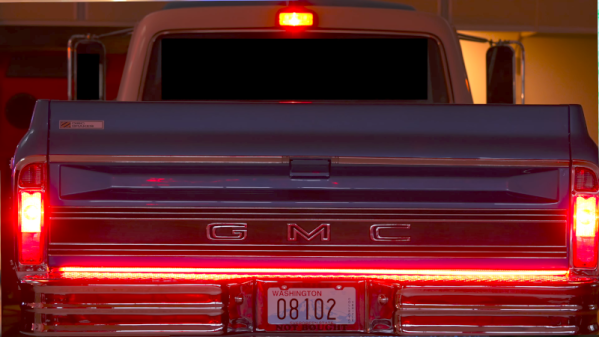
[Dave] wanted an old pickup, and he found a GMC Sierra Grande truck vintage 1970. While it had an unusual amount of options, there weren’t that many high-tech options over 50 years ago. The five-year-long restoration work was impressive, as you can see in the video below, but we were really interested in the electronics part. As [Dave] mentions, the truck was made when the Saturn V was taking people to the moon, but after his modifications, the truck has a lot more computing power than the famous rocket.

He was concerned that the taillights were not up to modern standards and that it would be too easy for someone using their cell phone to plow into the rear of the truck. So he broke out an ESP32 and some LEDs and made an attractive brake light that would have been a high-tech marvel in 1970.

Continue reading “Trick Your (1970) Pickup Truck”

Night Vision The Old Way

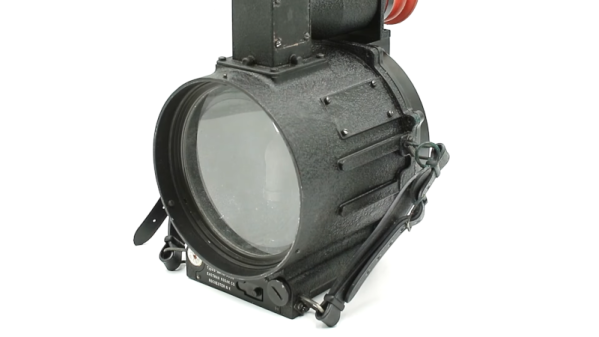
Solid state electronics have provided lighter weight night vision units that work better than the old-fashioned gear that used photomultiplier tubes, but there was an even older technology as [Our Own Devices] shows us in a recent video. The Metascope Type B was a first-generation passive night vision viewer that relied on moonlight.

The video shows a 1946 technical paper from the Office of Scientific Research and Development with [Vannevar Bush] credited as the institute’s director. If that name sounds familiar, you may remember that he foresaw hypertext (inspiring both [Doug Englebart] and the creation of the Web).

The Type B was an improvement over the older Type A, which had been tested during the invasion of North Africa in 1942. The type A weighed less than two pounds and was much smaller than the type B. However, it didn’t work very well, so they stopped making them and did a redesign, which is what you see in the video. The type B weighed almost 5 pounds.

To use the metascope, you had to “charge” it with light and then wait. Eventually, you’d need to charge it again. The type B allowed you to charge one phosphor plate while using another one. When that plate became weak, you could swap the plates to continue using the device.

If you aren’t keen on the history, you can skip to just before the 15-minute mark of the video for the hardware examination. He doesn’t open the device, but that’s probably wise, given the nature, age, and rarity of the metascope.

Modern image sensors are very sensitive to infrared, and normal cameras usually have filters to keep them out. Not that you can’t remove it, of course. If you want to see something more modern, [Nick] built his own AN/PVS-14 night vision scope and you can too.

Continue reading “Night Vision The Old Way”

Are Minimills Worth It?

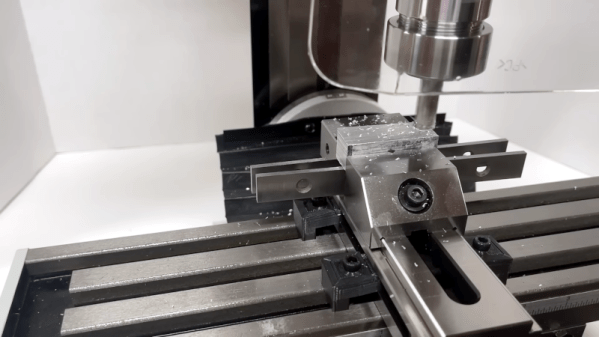
These days, the bar for home-built projects is high. With 3D printers, CNC, and cheap service providers, you can’t get away with building circuits in a shoe box or an old Tupperware container. While most people now have access to additive manufacturing gear, traditional subtractive equipment is still a bit less common. [Someone Should Make That] had thought about buying a “minimill” but he had read that they were not worth it. Like a lot of us, he decided to do it anyway. The pros and cons are in the video you can watch below.

During setup, he covered a few rumors he’d heard about these type of mills, including they are noisy, have poor tolerances, and can’t work steel. Some of these turned out to be true, and some were not.

Continue reading “Are Minimills Worth It?”