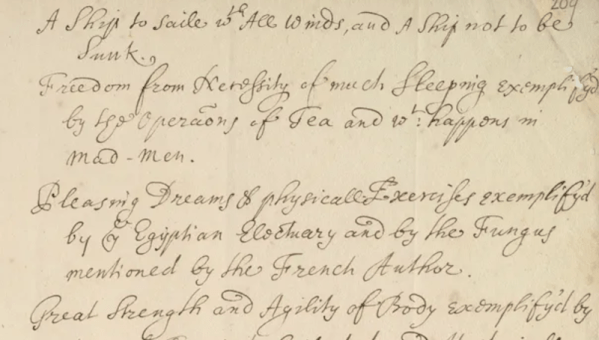
A Little Bit Of Science History Repeating Itself: Boyle’s List

In a recent blog post, [Benjamin Breen] makes an interesting case that 2023 might go down in history as the start of a scientific revolution, and that’s even if LK-99 turns out to be a dud. He points to several biomedical, quantum computing, and nuclear fusion news items this year as proof.

However, we aren’t as convinced that these things are here to stay. Sure, LK-99 was debunked pretty quickly, but we swim in press releases about new battery technologies, and new computer advances that we never hear about again. He does mention that we aren’t alone in thinking that as [Tyler Cowen] coined the phrase “Great Stagnation” to refer to the decline in disruptive tech since 1945. Still, [Benjamin] argues that people never know when they live through a scientific revolution and that the rate of science isn’t as important as the impact of it.

Continue reading “A Little Bit Of Science History Repeating Itself: Boyle’s List”
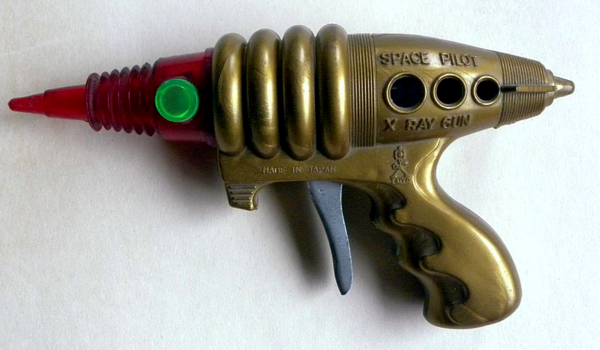
Ku-Go: The World War II Death Ray

Historians may note that World War II was the last great “movie war.” In those days, you could do many things that are impossible today, yet make for great movie drama. You can’t sneak a fleet of ships across the oceans anymore. Nor could you dig tunnels right under your captor’s nose. Another defining factor is that it doesn’t seem we seek out superweapons anymore.

A Churchill Bullshorn plough for clearning minefields — one of Hobart’s “Funnies”

Sure, we develop better planes, tanks, submarines, and guns. But we aren’t working on anything — that we know of — as revolutionary as a rocket, an atomic bomb, or even radar was back in the 1940s. The Germans worked on Wunderwaffe, including guided missiles, jets, suborbital rocket bombers, and a solar-powered space mirror to burn terrestrial targets. Everyone was working on a nuclear bomb, of course. The British had Hobart’s Funnies as well as less successful entries like the Panjandrum — a ten-foot rocket-driven wheel of explosives.

Death Ray

Perhaps the holy grail of all the super weapons — both realized and dreamed of was the “death ray.” Of course, Tesla claimed to have one that didn’t use rays, but particles, but no one ever successfully built one and there was debate if it would work. Tesla didn’t like the term death ray, partly because it wasn’t a ray at all, but also because it required a huge power plant and, therefore, wasn’t mobile. He envisioned it as a peacekeeping defensive weapon, rendering attacks so futile that no one would dare attempt them.

Continue reading “Ku-Go: The World War II Death Ray”

Hackaday Podcast 231: Harnessing Sparks, Hacking Food, And Leaving Breadcrumbs

Editor-in-Chief Elliot Williams and Al Williams don’t always agree on the best text editor to use, but they do — usually — agree on what makes a great hack. This week, they found plenty of Hackaday posts to discuss, ranging from exotic eavesdropping on keyboards, oscilloscopes, and several posts of interest to anyone who wants to build good-looking prototypes. If you are like mechanics, you’ll hear about an escapement-like mechanism and a Hobson’s coupler. If you crave more traditional hacks, you can learn more about maximizing battery life and etching PCBs.

In addition to a flurry of hacks, Elliot and Al also share their picks for the best original posts from Hackaday’s staff. This week, we find out how Arya Voronova documents projects and hear what Tom Nardi thinks of his Beepy — a ready-made display and Blackberry keyboard waiting for a Raspberry Pi.

Did you miss anything? Check out the links below. Be sure to send your favorite hacks our way, and let us know in the comments how you liked this episode. Hear it here:

Or download it yourself and listen while testing room-temperature superconductors!

Continue reading “Hackaday Podcast 231: Harnessing Sparks, Hacking Food, And Leaving Breadcrumbs”

A Hobson’s Coupler Leads To A Weird Engine

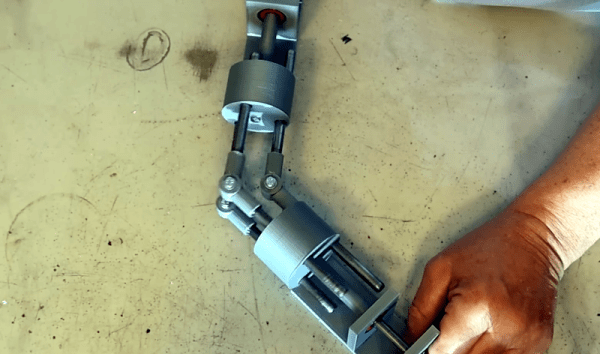
You want to join two shafts. What do you need? A coupler, of course. If the shafts don’t line up, you might consider an Oldham coupler. But what if the shafts are at a 90-degree angle to each other? Then you need a Hobson’s coupler. [Robert Murray-Smith] has the 3D printed hookup for you and a video that you can see below.

The part isn’t all 3D printed, though. You do need some bearings and steel rods. [Robert] proposes using this to couple a windmill’s blades to a generator, although we assume some loss is involved compared to a standard shaft. However, we’ve heard that the coupler, also called a Hobson’s joint or a stirrup joint, is actually pretty efficient. However, you rarely see these in practice because most applications will use a gear train employing a bevel gear.

While it may not be practical, the second video below shows an elbow engine that would look undeniably cool on your desk. By making some changes, you can create a Cardan joint which happens to be half of what you think of as a universal joint. The Hobson coupler and the Cardan joint seem to be made for each other, as you’ll see in the video.

We aren’t sure what we want to make with all these mechanisms, but as [Robert] points out, with new materials and techniques, these mechanisms might have a role to play in future designs, even though they have been mostly discarded.

There are, of course, many kinds of couplings. Then again, not all useful joints have to move.

Continue reading “A Hobson’s Coupler Leads To A Weird Engine”

Canadian Engineers? They Have A Ring About Them

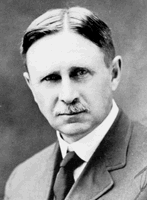
How can you spot an engineer? It can be tricky, but it is a little easier in Canada. That’s because many Canadian engineers have been through the Ritual of the Calling of an Engineer and wear an iron or steel ring to symbolize their profession. The ring has a very odd history that originated in 1922 as the brainchild of Professor H. E. T. Haultain. While he may not be a recognizable name, at least one famous person was involved with creating the Ritual.

H. E. T. Haultain

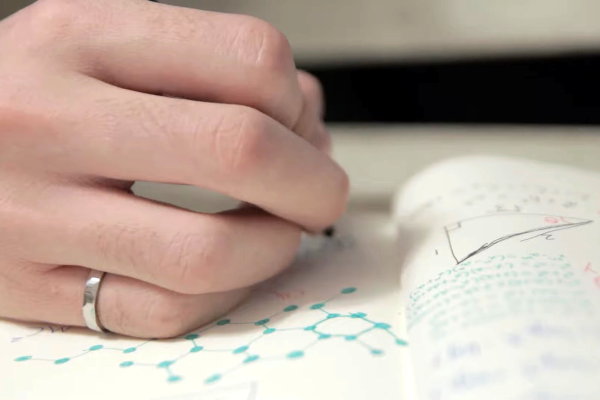
The ring itself has facets on the outer surface, and you wear it on the little finger of your dominant hand. Originally handmade, the ring reminds the wearer of the engineer’s moral, ethical, and professional commitment. In addition to being a visible reminder, the ring is made to drag slightly as you write or draw, as a constant reminder of the engineer’s obligation. With more experience, the ridges wear down, dragging less as you get more experience.

There is a rumor that the first rings were made from the metal of a bridge that collapsed due to poor design, but this appears untrue. The presentation ceremony is understated, with limited attendance and very little publicity.

Continue reading “Canadian Engineers? They Have A Ring About Them”

Inside The PET Keyboard

These days, you have a certain expectation for computer keys on a keyboard. Of course, there are variations and proponents of different mechanisms and noise levels. However, back in the late part of the 20th century, it was a different world. Computers came with a bewildering and sometimes befuddling array of keyboards. Since the IBM Selectric was the king of typewriters, we assumed the IBM PC keyboard would be spectacular, but it wasn’t. The PC Jr was even worse! Atari experimented with flat keyboards to save costs, and many computers had keys more reminiscent of calculator keys than you would imagine. The market voted. In general, a keyboard that wasn’t really a keyboard was the kiss of death for a computer. Case in point: the Commodore PET with its infamous chicklet keyboard, which gets a detailed examination in a recent post from [Norbert Landsteiner].

The PET keyboard gets some bad rap due to software limitations. Because of this, some games would use their own scan routines, and [Norbert] has worked on emulation able to accommodate software that wants to read the hardware directly. The resulting insights into the old keyboard is very interesting. For example, you can press more than one key at once. The result? The answer to that question takes up about half the post.

Continue reading “Inside The PET Keyboard”

Hacking Fake Food

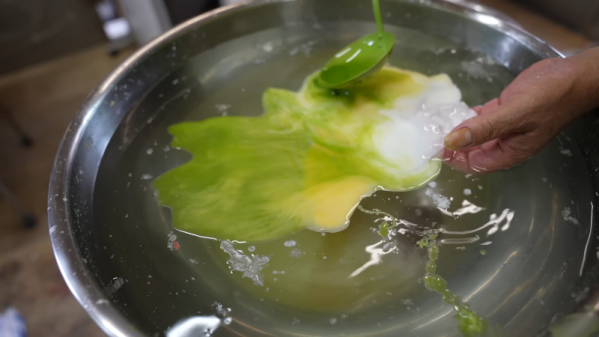
Ever seen a restaurant where they display fake models of the food on the menu? We never thought much about how shokuhin sampuru — the Japanese name — were made until we watched [Process X]’s video showing a 71-year-old artist creating food models. We aren’t sure what we — or you — would do with this information, but it is a striking process, and there must be something you could do with it. We suggest turning on the English captions, but you’d probably enjoy watching the unusual craftsmanship even with no words.

In years past, the food models were primarily made from wax, but since the 1980s, it is more common to use polyvinyl chloride, silicone, and resin. While some factories produce items, sometimes with a mold, single craftsmen like the one in the video still make up the largest part of the market.

We aren’t sure, but we think the material in the video is wax. We couldn’t help but think that some of this could have been 3D printed, but even with the finest resins and resolution, it probably wouldn’t be quite as artistic. We think wax is mainly underutilized in today’s tech. But there are some places it still shows up.

Continue reading “Hacking Fake Food”