Turns Out, Lightning Can Strike Twice, With A Little Help

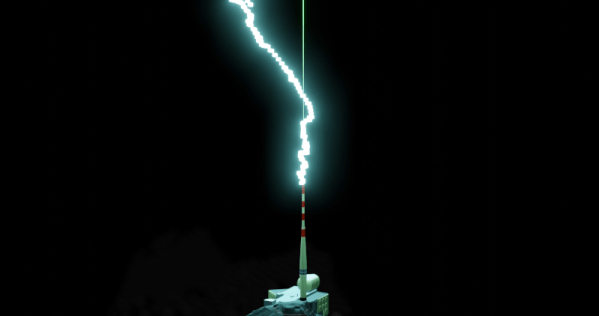
Few things are more impressive than a lighting strike. Lightning can carry millions of volts and while it can be amazing to watch, it is somewhat less amazing to be hit by lightning. Rockets and antennas often have complex lightning protection systems to try to coax the electricity to avoid striking where you don’t want it. However, a European consortium has announced they’ve used a very strong laser to redirect lightning in Switzerland. You can see a video below, but you might want to turn on the English closed captions.

Lightning accounts for as many as 24,000 deaths a year worldwide and untold amounts of property and equipment damage. Traditionally, your best bet for protection was not to be the tallest thing around. If the tallest thing around is a pointy metal rod in the ground, that’s even better. But this new technique could guide lightning to a specific ground point to have it avoid causing problems. Since lightning rods protect a circular area roughly the radius of their height, having a laser that can redirect beams to the area of a lightning rod would allow shorter rods to protect larger areas.

Continue reading “Turns Out, Lightning Can Strike Twice, With A Little Help”
Flappy Bird Drone Edition

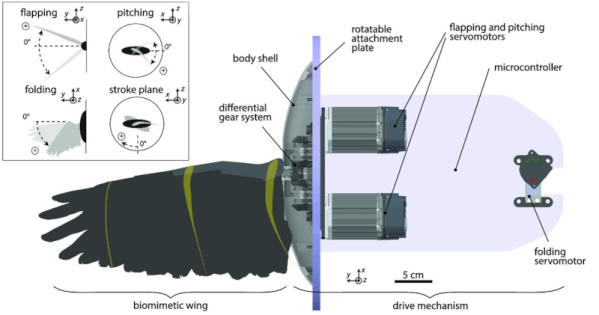
Ornithopters have been — mostly — the realm of science fiction. However, a paper in Advanced Intelligent Systems by researchers at Lund University proposes that flapping wings may well power the drones of the future. The wing even has mock feathers.

Birds, after all, do a great job of flying, and researchers think that part of it is because birds fold their wings during the upstroke. Mimicking this action in a robot wing has advantages. For example, changing the angle of a flapping wing can help a bird or a drone fly more slowly.

Continue reading “Flappy Bird Drone Edition”

Inside The Atari 2600

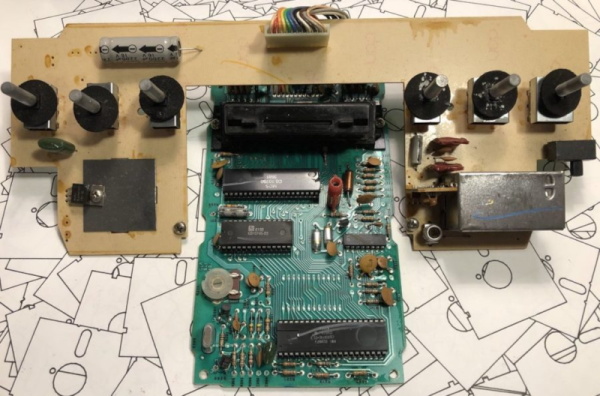
The Atari 2600 was an extremely popular yet very simple game console back in the 1970s. They sold, apparently, over 30 million of them, and, of course, these things broke. We’d get calls from friends and — remember, back then normal people weren’t computer savvy — nine times out of ten, we’d ask them to swap the controllers to show them it was a bad controller, and problem solved. But if you did have to open one up, it was surprising how little there was inside, as [Steve] notes in his recent teardown.

The bulk of the circuit board was switches, the power supply, and a TV modulator if you remember those. The circuit board was a tiny thing with a shrunk-down 6502, a 6532 RIOT chip, and a custom chip called a TIA. If you are familiar with those chips, you might wonder if the TIA had any memory in it. It didn’t. Nearly all the ROM and RAM for the game lived in the cartridge itself. Sure, the RIOT has 128 bytes of memory, but that’s not much.

Continue reading “Inside The Atari 2600”

Microsoft Returns To The Altair

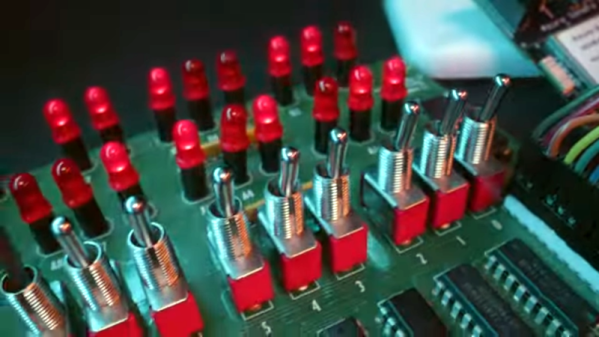
The Altair 8800 arguably launched Microsoft. Now [Dave Glover] from Microsoft offers an emulated and potentially cloud-based Altair emulation with CP/M and Microsoft Basic. You can see a video of the project below. One thing that makes it a bit odd compared to other Altair clones we’ve seen is that the emulator runs in a Docker environment and is fully cloud-enabled. You can interact with it via a PCB front panel, or a terminal running in a web browser.

The core emulator is MIT-licensed and seems like it would run nearly everywhere. We were a little surprised there wasn’t an instance in the Azure cloud that you could spin up to test drive. Surely a few hundred Altairs running at once wouldn’t even make a dent in a modern CPU.

Continue reading “Microsoft Returns To The Altair”

Conductive Ink Based On A Simple Idea

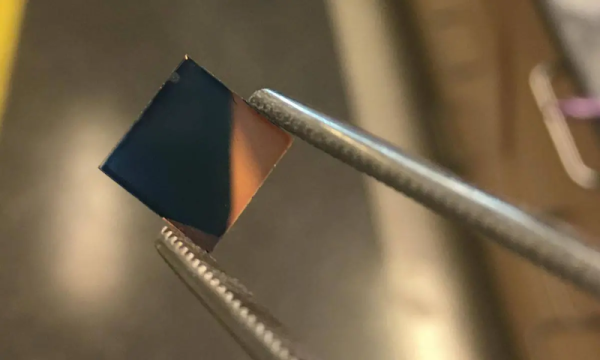
There’s an old series of jokes that starts with: “How do you put an elephant in a refrigerator?” The answer is to open the door, put the elephant inside, and close the door. Most people don’t get that because it is too simple, and simple is the approach Georgia Tech researchers have taken when faced with the problem of using a particular conductive plastic. PEDOT, the plastic in question, is a good conductor, but it is hard to work with. You can add materials to make it easier to work with, but that screws up the conductivity. Their answer is much like the refrigerator joke: add material to PEDOT, paint or print it where you want, and then remove the extra material. Simple.

The polymer needs side chains to be soluble. This allows you to mix an ink or paint made of the material, but the waxy side chains interfere with the material’s conductivity. However, after application, it is possible to break off the side chains and flush them out with a common solvent. The process is simple, and leaves a flexible conductive material that’s stable.

Continue reading “Conductive Ink Based On A Simple Idea”

Lunar Rover Is No Toy

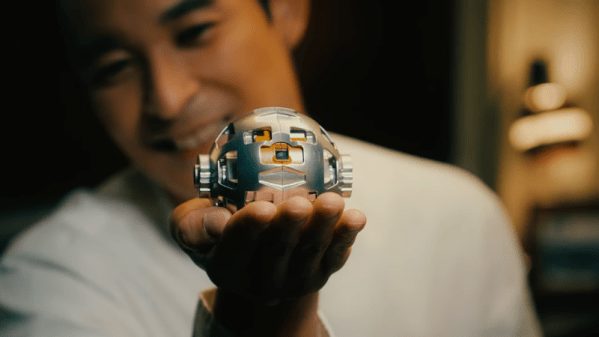
When you think of Tomy — more properly, Takara Tomy — you think of toys and models from Japan. After all, they have made models and toys as iconic as Transformers, Thomas, Jenga, Boggle, and Furby. They also made figures associated with Thunderbirds and Tron, two favorites in our circles. However, their recent design for SORA-Q is no toy. It is a tiny lunar rover designed at the request of JAXA, the Japanese space agency. The New Yorker recently posted about how this little rover came about.

The SORA-Q looks a bit like a modern Star Wars drone or — if it could fly — a training drone from some of the older movies. The rover caught a lift from a SpaceX Falcon 9 towards the moon with the Hakuto-R M1 lander. Another SORA-Q is scheduled to touch down later this year.

Continue reading “Lunar Rover Is No Toy”

NASA Help Wanted: Telescope Optional

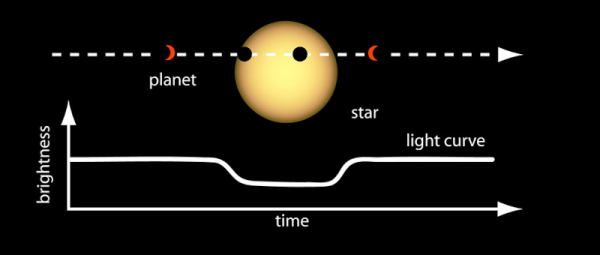
If you’ve ever wanted to work for NASA, here’s your chance. Well, don’t expect a paycheck or any benefits, but the Agency is looking for volunteers to help process the huge amount of exoplanet data with their Exoplanet Watch program. If you have a telescope, you can even contribute data to the project. But if your telescope is in the back closet, you can process data they’ve collected over the years.

You might think the only way to contribute with a telescope is to have a mini-observatory in your backyard, but that’s not the case. According to NASA, even a six-inch telescope can detect hundreds of exoplanet transits using their software. You might not get paid, but the program’s policy requires that the first paper to use work done by program volunteers will receive co-author credit on the paper. Not too shabby!

Continue reading “NASA Help Wanted: Telescope Optional”