LTSpice Tips And A Long Tutorial

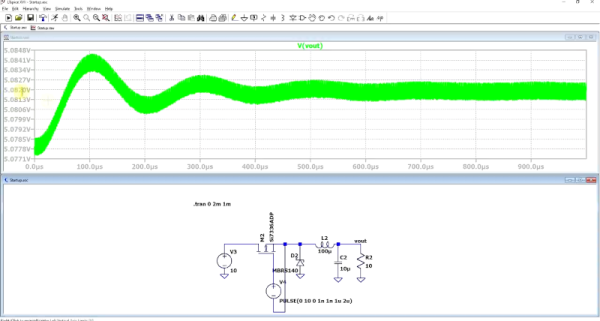
We always enjoy videos from [FesZ], so when we saw his latest about tips and tricks for LTSpice, we decided to put the 20 minutes in to watch it. But we noticed in the text that he has an entire series of video tutorials about LTSpice and that this is actually episode 30. So there’s plenty to watch.

Like any tips and tricks video, you might know some of them and you may not care about some of them — for example, the first one talks about setting the colors which is a highly personal preference.  But it is a good bet you’ll find something to like in the video.

Continue reading “LTSpice Tips And A Long Tutorial”

The World’s Most Expensive 3D Printers

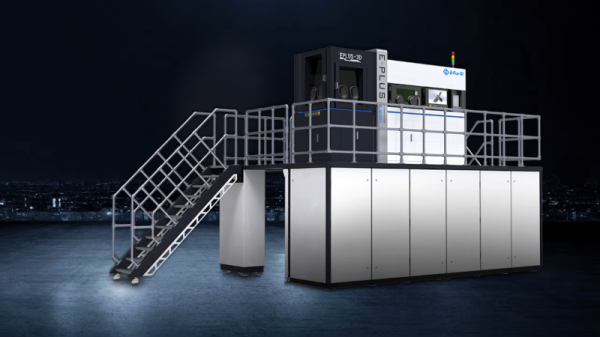
How much would you pay for a 3D printer? Granted, when we started a decent printer might run over $1,000 but the cost has come way down. Unless of course, you go pro. We were disappointed that this [All3DP] post didn’t include prices, but we noticed a trend: if your 3D printer has stairs, it is probably a big purchase. According to the tag line on the post, the printers are all north of $500,000.

Expensive printers usually have unique technology, higher degrees of automation, large capacity or some combination of that, and a few other factors. At least two of the printers mentioned had stairs to reach the top parts of the machine. And the Black Buffalo — a cement printer — uses a gantry that looks like it is part of a light show at a concert. It is scalable, but apparently can go up to three stories tall!

Continue reading “The World’s Most Expensive 3D Printers”

Cheap Oscilloscope Is… Well… Cheap

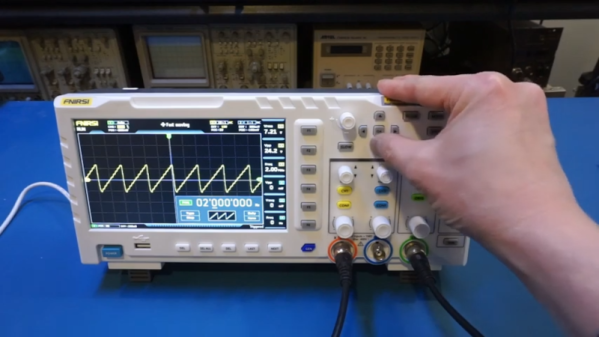
We always enjoy watching [Kerry Wong] put an oscilloscope through its paces. His recent video is looking at a very inexpensive FNIRSI 1014D ‘scope that you can also find rebranded. You can usually find these for well under $200 at the usual places. Can you get a reasonable scope for that cost? [Kerry] has a list of issues with the scope ranging from short memory depth to low sensitivity. He did, however, like that it is USB powered so it can be operated from a common battery pack, which would make it truly floating.

The ‘scope looks like a lot of other inexpensive ‘scopes, but you can see some concessions to price. For example, the encoder knobs don’t have a push button function, making the scope more difficult to operate. While the specs are relatively modest, [Kerry] wasn’t sure the instrument was even living up to them.

Continue reading “Cheap Oscilloscope Is… Well… Cheap”

The Origin Of The Fresnel Lens

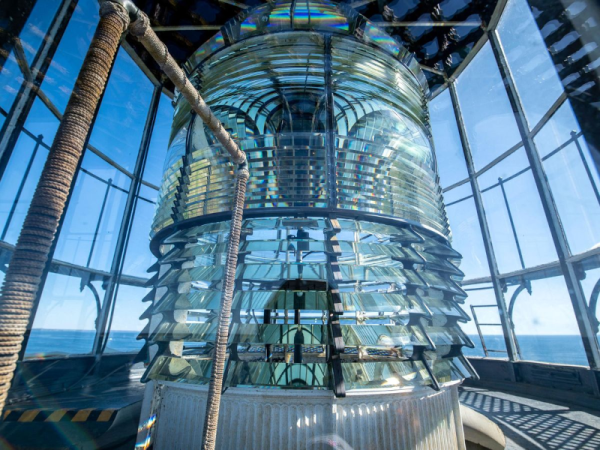
If you are a Hackaday reader, you probably know what a Fresnel lens is. You find them in everything from overhead projectors to VR headsets. While it seems commonplace now, the Fresnel lens was an important invention for its day because it revolutionized maritime navigation and, according to a post over at IEEE Spectrum, that was the driving force behind its invention. In fact, the lens has been called “the invention that saved a million ships“.

The problem stems from issues in navigation. Navigating by the sun and the stars is fine, but not workable when you have heavy cloud cover, or other reasons you can’t see them. A lighthouse often marked an important point that you either wanted to navigate towards or, sometimes, away from.  Sure, today, we have GPS, but for a long time, a lighthouse was your best bet.

Continue reading “The Origin Of The Fresnel Lens”

Live Glucose Monitoring With The Apple Watch

There has been a rumor that Apple is working on a glucose monitoring solution for the Apple watch. [Harley] decided not to wait and managed to interface an Abbot FreeStyle Libre sensor with the Apple watch. The sensor doesn’t directly read glucose continuously, but it does allow for more frequent reading which can help diabetic patients manage their blood sugar levels. However, as part of the hack, [Harley] effectively converts the meter to a continuous-reading device, another bonus.

The trick is to add a Bluetooth transmitter to the NFC sensor. Using a device called a MiaoMiao, the task seems pretty simple. The MiaoMaio is small, waterproof, and lasts two weeks on a charge, which is longer than the sensor’s life. Honestly, this is the hack since once you have the data flowing over Bluetooth, you can process it in any number of ways including using an app on the Apple watch.

It isn’t perfect. There’s a slight lag with readings due to the way the sensor works. However, you usually don’t care as much about the absolute value of your glucose (unless it is very high or very low). You are usually more interested in the slope of the change. This data is more than good enough for that.

In fact, the most complex part of this seems to be the watch app. It might be less work to feed the data to a machine learning model and let AI guide your insulin injections. Something to think about.

We have a keen interest in glucose monitoring around here and we know why it is so darn hard. Honestly, the idea of pushing glucose meter data to a watch isn’t new, but this is a well-done implementation with a lot of possibilities.

This $4 Desalination Device Provides Drinking Water For The Whole Family

Researchers at MIT and in China have improved the old-fashioned solar still with a new inexpensive device that harnesses the sun to remove salt from water. Traditionally, these kinds of systems use a wick to draw water, but once the wick becomes fouled with salt, the device needs cleaning or other maintenance. Not exactly what you want in a survival situation. You can read the paper in Nature if you want more details.

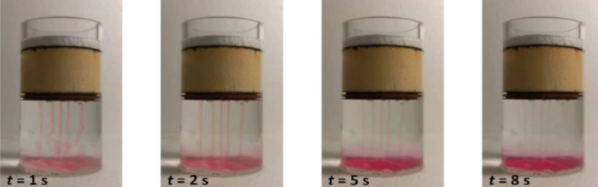
The key to this new technique is black paint and polyurethane with 2.5-millimeter holes drilled in it. The idea is that warmer water above the insulating medium causes the salt to concentrate in the cooler water beneath the insulator allowing efficient vaporization of the water.  As the water evaporates, it causes the salt concentration at the top to rise, which then sinks due to the higher density and lower-concentration salt water rises to the top to evaporate.

Because the materials are commonplace, the team says a one-meter-square system costs about $4 to produce. A system that size could provide a family’s daily drinking water.

So far, the prototype system has worked in the lab for at least a week without accumulating salt. The next challenge is to scale it to something more practical, but due to the low cost and simplicity of the system, it seems it would be easy enough to make that happen or to reproduce the device for your own testing.

Desalination is a problem you can approach from many different angles. You can also harvest clean water from fog, something else that started at MIT.

Quantum Computing: The First Taste Is Free

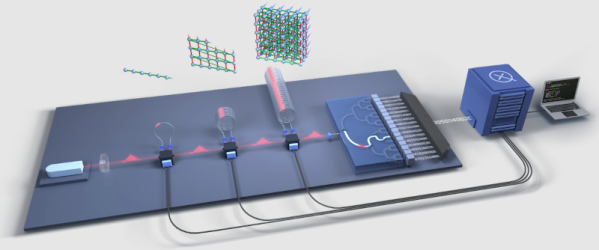
There are a few ways to access real quantum computers — often for free — over the Internet. However, most of these are previous-generation machines that have limited capabilities. Great for learning, perhaps, but not something you could do anything practical with.  Xanadu, however, has announced what they claim to be a computer capable of reaching quantum advantage that is free for anyone to use, within limits. Borealis — the computer in question — uses photonic states and has the capability of working with over 216 squeezed-state qubits.

The company is selling time on the computer, but the free tier includes 5 million free shots on Borealis and 10 million shots on an earlier series of quantum computers. You can also buy pay-as-you go service for about $100 per million shots on Borealis.

While a few million shots may sound like a lot, we noticed that the quickstart demo consumes 10,000 shots and that’s presumably something simple. That’s still about 500 runs of that on Borealis — not bad for free on a state-of-the-art quantum computer. You will be wanting to debug with a simulator, though.

We presume the developers are Beatles fans given that you use software called Penny Lane and Strawberry Fields to access the machines. Your job is controlled by Python and there is a cloud simulator to save your shots.

We won’t pretend to understand all there is about squeezed light qubits and the Borealis architecture. But you can get some general practice in our series on quantum computing. Or there are a few lectures around including one that aims at different levels of experience.

Continue reading “Quantum Computing: The First Taste Is Free”