A Home Payphone

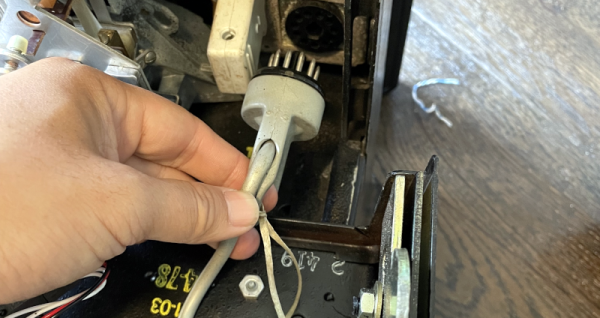
We can’t condone what [Bertrand] did as a kid to make him a fan of payphones, but we get his desire to have one of his own in his home. Even if you don’t want one yourself, he’s got some good shots of the insides of a real phone that came from a casino in Vegas.

As you might expect, these phones were built like tanks. They obviously took a lot of abuse. We had to wonder how much each one cost to produce back in the day. Cleaning up an old phone and getting it to work doesn’t seem like a big effort, but there’s one thing we didn’t think about. Turns out there is a backplate that holds the 50-pound phone up and you need special studs that screw into the phone to hold it up while you put screws through both pieces.

He did connect the phone successfully to a regular phone jack, but his goal was to let his 5-year-old use the phone so he decided to actually wire it to a phone line simulator that just provides a connection between two phones.

New York City recently ripped out its last payphones. They were replaced with multipurpose kiosks, but there are still privately-owned payphones in the city. Of course, you can always use an old payphone as a platform for a different project.
Sorry, Your Internet Connection Is Slow

How fast is your Internet connection? The days of 56K modems are — thankfully — long gone for most of us. But before you get too smug with your gigabit fiber connection, have a look at what researchers from the Network Research Institute in Japan have accomplished. Using a standard diameter fiber, they’ve moved data at a rate of 1 petabit per second.

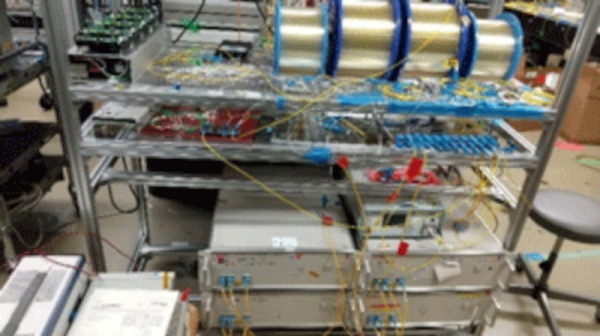
The standard fiber has four spatial channels in one cladding. Using wavelength division multiplexing, the researchers deployed a total of 801 channels with a bandwidth over 20 THz. The fiber distance was over 50 km, so this wasn’t just from one side of a lab to another. Well if you look at the pictures perhaps it was, but with big spools of fiber between the two lab benches. The project uses three distinct bands for data transmission with 335 channels in the S-band, 200 channels in the C-band, and 266 channels in the L-band.

To put this into perspective, a petabit — in theory — could carry a million gigabit Ethernet connections if you ignore overhead and other losses. But even if that’s off by a factor of 10 it is still impressive. We can’t imagine this will be in people’s homes anytime soon but it is easy to see the use for major backhaul networks that carry lots of traffic.

We are still amazed that we’ve gone from ALOHA to 2.5-gigabit connections. Although the Raspberry Pi can’t handle even a fraction of the bandwidth, you can fit it with a 10-gigabit network card.

Optimizing Linux Pipes

In CPU design, there is Ahmdal’s law. Simply put, it means that if some process is contributing to 10% of your execution, optimizing it can’t improve things by more than 10%. Common sense, really, but it illustrates the importance of knowing how fast or slow various parts of your system are. So how fast are Linux pipes? That’s a good question and one that [Mazzo] sets out to answer.

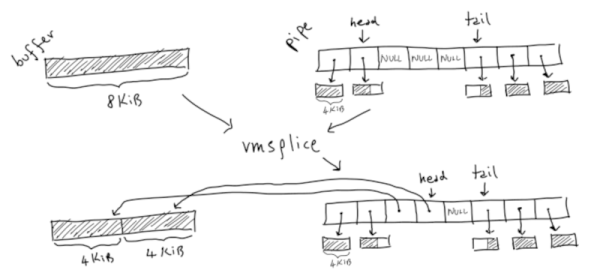
The inspiration was a highly-optimized fizzbuzz program that clocked in at over 36GB/s on his laptop. Is that a common speed? Nope. A simple program using pipes on the same machine turned in not quite 4 GB/s. What accounts for the difference?

Continue reading “Optimizing Linux Pipes”

Practical Transistors: JFETs

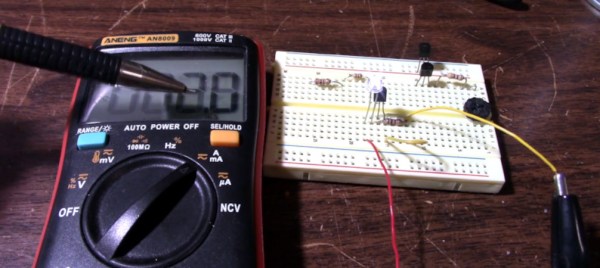
Transistors come in different flavors. Tubes used an electric field to regulate current flow, and researchers wanted to find something that worked the same way without the drawbacks like vacuum and filament voltages. However, what they first found — the bipolar transistor — doesn’t work the same way. It uses a small current to modulate a larger current, acting as a switch. What they were looking for was actually the FET — the field effect transistor. These come in two flavors. One uses a gate separated from the channel by a thin layer of oxide (MOSFETs), and the other — a junction or JFET — uses the property of semiconductors to deplete or enhance carriers in the channel. [JohnAudioTech] takes a decidedly practical approach to JFETs in a recent video that you can watch below.

The idea for the FET is rather old, with patents appearing in 1925 and 1934, but there were no practical devices at either time. William Shockley tried and failed to make a working FET in 1947, the same year the first point-contact transistor appeared, which was invented while trying to create practical FETs. In 1948, the bipolar junction transistor hit the scene and changed everything. While there were a couple of working FETs created between 1945 and 1950, the first practical devices didn’t appear until 1953. They had problems, so interest waned in the technology while the industry focused on bipolar transistors. However, FETs eventually got better, boasting both very high input impedance and simplified biasing compared to bipolar technology.

Continue reading “Practical Transistors: JFETs”

3D Printing With Sound, Directly

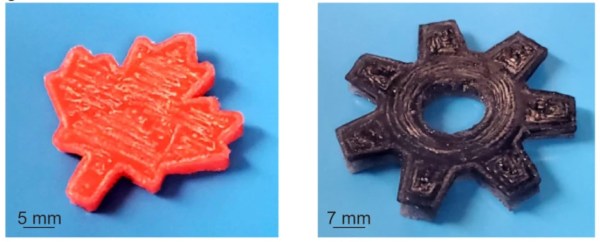
Canadian researchers at Concordia University want to change how you do 3D printing. Instead of using light or thermal mechanisms, they propose using ultrasound-activated sonochemical reactions. Sounds wild? You can see a video about it below, or read the paper in Nature.

The idea is that sound causes bubbles of cavitation. This requires a focused ultrasonic beam which means you can actually print through items that are transparent to ultrasonic energy. Wherever the cavitation bubbles form, liquid polymer turns solid.

Continue reading “3D Printing With Sound, Directly”

Linux Fu: Easy Widgets

Here’s a scenario. You have a microcontroller that reads a number of items — temperatures, pressures, whatever — and you want to have a display for your Linux desktop that sits on the panel and shows you the status. If you click on it, you get expanded status and can even issue some commands. Most desktops support the notion of widgets, but developing them is a real pain, right? And even if you develop one for KDE, what about the people using Gnome?

Turns out there is an easy answer and it was apparently inspired by, of all things, a tool from the Mac world. That tool was called BitBar (now XBar). That program places a widget on your menu bar that can display anything you want. You can write any kind of program you like — shell script, C, whatever. The output printed from the program controls what appears on the widget using a simple markup-like language.

That’s fine for the Mac, but what about Linux? If you use Gnome, there is a very similar project called Argos. It is largely compatible with XBar, although there are a few things that it adds that are specific to it. If you use KDE (like I do) then you’ll want Kargos, which is more or less a port of Argos and adds a few things of its own.

Good News, Bad News

The good news is that, in theory, you could write a script that would run under all three systems. The bad news is that each has its own differences and quirks. Obviously, too, if you use a complied program that could pose a problem on the Mac unless you recompile.

Continue reading “Linux Fu: Easy Widgets”

Better Robots Through Gallium

In the movie Terminator 2, the T-1000 robot was made of some kind of liquid metal that could change shape among other interesting things. According to a chemical engineer at North Carolina State University, there may be something to the idea. [Michael Dickey] has been experimenting with gallium, a liquid metal, that scientists think may unlock a new generation of flexible devices.

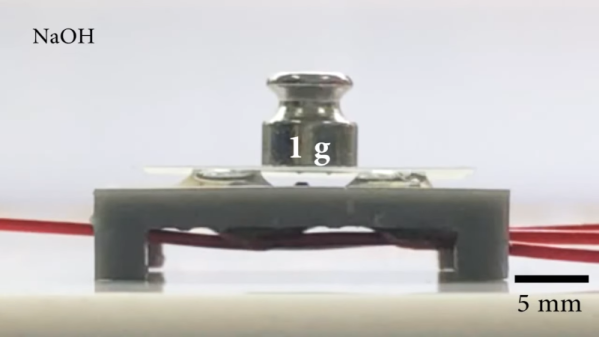
The most common liquid metal is mercury, of course, and it has its uses. However, its toxicity has led to a reduction in its use. Gallium has low toxicity and also doesn’t easily evaporate. What can you do with it? Check out the video below to see a very simple demonstration of the liquid metal lifting a small — very small — weight with an electrical impulse.

Continue reading “Better Robots Through Gallium”