8″ Floppy On Your PC?

We should probably have a new metric for measuring mass storage performance: bytes per pound. An old IBM tape drive from the S/360 days, for example, could hold almost 6 megabytes of data. It also weighed more than a typical refrigerator. Today, a tiny postage-stamp-sized card can hold gigabytes of data and weighs — at most — a few ounces. Somewhere in the middle is the old 8 inch floppy drive. At its peak, you could cram about 1.2 megabytes on it, but even with the drive you could lift it all in one hand. These disks and their descendants ruled the computing world for a while. [Adrian asks the question: can you use an 8″ floppy drive on a PC? The answer is in the video below.

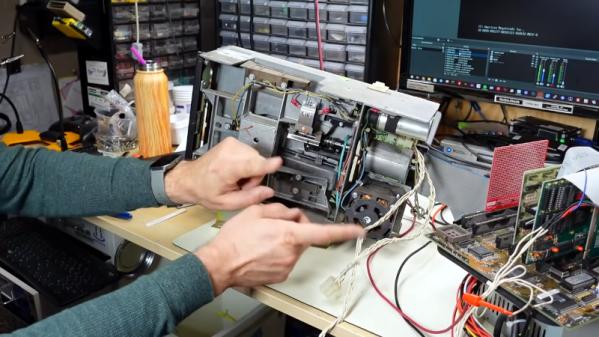
He didn’t do it on a lark. [Adrian] is getting ready to restore a TRS-80 Model II so he wanted to create some 8″test floppies. But how do you marry a 40-something-year-old drive to a modern computer? He had a few drives of unknown condition so there was nothing to do but try to get them working.
Continue reading “8″ Floppy On Your PC?”

Arduino Piano Tuner Is Pitch Perfect

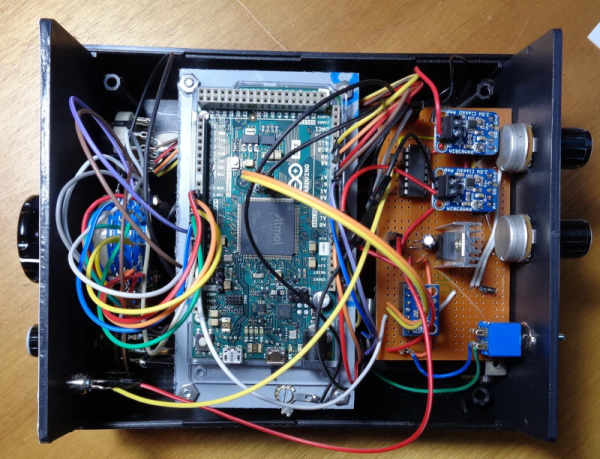
[JanHerman] knows that tuning musical instruments is all about precision and that precision is measured in a logarithmic unit called a cent. A cheap tuner unit might be accurate to 1.5 cents which sounds good until you look at one for ten times the price and find it is accurate to 0.1 cents. So you can spend $800 for precision or $60 for something less. [Jan] decided to build something better and cheaper using a 32-bit Arduino and a DDS frequency generator chip on a breakout board.

Oddly enough, the device doesn’t have a display. Instead, it generates a precise frequency and couples it to the piano using a transducer. You tune the string to the corresponding note. The post has a lot of detail about how piano tuning works.

Continue reading “Arduino Piano Tuner Is Pitch Perfect”

Faster IPA Recycling For Your Resin Print Workflow

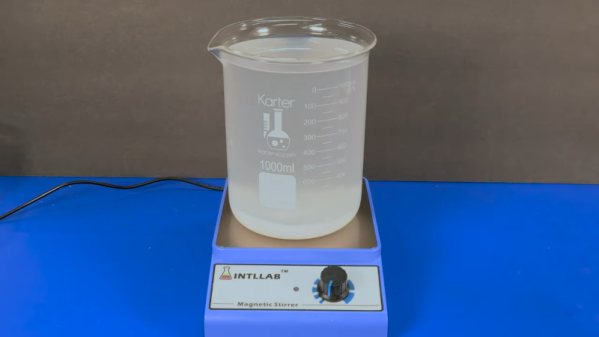
If you’ve printed with photopolymer resins, you know that you need alcohol. Lots of alcohol. It makes sense that people would like to reuse the alcohol both to be environmentally responsible and to save a little money. The problem is that the alcohol eventually becomes so dirty that you have to do something. Given time, the polymer residue will settle to the bottom and you can easily pour off most of the clean liquid. You can also use filters with some success. But [Makers Mashup] had a different idea. Borrowing inspiration from water treatment plants, he found a chemical that will hasten the settling process. You can see a video of his process below.

The experimentation started with fish tank clarifier, which is — apparently — mostly alum. Alum’s been used to treat wastewater for a long time. Even the ancient Romans used it for that purpose in the first century. Alum causes coagulation and flocculation so that particles in the water wind up sinking to the bottom.

Continue reading “Faster IPA Recycling For Your Resin Print Workflow”

Most FDM Printers Are Also Filament Dryers (with A Little Help)

If you’ve printed with an FDM printer, you probably know there are many interrelated factors to getting a good print. One key item is the dryness of the filament. When you first crack your plastic open, it should be dry. Most filament is packed in a sealed bag with desiccant in it. But if you have the filament out for a while, it soaks up moisture from the air and that causes lots of problems. [Design Prototype Test] has built and bought filament dryers before, but now he would like to point out that every FDM printer with a heated bed can act as a filament dryer. You can see the details in the video below.

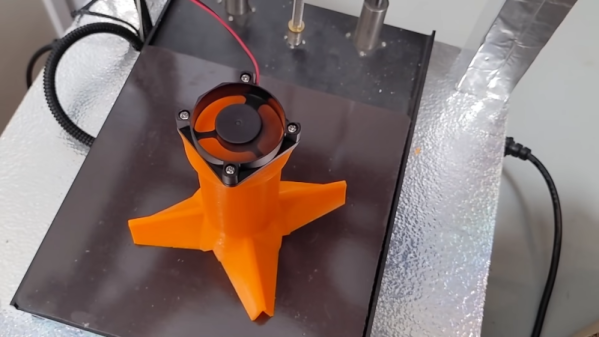
It turns out that the idea isn’t original, but it doesn’t seem to be one that has caught on. What the video shows though, is to take the idea and run with it. A 3D printed support sits on the bed and accepts a cheap PC fan. The whole affair gets boxed up with cardboard and can dry the filament.

Continue reading “Most FDM Printers Are Also Filament Dryers (with A Little Help)”

Linux Fu: Automatic Header File Generation

I’ve tried a lot of the “newer” languages and, somehow, I’m always happiest when I go back to C++ or even C. However, there is one thing that gets a little on my nerves when I go back: the need to have header files with a declaration and then a separate file with almost the same information duplicated. I constantly make a change and forget to update the header, and many other languages take care of that for you. So I went looking for a way to automate things. Sure, some IDEs will automatically insert declarations but I’ve never been very happy with those for a variety of reasons. I wanted something lightweight that I could use in lots of different toolsets.

I found an older tool, however, that does a pretty good job, although there are a few limitations. The tool seems to be a little obscure, so I thought I’d show you what makeheaders — part of the Fossil software configuration management system. The program dates back to 1993 when [Dwayne Richard Hipp] — the same guy that wrote SQLite — created it for his own use. It isn’t very complex — the whole thing lives in one fairly large C source file but it can scan a directory and create header files for everything. In some cases, you won’t need to make big changes to your source code, but if you are willing, there are several things you can do.

Continue reading “Linux Fu: Automatic Header File Generation”

Heathkit IM-13 VTVM Repair

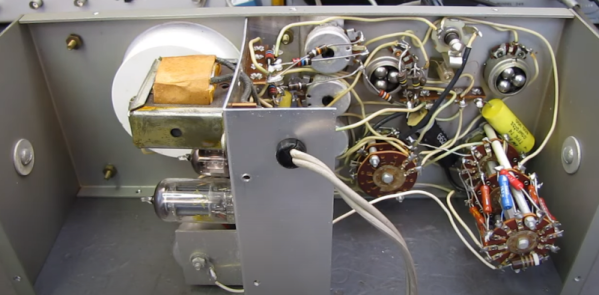
If you are under a certain age, you might not know the initialism VTVM. It stands for vacuum tube voltmeter. At first glance, you might just think that was shorthand for “old voltmeter” but, in fact, a VTVM filled a vital role in the old days of measuring instruments. [The Radio Mechanic] takes us inside a Heathkit IM-13 that needed some loving, and for its day it was an impressive little instrument.

Today, our meters almost always have a FET front end and probably uses a MOSFET. That means the voltage measurement probes don’t really connect to the meter at all. In a properly working MOSFET, the DC resistance between the gate and the rest of the circuit is practically infinite. It is more likely that a very large resistor (like 10 megaohms) is setting the input impedance because the gate by itself could pick up electrostatic voltage that might destroy the device. A high resistance like that is great when you make measurements because it is very unlikely to disturb the circuit you are trying to measure and it leads to more accurate measurements.

Continue reading “Heathkit IM-13 VTVM Repair”

Solar Cells, Half Off

A company named Leap Photovoltaic claims they have a technology to create solar panels without silicon wafers which would cut production costs in half. According to [FastCompany] the cells are still silicon-based, but do not require creating wafers as a separate step or — as is more common — acquiring them as a raw material.

The process is likened to 3D printing as silicon powder is deposited on a substrate. The design claims to use only a tenth of the silicon in a conventional cell and requires fewer resources to produce, too.

Continue reading “Solar Cells, Half Off”