Smooth 3D Prints With Alcohol

There was a time when most 3D printers used ABS, which is a great plastic for toughness, but is hard to print with since it tends to warp. Worse still, it stinks and the fumes may be bad for you. Most people have switched over to printing in PLA these days, but one thing you might miss with this more forgiving plastic is vapor smoothing with acetone; a smoothed print doesn’t show layer lines and looks more like plastic part that didn’t go through a nozzle.

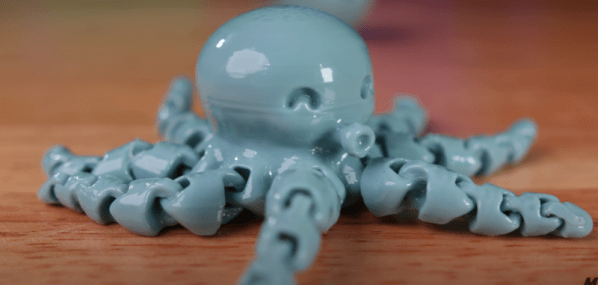
[Major Hardware] likes the look of vapor smoothed parts, but doesn’t like working with ABS and acetone fumes, so he’s started using Polysmooth. As you can see in the video below, the results look good, but be warned that the filament is relatively pricey. Plus you need to use a $300 machine that atomizes your alcohol into a mist. We feel certain you could do the same thing for less since it appears to just be like a humidifier, but we’d also suggest being careful putting flammable substances in a consumer-grade humidifier and certainly don’t use a vaporizer.

The filament sounds like it is on par with PLA for ease of printing. The material has a higher glass temperature than PLA but less than ABS. The tensile strength and Young’s modulus (a measure of stiffness) numbers are comparable to ABS. Although all smoothing has some imperfections and you probably need to experiment with times and other parameters. The smoothing did fuse some movable joints, so anything that moves or fits together is probably a bad candidate for this process. We’ve also heard that thin-walled parts can get soft in water due to alcohol residue, but you can dry or soak the part clean to avoid that.

If you want to try your own hand at making a mist, this might get you started. After all, if it can handle acetone, we imagine alcohol isn’t any worse. While it isn’t as easy to handle as alcohol, we hear the solvents such as THF or ethyl acetate can smooth regular PLA. Heat guns and open flames are popular, too.


Continue reading “Smooth 3D Prints With Alcohol”

Balloon Antenna Doesn’t Need A Tower

What do you do with floral wire and balloons from Dollar Tree? If you are [Ham Radio Crash Course], you make a ham radio antenna. Floral wire is conductive, and using one piece as a literal sky hook and the other as a ground wire, it should do something. He did use, as you might expect, a tuner to match the random wire length.

The first attempt had too few balloons and too much wind. He eventually switched to a non-dollar store helium tank. That balloon inflates to about 36 inches and appears to have plenty of lift. It looks like by the end he was using two of them.

Continue reading “Balloon Antenna Doesn’t Need A Tower”

Circuit VR: Arduino Virtually Meets Analog

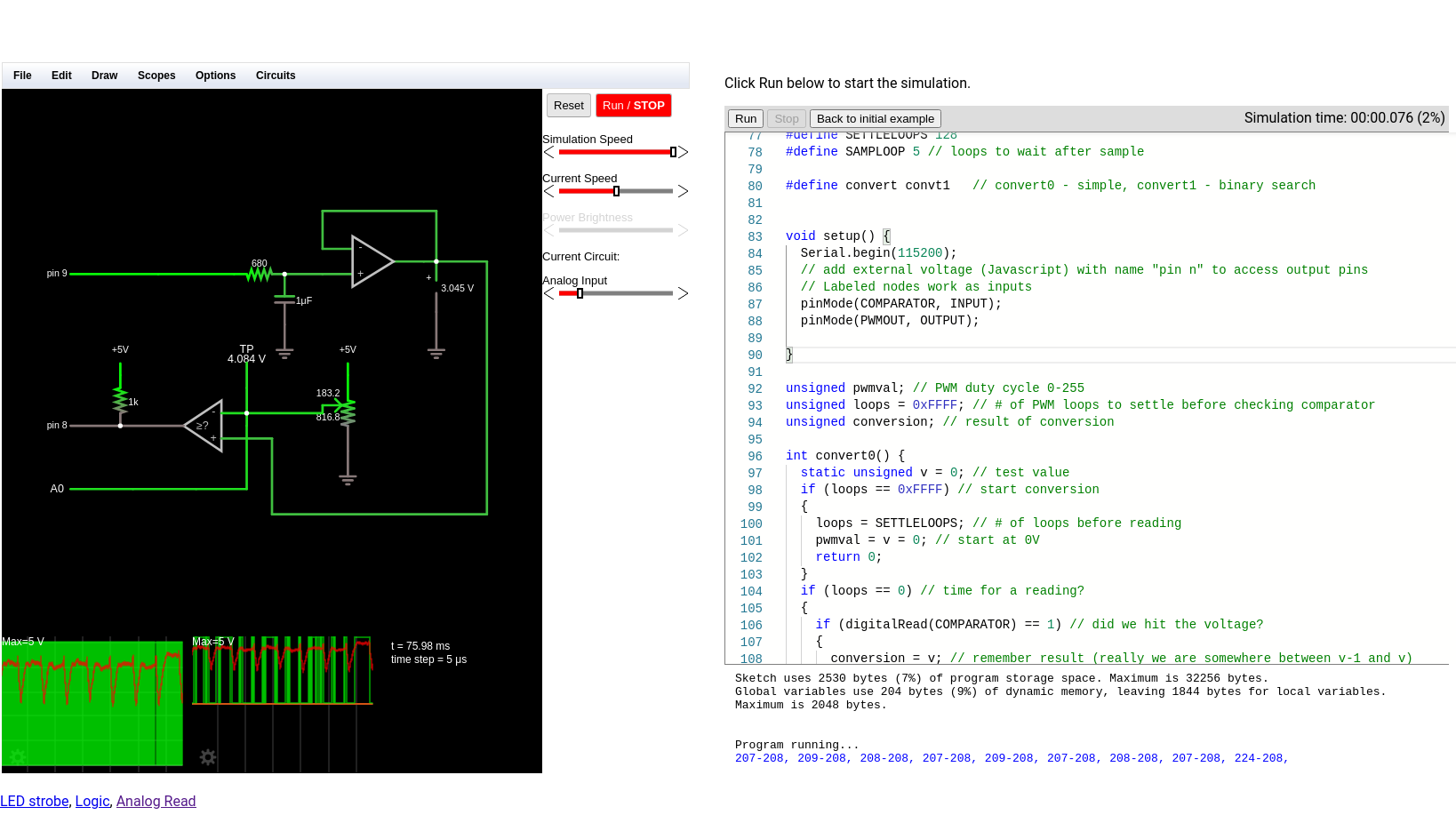
There was a time when building electronics and building software were two distinct activities. These days, almost any significant electronic project will use a CPU somewhere, or — at least — could. Using a circuit simulator can get you part of the way and software simulators abound. But cosimulation — simulating both analog circuits and a running processor — is often only found in high-end simulation products. But I noticed the other day the feature quietly snuck into our favorite Web-based simulator, Falstad.

The classic simulator is on the left and the virtual Arduino is on the right.

Back in March, the main project added work from [Mark McGarry] to support AVR8js written by [Uri Shaked]. The end result is you can have the circuit simulator on the left of the screen and a Web-based Arduino IDE on the right side. But how does it work beyond the simple demo? We wanted to find out.

The screen looks promising. The familiar simulator is to the left and the Arduino IDE — sort of — is to the right. There’s serial output under the source code, but it doesn’t scroll very well, so if you output a lot of serial data, it is hard to read.

Continue reading “Circuit VR: Arduino Virtually Meets Analog”

Robot Clings To Ceiling

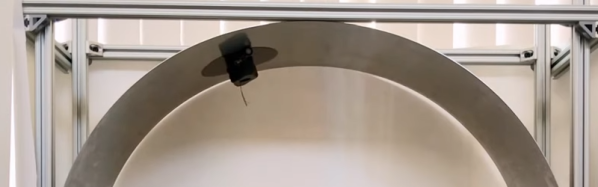
Imagine you are at the movies and you see a Roomba-like robot climbing a wall or clinging to a ceiling. How would that work? If you are like us, you might think of suction cups or something mechanical or magnetic in the wall. Then again, it is a movie, so maybe it is just a camera trick. The robots from the Bioinsipired Robotics and Design Lab at UCSD are no camera trick, though. As [Evan Ackerman] mentions in a post on IEEE Spectrum, “It’s either some obscure fluid effect or black magic.” You can watch a video about the bots, below.

It turns out, the answer is closer to a suction cup than you might think. According to the paper from the lab, a small flexible disk vibrates at 200 Hz. This generates a thin (less than 1 mm) layer of low pressure air in between the disk and the underlying surface. The robot can resist a force of up to 5 newtons from the suction from the disk.

Continue reading “Robot Clings To Ceiling”

Historical Hackers: Ctesibius Tells Time

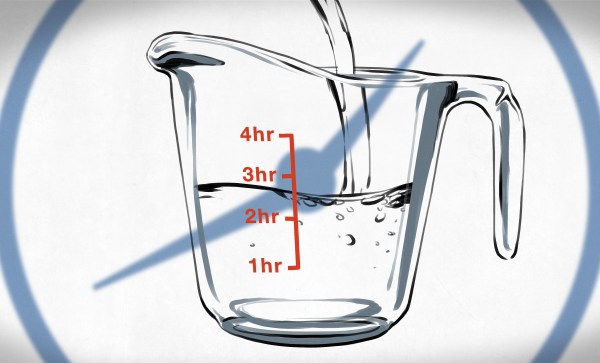
People are obsessed with the time and the weather. We’ve talked about the weather since we were all cave dwellers hunting with spears. But the time is a different matter. Sure, people always had the idea of the passage of time. The sun rising and setting gives a natural sense of days, but daylight and dark periods vary by the time of year and to get an accurate and linear representation of time turns out to be rather difficult. That is unless you are a Greek engineer living in Alexandria around 250 BC.

Legend has it that and engineer working in his father’s barbershop led him to discover not only the first working clock, but also the pipe organ, launching the field of pneumatics in the process. That engineer was named Ctesibius and while his story is mostly forgotten, it shows he has a place as a historical hacker.

You might think there were timekeeping devices before 250 BC, and that’s sort of true. However, the devices before Ctesibius had many limitations. For example, a sundial can tell time, but only if the sun is shining. At night or during a storm it is worthless.

Continue reading “Historical Hackers: Ctesibius Tells Time”

3D Printed Calipers Work Like Clockwork

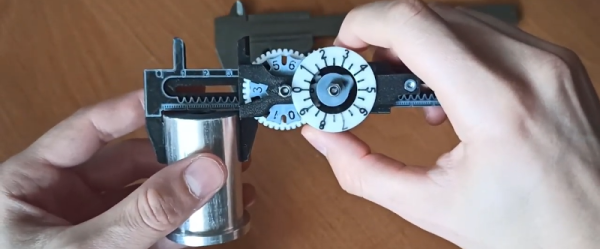
Most of us use calipers when working with our 3D printers. Not [Albert]. He has a clockwork caliper design that he 3D printed. The STL is available for a few bucks, but you can see how it works in the video below. We don’t know how well it works, but we’ll stick with our digital calipers for now.

The digital readout on this caliper is more like a sophisticated watch. A window shows 10s of millimeters and two dials show the single digits and the number after the decimal point.

Continue reading “3D Printed Calipers Work Like Clockwork”

Printer Uses Algae To Print Live Structures

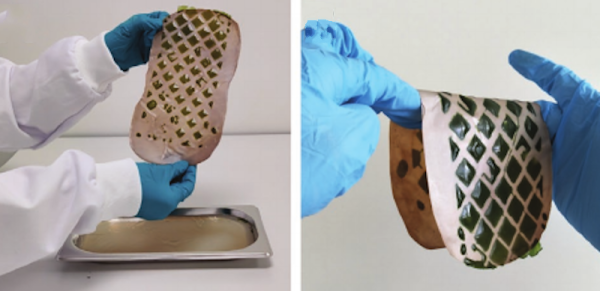
There’s a famous scene in the movie version of Frankenstein — but not in the book — where the doctor exclaims: “It’s alive!” We wonder if researchers at TU Delft had the same experience after printing living structures using algae. Of course, they aren’t creating life or even reanimating it. They are simply depositing living cells in artificial structures using a bio-compatible substrate. According to the paper, the living cells or bio ink can build up layers in a 3D printing fashion and the structures are “self-standing.”

There are some advantages, for example that the algae get their energy from sunlight. Of course they also have to eat, so unless you provide some snacks, your print will die off in about 3 days.

Continue reading “Printer Uses Algae To Print Live Structures”