Anodize Aluminum Easily

We’ve all seen brightly-colored pieces of aluminum and can identify them as anodized. But what does that mean, exactly? A recent video from [Ariel Yahni] starring [Wawa] — a four-legged assistant — shows how to create pieces like this yourself. You can see [Wawa’s] new dog tag, below.

[Ariel] found a lot of how to information on using sulphuric acid, but that’s dangerous stuff. One web page we covered years ago, though, discussed a safer chemistry. The process requires lye and a common pool chemical used to decrease pH. Sodium hydroxide isn’t super safe, but it is much less problem to buy, store, and use than battery acid.

Continue reading “Anodize Aluminum Easily”

Ceramic Aerogel Meets Stretch Goals

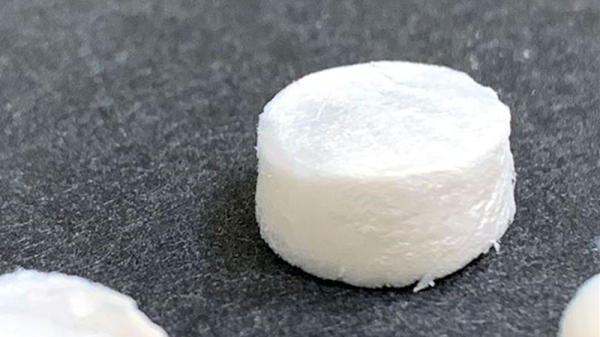
Aerogels have changed how a lot of high tech equipment is insulated. Resembling frozen smoke, the gel is lightweight and has extremely low thermal conductivity. However there’s always a downside, traditional aerogel material is brittle. Any attempt to compress it beyond 20% of its original size will change the material. Researchers at UCLA and eight other universities around the world have found a new form of ceramic aerogel that can compress down to 5% of its original size and still recover. It is also lighter and able to withstand extreme temperature cycles compared to conventional material. The full paper is behind a paywall, but you can view the abstract.

Traditional aerogel is more likely to fracture when exposed to high temperatures or repeated temperature swings, but the new material is more robust. Made from boron nitride, the atoms have a hexagonal pattern which makes it stronger.

Continue reading “Ceramic Aerogel Meets Stretch Goals”

Ludwig Promises Easy Machine Learning From Uber

Machine learning has brought an old idea — neural networks — to bear on a range of previously difficult problems such as handwriting and speech recognition. Better software and hardware has made it feasible to apply sophisticated machine learning algorithms that would have previously been only possible on giant supercomputers. However, there’s still a learning curve for developing both models and software to use these trained models. Uber — you know, the guys that drive you home when you’ve had a bit too much — have what they are calling a “code-free deep learning toolbox” named Ludwig. The promise is you can create, train, and use models to extract features from data without writing any code. You can find the project itself on GitHub.io.

The toolbox is built over TensorFlow and they claim:

Ludwig is unique in its ability to help make deep learning easier to understand for non-experts and enable faster model improvement iteration cycles for experienced machine learning developers and researchers alike. By using Ludwig, experts and researchers can simplify the prototyping process and streamline data processing so that they can focus on developing deep learning architectures rather than data wrangling.

Continue reading “Ludwig Promises Easy Machine Learning From Uber”

Pathio: New 3D Slicer From E3D

Having a great word processor won’t actually help you write the next bestselling novel. It might make it easier, but if you have a great novel in you, you could probably write it on paper towels with a crayon if you had to. A great 3D printer isn’t all you need to make great 3D prints. A lot depends on the model you start with and that software known as a slicer. You have several choices, and now you have one more: PathIO, a slicer sponsored by E3D, is out in beta. You can see a video about its features below.

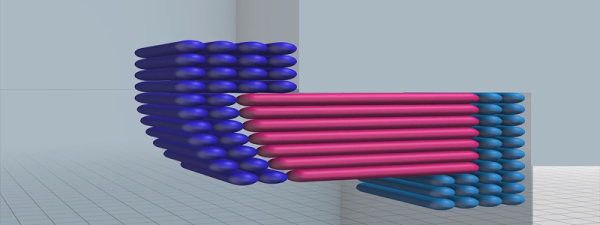
The software has a few rough edges as you might expect from a beta. The slicer doesn’t feed Gcode to a printer directly, although Octoprint integration is forthcoming. Developers say they are focusing on the slicing engine which is totally new. According to their website, conventional slicers immediately cut a model into 2D slices and then decide how to realize each slice with respect to the shell and infill. Pathio works in 3D space and claims this has benefits for producing correct wall thickness and an increase in self-supporting geometries.

Continue reading “Pathio: New 3D Slicer From E3D”

Ultra Tiny PC Plays Snake

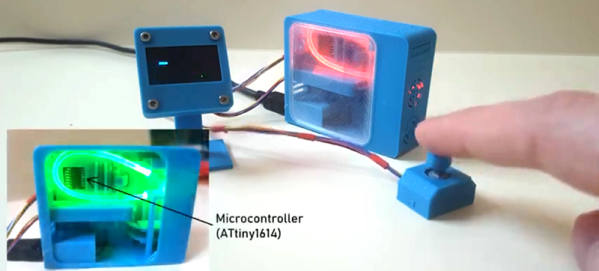
[Steve Martin] used to do a comedy act about “Let’s get small!” You have to wonder if [Paul Klinger] is a fan of that routine, as he recently completed a very small 3D printed PC that plays snake. Ok, it isn’t really a PC and it isn’t terribly practical, but it is really well executed and would make a great desk conversation piece. You can see the thing in all its diminutive glory in the video below.

The 3D printer turned out a tiny PC case, a monitor, and a joystick. The PC contains an ATtiny1614, an RGB LED, and some fiber optic to look like case lighting. The monitor is really a little OLED screen. A 5-way switch turns into the joystick.

Continue reading “Ultra Tiny PC Plays Snake”

Foundations For Machine Learning In English (Or Russian)

We are big fans of posts and videos that try to give you a gut-level intuition on technical topics. While [vas3k’s] post “Machine Learning for Everyone” fits the bill, we knew we’d like it from the opening sentences:

Machine Learning is like sex in high school. Everyone is talking about it, a few know what to do, and only your teacher is doing it.”

That sets the tone. What follows is a very comprehensive exposition of machine learning fundamentals. There is no focus on a particular tool, instead this is all the underpinnings. The original post was in Russian, but the English version is easy to read and doesn’t come off as a poor machine translation.

Continue reading “Foundations For Machine Learning In English (Or Russian)”

Drops Of Jupyter Notebooks: How To Keep Notes In The Information Age

Our digital world is so much more interactive than the paper one it has been replacing. That becomes very obvious in the features of Jupyter Notebooks. The point is to make your data beautiful, organized, interactive, and shareable. And you can do all of this with just a bit of simple coding.

We already leveraged computer power by moving from paper spreadsheets to digital spreadsheets, but they are limited. One thing I’ve seen over and over again — and occasionally been guilty of myself — is spreadsheet abuse. That is, using a spreadsheet program to do something I probably ought to write a program to do. For those times that you want something quick but want something more than a spreadsheet, you should check out Jupyter Notebooks. The system is most commonly associated with Python, but it isn’t Python-specific. There are over 100 languages supported — many community-developed. You can even install a C++ interpreter backend for it. Because of the client/server architecture, it is very simple to share notebooks with other users.

You can — in theory — use Jupyter for anything you could use Python for. In practice, it seems to get a lot of workout with people analyzing large data sets, doing machine learning, and similar tasks.

The Good: Simple, Powerful, Extensible

The idea is simple. Think of a Markdown-enabled web page that can connect to a backend (a kernel, in Jupyter-speak). The backend can run on your machine or remotely and will support some kind of language — often Python. The document has cells that line up vertically (like a single wide spreadsheet column). For example, here’s a simple notebook I created to explain how a bunch of sine waves add up to a square wave:

Continue reading “Drops Of Jupyter Notebooks: How To Keep Notes In The Information Age”