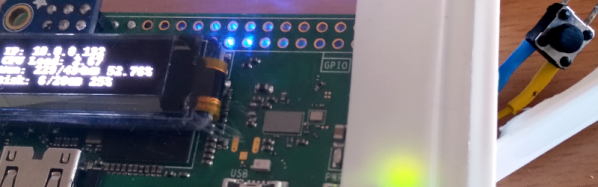
There’s a long history of building things in Altoid tins, but the Pi-Tac 1.0 uses a Pi Zero W inside a Tic-Tac box. In addition to the processors, there is a tiny OLED display and a battery controller. According to a Reddit post, [Deathonater] plans to use it as a WiFi access point.
The display and the battery/power controller are from AdaFruit. You can find some sample code for the battery controller if you want to duplicate the design. You can also opt for an enhanced version that can report the battery state readily.
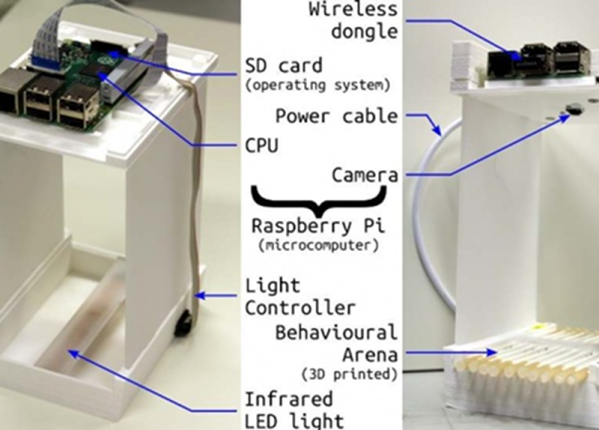
Groucho Marx famously said, “Time flies like an arrow, but fruit flies like a banana.” As insulting as it is, researchers often use fruit flies for research because they have similar behavior and genetics to humans. For example, the flies exhibit signs of anxiety, stress, and many common diseases. Researchers at Imperial College London built an inexpensive and customizable research platform for fruit flies — the ethoscope — that uses a 3D printed enclosure and a Raspberry Pi to study our winged counterparts. You can see a video about the ethoscope, below.
By using a camera, the Pi can watch the flies, something researchers used to do by hand. The software is easy to customize. For example, while studying sleep deprivation, the ethoscope could detect when a fly didn’t move for 20 seconds and rotate its tube to wake it up.
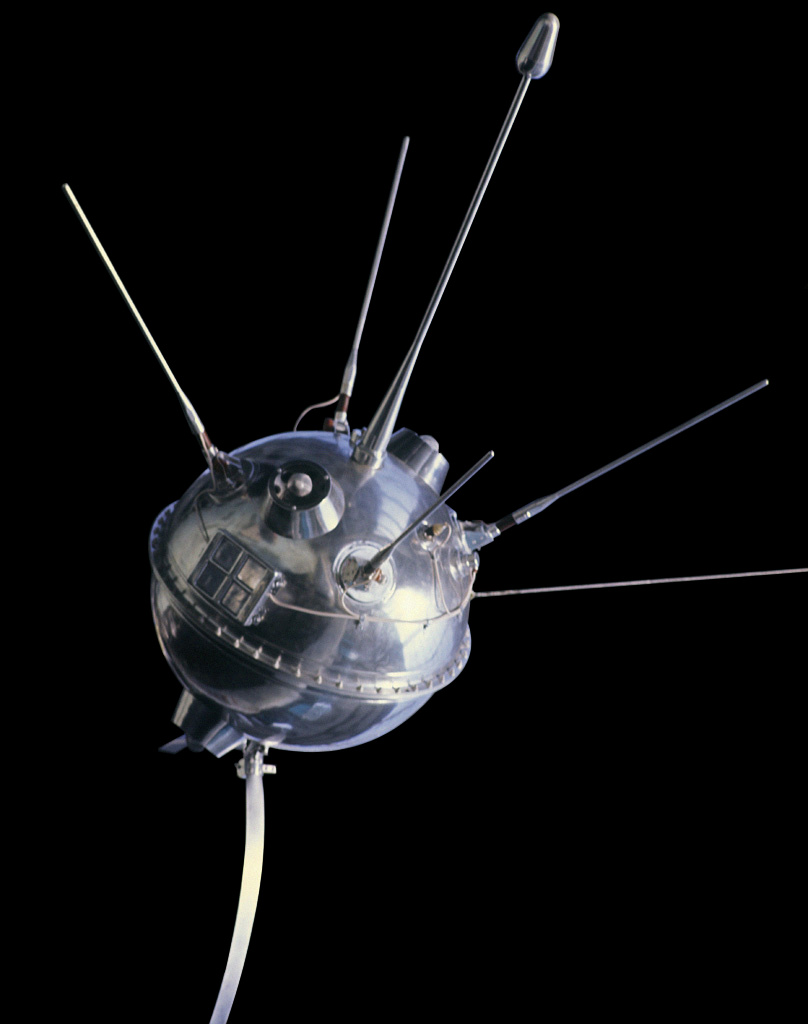
Ever hear of the Soviet Luna program? In the west, it was often called Lunik, if you heard about it at all. Luna was a series of unmanned moon probes launched between 1959 and 1976. There were at least 24 of them, and 15 were successful. Most of the failures were not reported or named. Luna craft have a number of firsts, but the one we are interested in is that it may have been the first space vehicle to be stolen — at least temporarily — in a cold war caper worthy of a James Bond novel.
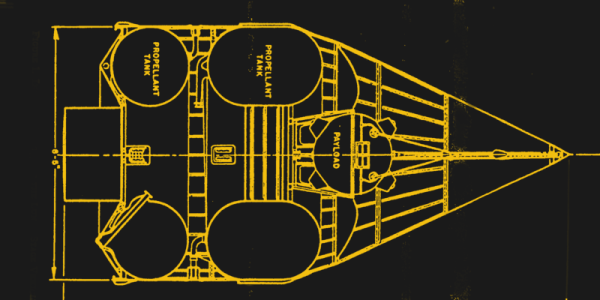
Luna-1 Payload
Around 1960, the Soviet Union toured several countries with exhibits of their industrial and technological accomplishments. One of the items on display was the upper stage of a Luna vehicle with windows cut out to show the payload inside. At first, the CIA suspected the vehicle was just a model. But they wanted to be sure.
The story is laid out in a CIA document from 1967 that was only declassified in 1994. Even then, the document has a lot of redactions in it. The paper is sparse on how they managed it, but when the exhibit closed — somehow — a group of intelligence operatives wound up inside the exhibition hall alone for 24 hours.
What they found was surprising. While the engine and most of the avionics were gone, the vehicle was the real article. They took measurements and photos, hoping that analysis would reveal more about the vehicle’s performance characteristics.
Here’s where you start getting into the redacted material. The team was able to get something from the probe — probably machine tooling marks — but there wasn’t enough detail to identify where and how they were made. They decided to get a team specializing in this kind of analysis to examine it more closely.
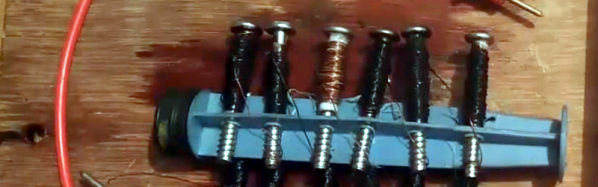
Volta’s pile — the first battery — was little more than silver and zinc discs separated by paper soaked in salt water. A classic classroom experiment is to build a pile from copper pennies, tin foil, and vinegar or lemon juice. [Omars2] has a different take on this old experiment. He creates a 9V battery using some zinc screws, copper wire, and salt water. There’s a video of the battery, below.
A syringe piston serves as a substrate for the cells, and each cell is just a screw with paper wrapped around it and then 35 turns of copper wire on top of that. The battery is soaked in salt water, although we suspect vinegar or lemon juice would work even better. Heating the electrolyte is also a good idea.
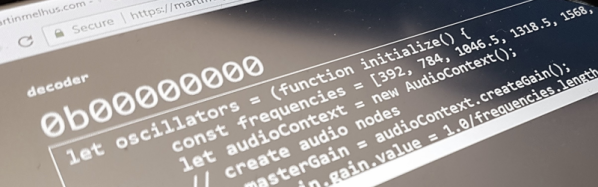
If you are beyond a certain age, you will recall when getting on the Internet was preceded by strange buzzing and squawking noises. Modems used tones to transmit and receive data across ordinary telephone lines. There were lots of tricks used to keep edging the speed of modem up until — at the end — you could download (but not upload) at a blazing 56,000 bits per second. [Martin Kirkholt Melhus] decided to recreate a modem. In a Web browser. No kidding.
We started to say something about a modem in the cloud, but that wouldn’t really be accurate. The modem uses the HTML 5 audio API, so it really runs in the browser. We would have been really surprised if [Martin] had cooked up a modem able to interact with a real modem, but as you might expect, the browser modem only communicates with other instances of itself. If you want a brief introduction to HTML 5 audio, you might enjoy the video below.
Brushless motors have a lot of advantages over traditional brushed motors. However, testing them can be a bit of a pain. Because the resistance of the motor’s coils is usually very low, a standard resistance check isn’t likely to be useful. Some people use LC meters, but those aren’t as common as a multimeter or oscilloscope. [Nils Rohwer] put out two videos — one two years ago and one recently — showing how to test a brushless motor with a multimeter or scope. Oh, you do need one other thing: a drill.
You don’t have to drill into the motor, instead you use the drill to spin the motor’s shaft. Since a motor and a generator are about the same thing, you can read the voltages produced by the spinning motor and determine if it is good or not. The first video shows the technique and the second, more recent video shows a scope reading a bad motor. You can see both videos, below.
If you’ve had the classic engineering education, you probably have a hazy recollection of someone talking about control theory. If you haven’t, you’ve probably at least heard of PID controllers and open loop vs closed loop control. If you don’t know about control theory or even if you just want a refresher, [Brian Douglas] has an excellent set of nearly 50 video lectures that will give you a great introduction to the topic. You can watch the first lecture, below.
You might think that control systems are only useful in electronics when you are trying to control a process like a chemical plant or a temperature. However, control theory shows up in a surprising number of places from filters to oscillators, to the automatic gain control in a receiver. You’ll find the background behind many familiar results inside control theory. Sort of like when you take calculus and you discover how they came up with all the formulas you memorized in geometry.