A Video Game Odyssey: How Magnavox Launched The Console Industry

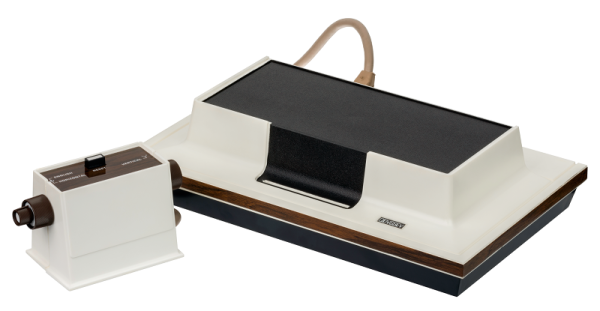
What was the first video game console? If you said the Atari 2600, you would be wrong, but we’d forgive you. After all, the Atari was early and widely sold. It also had the major features you expect from a video game. However, there was an earlier console available. the Magnavox Odyssey.

This system was black and white, had two wired controllers, and while it didn’t quite have cartridges, you could select from one of several games. The system seems inexpensive today at $100 (not including the optional light gun). However, adjusting for 1972 currency value, that’s equivalent to about $600 today.

It was not an impulse buy, and the differentiation between games was mostly an exercise in imagination. But the the Magnavox Odyssey nevertheless brought computer technology into the home and that was exciting. It proved a market existed for home video gaming, and served no small part in the success of Atari.

Continue reading “A Video Game Odyssey: How Magnavox Launched The Console Industry”
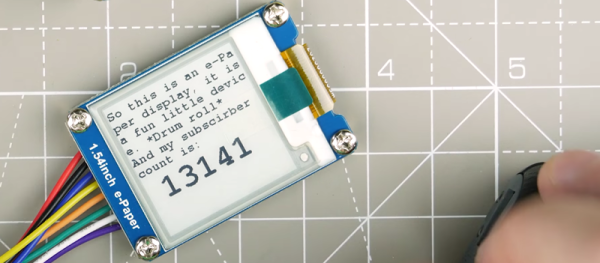
Breadboarding With E-Paper

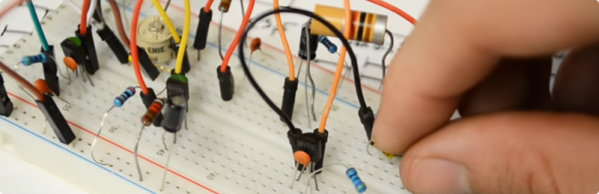
[David Watts] picked up an inexpensive Waveshare e-Paper display. He made a video about using it with a breadboard, and you can see it below.

The E-Paper or E-Ink displays have several advantages. They are low power, they retain their display even without power, and they are very visible in direct light. The downside is they don’t update as fast as some other display technologies.

Continue reading “Breadboarding With E-Paper”

Wolfram Alpha Shows Its Work

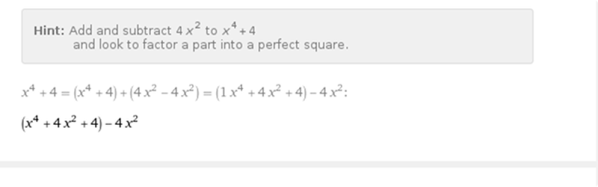
The bane of math students everywhere is the teacher asking for you to show your work. If you’ve grown up where a computer is a normal part of school work, that might annoy you since a lot of tools just give you an answer. We aren’t suggesting you cheat at homework, but we did notice that Wolfram Alpha now shows more of its work when it solves many common math problems.

Granted, the site has always shown work on some problems. However, a recent update shows more intermediate steps and also covers more kinds of problems in a step-by-step format. There are examples, but be aware that for general use, you do need to upgrade to pro (about $6 a month or less if you are student or teacher).

Continue reading “Wolfram Alpha Shows Its Work”

Think You Know Everything About Soldering?

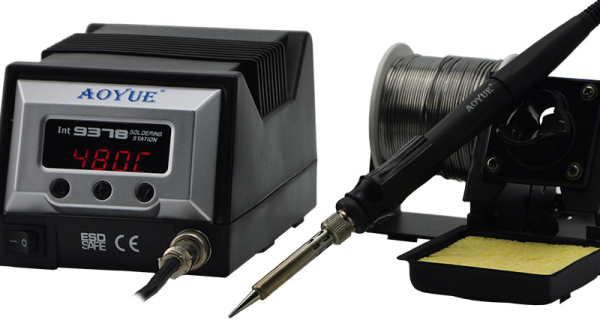
[Joshua] has frequent discussions about his soldering techniques with viewers of his YouTube channel. He finally decided to interview [Randy Rubinstein] who is the president of SRA Soldering. In nearly an hour, they talk about everything from solder alloys to proper temperature. They also talk about lead exposure, flux cleaning, and lead-free solder.

They also talk about strategies for rework with lead-free and using special solder for removing SMD components. Honestly, although the first frame of the video says “your solder sucks,” we didn’t really find any earth-shattering revelations about something everyone’s doing wrong. We did, however, find a lot of good advice and some interesting details about things like the uses for different solder alloys.

Continue reading “Think You Know Everything About Soldering?”

Hakko FX-901: Better Than TS-100?

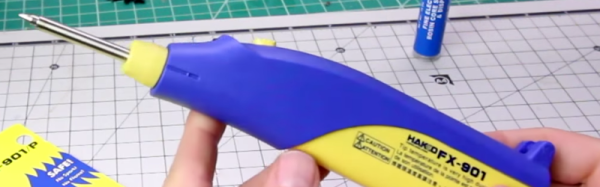
You’ve surely seen the TS-100 soldering iron. It has an OLED display, an ARM processor, and will run with an external battery pack. They are not too pricey, but at $80 or so they aren’t exactly an impulse buy, either. [Drone Camps RC] used one in the field and decided to try a Hakko FX-901 instead. He did a video review that you can see below.

The FX-901 is about half the price of a TS-100. Granted, it doesn’t have a fancy display and you can’t hack it to play Tetris. However, it does take batteries (including rechargeable) without an external pack. The manufacturer claims up to two hours of use and that it will melt solder in 40 seconds. From the video, the iron actually melted solder in under 30 seconds. The two hours, by the way, is with rechargeables. Alkaline AA batteries should give about 70 minutes of operation.

Continue reading “Hakko FX-901: Better Than TS-100?”

Antenna Basics By Whiteboard

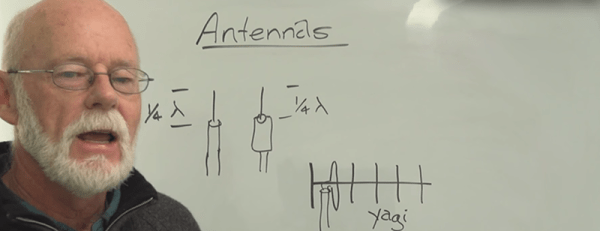
Like a lot of people, [Bruce] likes radio controlled (RC) vehicles. In fact, many people get started in electronics motivated by their interest in RC. Maybe that’s why [Bruce] did a video about antenna basics where he spends a little more than a half hour discussing antennas. You can see the video below.

[Bruce] avoids any complex math and focuses more on intuition about antennas, which we like. Why does it matter that antennas are cut to a certain length? [Bruce] explains it using a swing and a grandfather clock as an analogy. Why do some antennas have gain? Why is polarization important? [Bruce] covers all of this and more. There’s even a simple experiment you can do with a meter and a magnet that he demonstrates.

Continue reading “Antenna Basics By Whiteboard”

Theremin In Detail

[Keystone Science] recently posted a video about building a theremin — you know, the instrument that makes those strange whistles when you move your hands around it. The circuit is pretty simple (and borrowed) but we liked the way the video explains the theory and even dives into some of the math behind resonant frequencies.

The circuit uses two FETs for the oscillators. An LM386 amplifier (a Hackaday favorite) drives a speaker so you can use the instrument without external equipment. The initial build is on a breadboard, but the final build is on a PCB and has a case.

Continue reading “Theremin In Detail”