Sous Vide Arduino Isn’t Lost In Translation

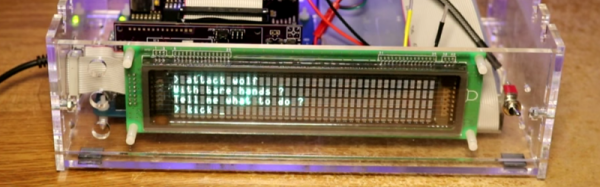
If your idea of a six-course meal is a small order of chicken nuggets, you might have missed the rise of sous vide among cooks. The idea is you seal food in a plastic pouch and then cook it in a water bath that is held at a precise temperature. That temperature is much lower than you usually use, so the cook times are long, but the result is food that is evenly cooked and does not lose much moisture during the cooking process. Of course, controlling a temperature is a perfect job for a microcontroller and [Kasperkors] has made his own setup using an Arduino for control. The post is in Danish, but Google translate is frighteningly good.

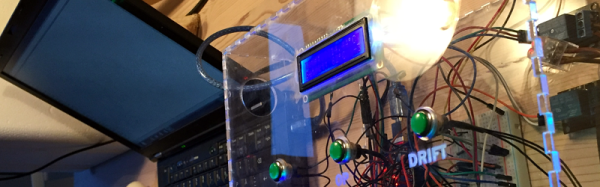
The attractive setup uses an Arduino Mega, a display, a waterproof temperature probe, and some odds and ends. The translation does fall down a little on the parts list, but if you substitute “ground” for “earth” and “soil” you should be safe. For the true epicurean, form is as important as function, and [Kasperkors’] acrylic box with LEDs within is certainly eye-catching. You can see a video of the device, below.

Continue reading “Sous Vide Arduino Isn’t Lost In Translation”

Help Wanted: Open Source Oscilloscope On Rigol Hardware

We’ve often heard (and said) if you can’t hack it, you don’t own it. We noticed that [tmbinc] has issued a call for help on his latest project: developing new firmware and an FPGA configuration for the Rigol DS1054Z and similar scopes. It isn’t close to completion, but it isn’t a pipe dream either. [tmbinc] has successfully booted Linux.

There’s plenty left to do, though. He’s loading a boot loader via JTAG and booting Linux from the USB port. Clearly, you’d want to flash all that. Linux gives him use of the USB port, the LCD, the network jack, and the front panel LEDs and buttons. However, all of the actual scope electronics, the FPGA functions, and the communications between the processor and the FPGA are all forward work.

Continue reading “Help Wanted: Open Source Oscilloscope On Rigol Hardware”

Fundamentals Of Fingerprint Scanning

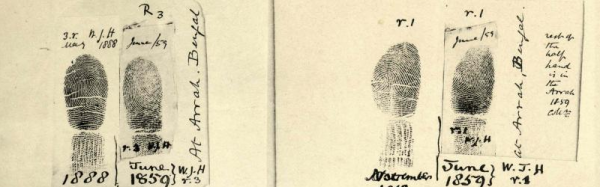
Like most (if not all) Hackaday readers, I like to know how the technology I use works. I’m always amazed, for example, how many otherwise smart people have no idea how the cellphone network works other than “it’s a radio.” So now that I have two phones with fingerprint scanners on them, I decided I needed to know more about what’s going on in there.

Sure, I assumed the sensor was capacitive (but maybe not, I found out). Plus we all know some super glue, scotch tape, and gummy bears are all you need to fake one out. However, that’s been known for about 15 years and we are still seeing phones and other devices rolling out with the same scanners. So for now, put aside the debate about whether we should be using fingerprint scanners. Let’s talk about how those sensors work.

Continue reading “Fundamentals Of Fingerprint Scanning”

FPGAs In C With Cynth

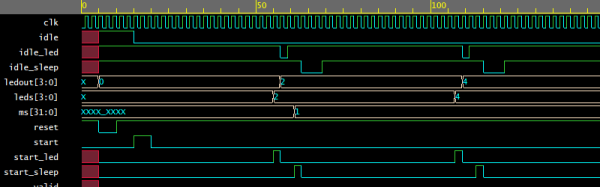
Programming an FPGA with Verilog looks a lot like programming. But it isn’t, at least not in the traditional sense. There have been several systems that aim to take C code and convert it into a hardware description language. One of these, cynth, is simple to use and available on GitHub. You will need to install scala and a build system called sbt, if you want to try it.

There are limitations, of course. If you want a preprocessor, you’ll have to run it separately. You can’t use global variables, multiplication, floats, and many other pieces of C. The compiler generates a Verilog file for each C function.
Continue reading “FPGAs In C With Cynth”

Papa Loves Mamba: Slithering Robot Is Reconfigurable

It makes sense considering evolution, but nature comes up with lots of different ways to do things. Consider moving. Land animals walk on four feet or two, some jump, and some use peristalsis or otherwise slither. Oddly, though, mother nature never developed the wheel (although the mother-of-pearl moth’s caterpillar will form its entire body into a hoop and roll away from attackers). Human-developed robots which, on the other hand, most often use wheels. Even a tank track has wheels within. [Joesinstructables] latest robot still uses wheels, but it emulates the slithering motion of a snake, He calls it the Lake Erie Mamba.

The most interesting thing about the robot is that it can reconfigure and move in several different modalities. Like the caterpillar, it can even form a wheel like an ouroboros and roll. You can see that at the end of the video, below.

Continue reading “Papa Loves Mamba: Slithering Robot Is Reconfigurable”

FlowCode Graphical Programming

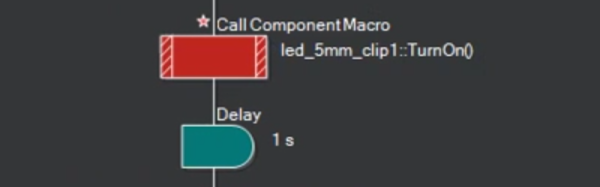
If you’ve ever been curious if there’s a way to program microcontrollers without actually writing software, you might be interested in FlowCode. It isn’t a free product, but there is a free demo available. [Web learning] did a demo of programming a Nucleo board using the system. You can check it out below.

The product looks slick and it supports a dizzying number of processors ranging from AVR (yes, it will do Arduino), PIC, and ARM targets. However, the pricing can add up if you actually want to target all of those processors as you wind up paying for the CPU as well as components. For example, the non-commercial starter pack costs about $75 and supports a few popular processors and components like LEDs, PWM, rotary encoders, and so on.

Continue reading “FlowCode Graphical Programming”

Z80 Fuzix Is Like Old Fashioned Unix

Classic Z80 computers tend to run CP/M. If you’re a purist you’ll be happy with that because that’s certainly what most serious Z80 computers ran back in the day. However, for actual use, CP/M does feel dated these days. Linux is more comfortable but isn’t likely to run on a Z80. Or is it? Linux borrows from Unix and back in the 1980s [Doug Braun] wrote a Unix-like OS for the Z80 called UZI. There have been lots of forks of it over the years, and a project called FuzixOS aims to make a useful Z80 Unix-like OS.

Of course, 1980 Unix was a lot different from modern-day Linux, but it is still closer to a modern system than CP/M. Fuzix also adds several modern features like 30 character file names and up-to-date APIs. The kernel isn’t just for the Z80, by the way. It can target a variety of older processors including the 6502, the 6809, the 8086, and others. As you might expect, the system can fit in a pretty small system.

The video below shows [Scott Baker’s] RC2014 computer running Fuzix. You’ll see it looks a lot like a Linux system, although that analogy only goes so far.

Continue reading “Z80 Fuzix Is Like Old Fashioned Unix”