Hacker U.

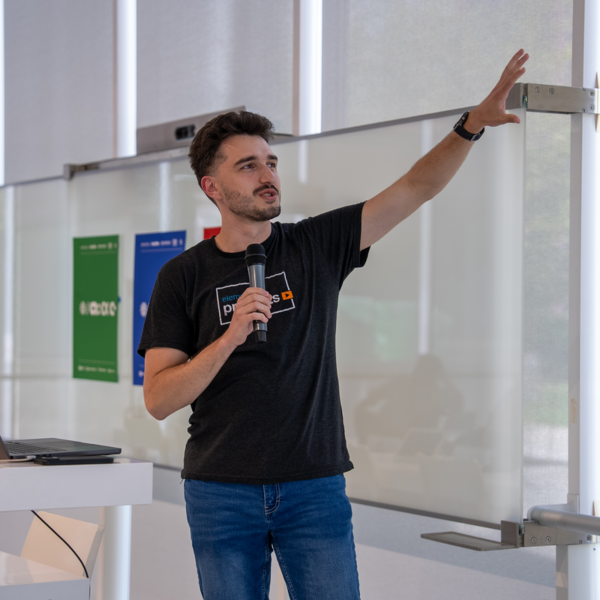
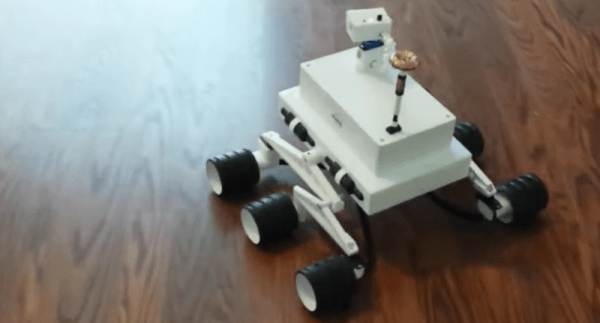
If you go to the University of South Florida, you can take the “Makecourse.” The 15-week program promises to teach CAD software, 3D printing, Arduino-based control systems, and C++. Don’t go to the University of South Florida? No worries. Professor [Rudy Schlaf] and [Eric Tridas] have made the entire course available online. You can see several videos below, but there are many more. The student project videos are great, too, like [Catlin Ryan’s] phase of the moon project (see below) or [Dustin Germain’s] rover (seen above).

In addition to a lesson plan and projects, there’s a complete set of videos (you can see a few below). If you are a regular Hackaday reader, you probably won’t care much about the basic Arduino stuff and the basic electronics–although a good review never hurts anyone. However, the more advanced topics about interrupts, SDCards, pin change interrupts might be just the thing. If you ever wanted to learn Autodesk Inventor, there are videos for that, too.
Continue reading “Hacker U.”

Measuring Capacitors At The Birth Of Rock And Roll

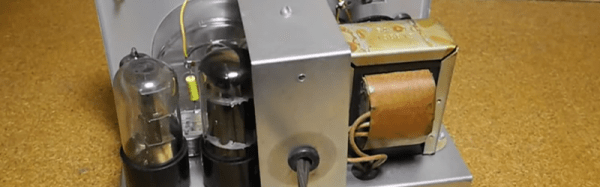
The late 1950s [Bill Haley], [Elvis Presley], and [Little Richard] were building a new kind of music. Meanwhile, electronic hobbyists were building their own gear from Heathkit. A lot of that gear shows you how far we’ve come in less than a century. [Jeff Tranter’s] YouTube channel is a great way to look at a lot of old Heathkit gear, including this really interesting “direct reading capacity meter.” You can see the video, below.

Measuring capacitance these days is easy. Many digital multimeters have that function. However, those didn’t exist in the 1950s–at least, not in the way we know them. The CM-1 weighed 5 pounds, had several tubes, and cost what would equate to $250 in today’s prices. Unlike other instruments of the day, though, the capacitance was read directly off a large analog meter (hence, the name). You didn’t have to interpret readings using a nomograph or move a knob to balance a bridge and read the knob’s position.

Continue reading “Measuring Capacitors At The Birth Of Rock And Roll”

Build Your Own PC — Really

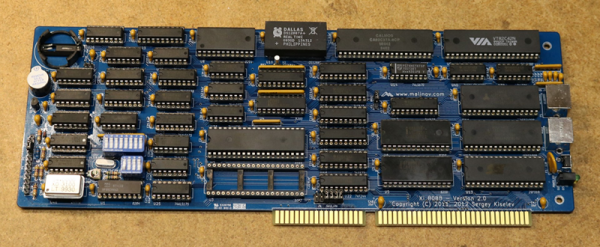
There was a time when building your own computer meant a lot of soldering or wire wrapping. At some point, though, building a PC has come to mean buying a motherboard, a power supply, and just plugging a few wires together. There’s nothing wrong with that, but [Scott Baker] wanted to really build a PC. He put together an Xi 8088, a design from [Sergey] who has many interesting projects on his site. [Scott] did a great build log plus a video, which you can see below.

As the name implies, this isn’t a modern i7 powerhouse. It is a classic 8088 PC with a 16-bit backplane. On the plus side, almost everything is conventional through-hole parts, excepting an optional compact flash socket and part of the VGA card. [Scott] acquired the boards from the Retrobrew forum’s inventory of boards where forum users make PCBs available for projects like this.

Continue reading “Build Your Own PC — Really”

Lattice ICE40 FPGA Configured By Linux Kernel

The Linux kernel recently added support for loading firmware into an FPGA via the FPGA Manager Framework. [OpenTechLab] has built a driver for the Lattice iCE40 FPGA (same chip used on the iCEStick and other development boards). One attraction to the iCE40 is there is an open source toolchain called iCEStorm.

Even if you aren’t specifically interested in FPGAs, the discussion about Linux device drivers is good background. The principles would apply to other drivers, and would definitely apply if you want to write another FPGA loader.

Continue reading “Lattice ICE40 FPGA Configured By Linux Kernel”

Apparently Time IS Money

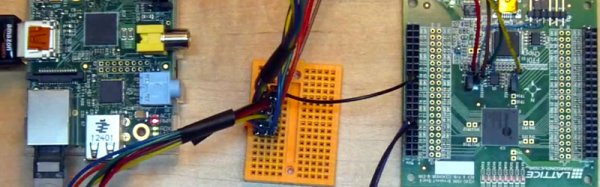
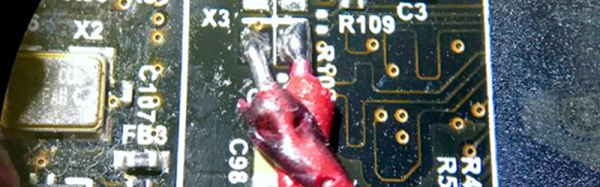
Some people like to tweak cars. Some like to overclock PCs. Then there are the guys like [Jack Zimmermann] who are obsessed with accurate time. He’s working on a project that will deploy NTP (Network Time Protocol) servers in different African countries and needed small, cheap, energy-efficient, and accurate servers. What he wound up with is a very accurate setup for around $200. Along the way, he built some custom hardware, and hacked a computer to sync to the GPS clock reference.

His original attempt was with a Raspberry Pi 3. However, the network adapter isn’t the fastest possible, both because it is 100 MBPS and, primarily, because it is connected via the USB bus. Network latency due to these limitations makes it difficult to serve accurate time.

His solution includes an Odroid C2. For $50 it is a very capable computer with four cores, gigabit Ethernet, and can even use eMMC storage which is faster than the usual SD card. You can still use a conventional SD card, though, if you prefer.

Continue reading “Apparently Time IS Money”

4.4 GHz Frequency Synthesis Made Easy

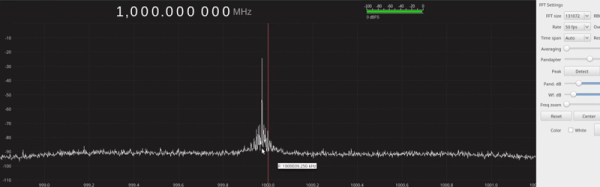
How hard is it to create a synthesizer to generate frequencies between 35 MHz to 4.4 GHz? [OpenTechLab] noticed a rash of boards based on the ADF4351 that could do just that priced at under $30. He decided to get one and try it out and you can find his video results below.

At that price point, he didn’t expect much from it, but he did want to experiment with it to see if he could use it as an inexpensive piece of test gear. The video is quite comprehensive (and weighs in at nearly an hour and a half). It covers not just the device from a software and output perspective but also talks about the theory behind these devices.  [OpenTechLab] even sniffed the USB connection to find the protocol used to talk to the device. He wasn’t overly impressed with the performance of the board but was happy enough with the results at the price and he plans to make some projects with it.

Continue reading “4.4 GHz Frequency Synthesis Made Easy”

ESP32 WiFi Hits 10km With A Little Help

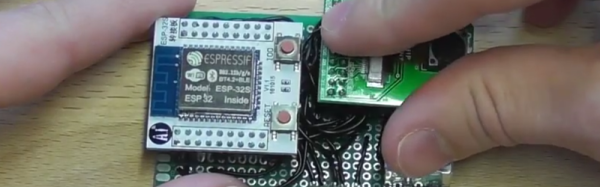
[Jeija] was playing with some ESP32s and in true hacker fashion, he wondered how far he could pull them apart and still get data flowing. His video answer to that question covers the Friis equation and has a lot of good examples of using the equation, decibels, and even a practical example that covers about 10km. You can see the video below.

Of course, to get that kind of range you need a directional antenna. To avoid violating regulations that control transmit power, he’s using the antenna on the receiving end. That also means he had to hack the ESP32 WiFi stack to make the device listen only on one side. The hack involves putting the device in promiscuous mode and only monitoring the signals being sent. You can find the code involved on GitHub (complete with a rickrolling application).

Continue reading “ESP32 WiFi Hits 10km With A Little Help”