MDF Omniwheel Uses No Metal Or Plastic

What’s better than a caster? An omniwheel. These wheels are like a big wheel with little wheels at different angles that can roll in any direction. [Sonodera] built an omniwheel out of laser cut MDF. MDF–or Medium Density Fiberboard–makes up all the parts of the wheel. There’s no plastic or metal at all.

[Sonodera’s] wheel is more of a passive design like a caster. It would be possible to drive the wheel through the center in two directions, but the right-angle rollers are passive.

We’ve seen several robots with omniwheels before. In fact, this tripod-inspired robot also has passive rollers and the three-legged design takes advantage of them (the so-called Kiwi drive). Some schemes combine multi-directional wheels with conventional wheels (usually the standard wheels are in the center). There are other multi-directional wheel designs out there, including the Mecanum wheel. You can see a video of the MDF wheel in action, below.
Mind-Controlled Prosthetic Arm

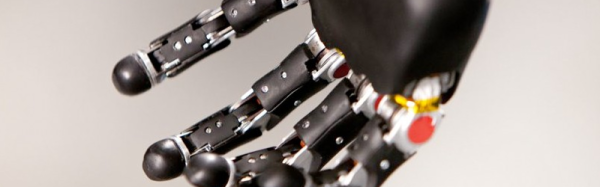
Losing a limb often means getting fitted for a prosthetic. Although there have been some scientific and engineering advances (compare a pirate’s peg leg to “blade runner” Oscar Pistorius’ legs), they still are just inert attachments to your body. Researchers at Johns Hopkins hope to change all that. In the Journal of Neural Engineering, they announced a proof of concept design that allowed a person to control prosthetic fingers using mind control.

Continue reading “Mind-Controlled Prosthetic Arm”

Tiny USB Morse Code Beacon

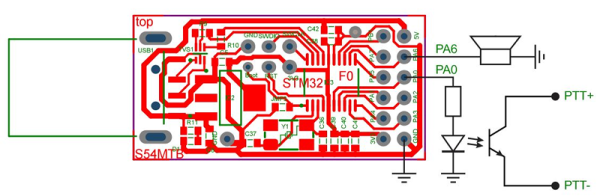
It is reasonably easy to make a microcontroller spit out some Morse code. What makes [pavlin’s] take on this project interesting is that it resides on a tiny USB board with an ARM processor. The design for the board is available with single-sided artwork suitable for production using simple methods like toner transfer.

The STM device has a built-in USB bootloader. It can also act as a serial port, which makes the project very simple. The only external parts are a speaker and an optoisolator. The program provides a command line interface over the serial port that you can use to program the message and set other options like speed and the delay between messages. The code is available on GitHub.

You might argue that a beacon shouldn’t need a USB port, and we’ve seen an alternative that fits the bill. If you want a much larger Arduino-based keyer, we’ve seen those, too.

Musical Shades

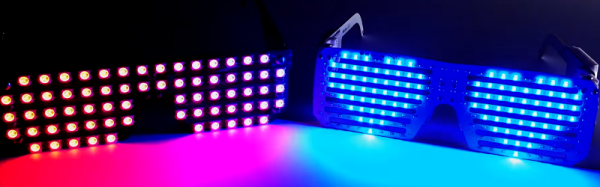
There are only so many blinking light patterns you can create with a microcontroller before you get bored. [Garrett] apparently felt that way and decided to build a music-driven LED display on some LED shades. The system has three main elements: a microphone, a preamp, and a 7-band spectrum analyzer chip. You can see the results in the video below.

Continue reading “Musical Shades”

FAXing In 1843

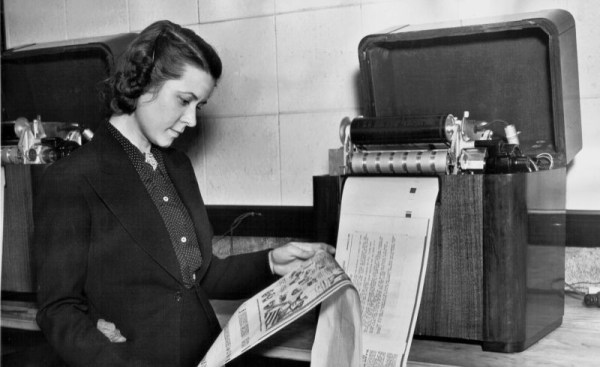
By 2016, it is evident the FAX machine has peaked. Sure, you still see a few. There are even services that will let you send and receive FAXes via Internet–which could mean no FAX machine was involved at all. But looking back, you have to wonder where it all started. Most people had never seen a FAX machine until the late 1960s or early 1970s. It was 1980 before there was a standard. Some, like hams and weather service employees, were using them even earlier. But would it surprise you to know that the first experimental FAX machine appeared in 1843?

Wait a minute. Bell didn’t even build a telephone until 1875 (the patent issued in 1876). Turns out the first FAX machines didn’t work with a phone. They worked over a telegraph wire.

Continue reading “FAXing In 1843”

Brain Waves Can Answer Spock’s (and VR’s) Toughest Question

In Star Trek IV: The Voyage Home, the usually unflappable Spock found himself stumped by one question: How do you feel? If researchers at the University of Memphis and IBM are correct, computers by Spock’s era might not have to ask. They’d know.

[Pouya Bashivan] and his colleagues used a relatively inexpensive EEG headset and machine learning techniques to determine if, with limited hardware, the computer could derive a subject’s mental state. This has several potential applications including adapting virtual reality avatars to match the user’s mood. A more practical application might be an alarm that alerts a drowsy driver.

Continue reading “Brain Waves Can Answer Spock’s (and VR’s) Toughest Question”

Do You Know Rufus Turner?

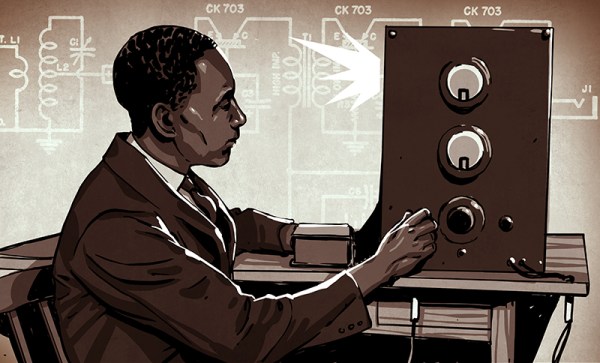
It is hard to be remembered in the electronics business. Edison gets a lot of credit, as does Westinghouse and Tesla. In the radio era, many people know Marconi and de Forest (although fewer remember them every year), but less know about Armstrong or Maxwell. In the solid-state age, we tend to remember people like Shockley (even though there were others) and maybe Esaki.

If you knew most or all of those names without looking them up, you are up on your electronics history. But do you know the name Rufus Turner?
Continue reading “Do You Know Rufus Turner?”