A Timepiece Straight Out Of Back To The Future

[Stephen Holdaway] needed a desk clock, and decided to whip something up from scratch. The result is a beautiful tribute to the DeLorean’s time circuits from legendary 1985 film Back to the Future.

We say it’s a tribute rather than an exact replica, as it only implements the “present time” section of the time circuits. However, for those of us without time machines, that’s more than enough. In any case, the build is a very faithful recreation. It uses a lovely sheet metal enclosure complete with era-appropriate sticky labels.
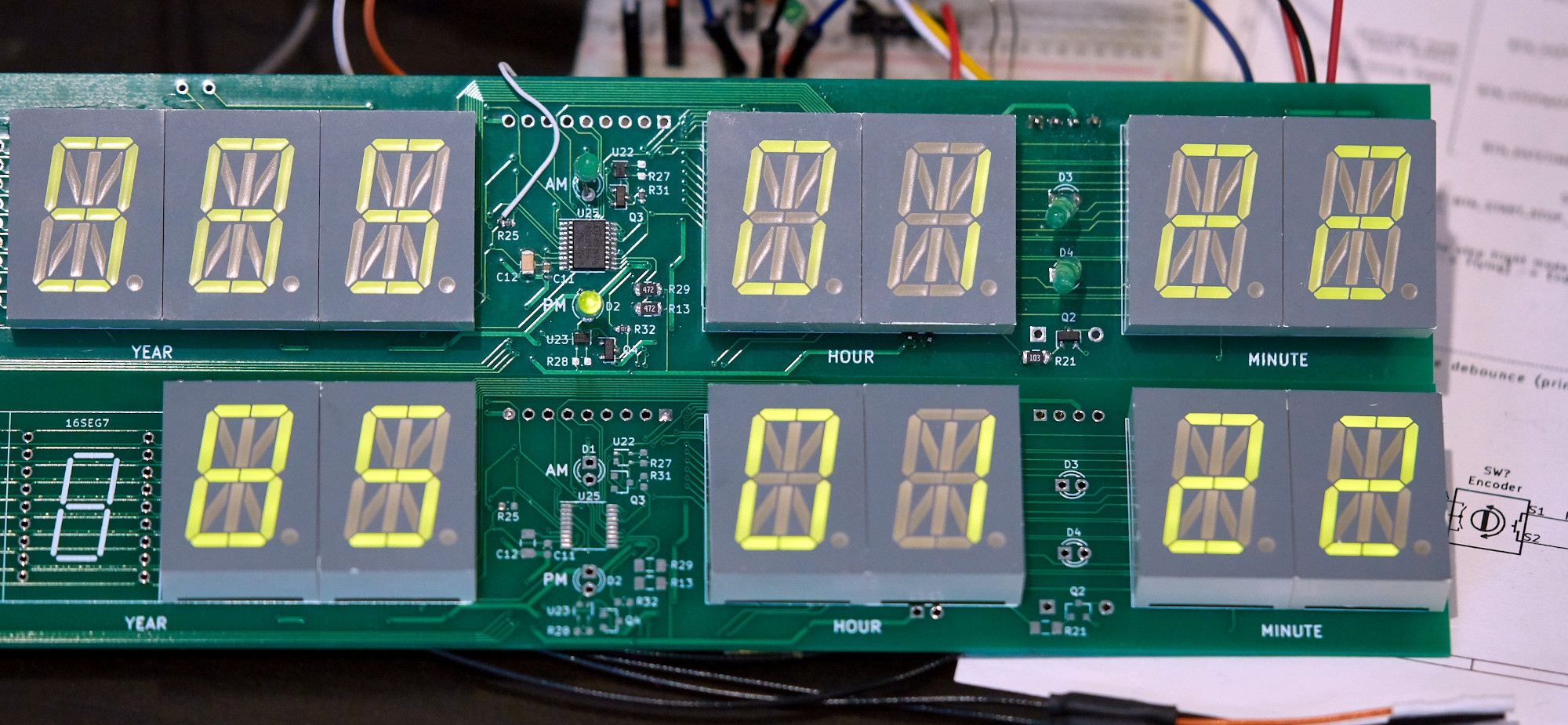
Naturally, the numerals are all shown on green segment displays, though [Stephen] used 16-segment devices instead of the more typical 7-segment parts. What really helps add to the look is the shaded acrylic windows, which adds a very nice effect.

It’s a nice tribute piece that any fan would instantly recognize. We’ve seen some other great builds, too, like this replica of the RC controller that first gets the DeLorean up to 88 mph. If you’ve been whipping up your own neat prop project, don’t hesitate to hit us up on the tipsline!

Throwback: USB Hotplate Used 30 Whole Ports

Once upon a time, USB was still hip, cool, and easy to understand. You could get up to 500 mA out of a port, which wasn’t much, but some companies produced USB cup warmers anyway which were a bit of a joke. However, one enterprising hacker took things further back in 2004, whipping up a potent USB hot plate powered by a cavalcade of ports.

Delicious.

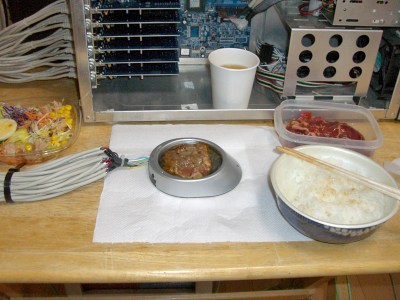
The project was spawned after a USB cup warmer sadly failed to cook a decent fried egg. To rectify this, a souped-up version was built. The cup warmer was stripped of its original hardware, and fitted with six 2-ohm resistors instead. At 5 volts, each would draw 2.5 amps and the total power draw would be on the order of 75 watts. Each resistor would thus need five USB ports to power it to stay under the 500 mA limit, for a total of 30 USB ports in total. Six PCI-to-USB cards were installed in a motherboard for this purpose, providing the requisite ports.  A 500 watt power supply meant the computer had plenty of juice to run the hot plate.

Cooking proved successful, generating a decent amount of heat to brown up some beef. Served with some white rice, it proved an adequate meal, though apparently with a noted taste of electronic components.

This wouldn’t be such a challenge today. USB-C is capable of delivering 100 watts through a single port at 20 volts and 5 amps. However, there’s something joyous and charming about cooking on a ridiculous hotplate running off 30 USB 1.1 ports. The ingenuity is to be applauded, and it is truly a project of its time.

Simple ATX Bench Power Supply Adds Variable Output

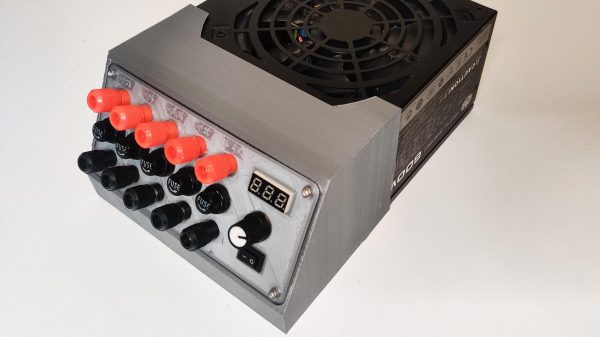
A benchtop power supply is a key thing to have for any aspiring electronics hacker. While you can always buy one, plenty of us have old computer PSUs lying around that could do a fine job themselves. [Frugha] decided to whip up a neat 3D-printed design for converting any ATX PSU into a usable bench unit.

The design features banana plugs outputting +12V, -12V, +5V, and +3.3V, with all outputs appropriately fused for safety. There’s also a fused stepdown converter used to supply variable voltages as needed. Its original trimpot was replaced with a multi-turn pot for ease of control. To make everything work, a load resistor on the 5V circuit makes the power supply think it’s hooked up to a motherboard. It’s all wrapped up in a neat slant-sided 3D-printed case that fits onto the ATX power supply itself.

The result is a neat and tidy power supply built out of readily-available components. We particularly like the addition of the stepdown converter – most ATX-based projects don’t offer variable output, which can nonetheless come in handy.

We’ve seen some other great builds along these lines before, too. If you’ve been cooking up your own homebrew power supply, don’t hesitate to share it on the tipsline! 

JCB Is Exploring Hydrogen Combustion Engines For Construction Machinery

When we think about greening up the planet, solar panels and electric cars are often at the forefront of our mind. However, there’s a whole bunch of other things out there that are spewing out carbon dioxide that also need to be cleaned up. That includes leaf blowers, lawn mowers, and yes – big equipment for construction and agricultural work!

JCB manufactures diesel engines for big machines, but is now looking to switch things up for a cleaner future. To that end, the company is working on hydrogen-burning engines for its big machines.

Continue reading “JCB Is Exploring Hydrogen Combustion Engines For Construction Machinery” →

Weird Energy Storage Solutions Could Help The Grid Go Renewable

We’re all familiar with batteries. Whether we’re talking about disposable AAs in the TV remote, or giant facilities full of rechargeable cells to store power for the grid, they’re a part of our daily lives and well understood.

However, new technologies for storing energy are on the horizon for grid storage purposes, and they’re very different from the regular batteries we’re used to. These technologies are key to making the most out of renewable energy sources like solar and wind power that aren’t available all the time. Let’s take a look at some of these ideas, and how they radically change what we think of as a “battery.”

Continue reading “Weird Energy Storage Solutions Could Help The Grid Go Renewable” →

App Detects Parkinsons Disease And COVID-19 Via Audio

One of the challenges of diagnosing diseases is identifying them early. At this stage, signs may be vague or confusing, or difficult to identify. Early diagnosis is often tied to the best possible treatment outcomes, so there’s plenty of incentives to improve methods in this way.

A new voice-based method of diagnosing disease could prove fruitful in this regard. It relies on machine learning techniques to detect when patients may be suffering from certain conditions.

Continue reading “App Detects Parkinsons Disease And COVID-19 Via Audio” →

EV Chargers Could Be A Serious Target For Hackers

Computers! They’re in everything these days. Everything from thermostats to fridges and even window blinds are now on the Internet, and that makes them all ripe for hacking.

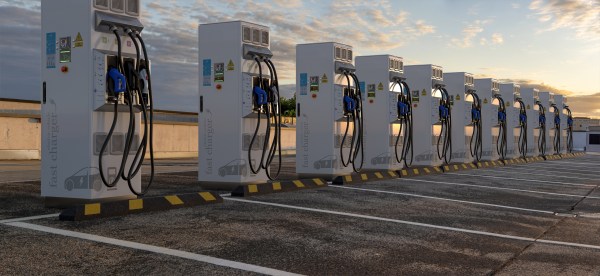
Electric vehicle chargers are becoming a part of regular life. They too are connected devices, and thus pose a security risk if not designed and maintained properly. As with so many other devices on the Internet of Things, the truth is anything but. 

Continue reading “EV Chargers Could Be A Serious Target For Hackers” →