Arduino Releases New Products; Help Them Develop ARM-based Arduino

The Arduino folks took advantage of Maker Faire New York to announce their new line of products. There’s several interesting new additions to their product line.

They’ve got a WiFi shield in the works that utilizes a module from H&D Wireless in conjunction with an AVR32 processor to take the workload off of the ATmega chip on the Arduino board. It even has room for you to run your own code on the shield’s processor.

Notable (but of less interest to us) is the 1.0 release of the IDE and the development of a new low-cost board. That hardware is intended to make USB device development easier for those already familiar with the Arduino platform.

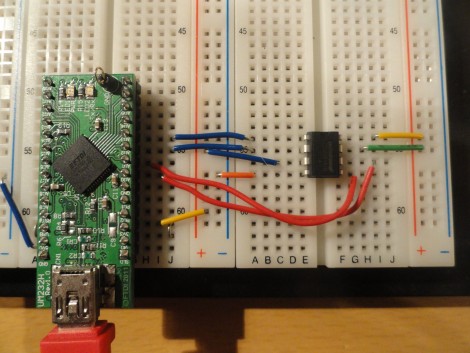
But the big news that caught our eye is the announcement of an ARM Cortex-M3 Arduino called the Due (we already wish that had been named something different just for search term contrast to the Duemilanova). The hardware hasn’t been finalized yet, although you can see a prototype in the picture above. They want community input on the final touches, so get in there and give them a hand!

[Thanks Insapio and Tom]

Using Classic Game Controllers With A Wii

[Bruno]’s Wii RetroPad Adapter was sent into the tip line, and we’re loving the possibility of using Playstation 2, Genesis, NES and SNES controllers with our Wii.

While there are commercial solutions that connect an NES or SNES controller to a Wii, everything connects to the GameCube port and there is no adapter for Sega or Playstation controllers. For his build, [Bruno] used an ATmega168 to read data from the classic controllers and translate that to the Wiimote I2C bus. Think of it as a new classic controller with the same form factor your 8-year-old self knew and loved.

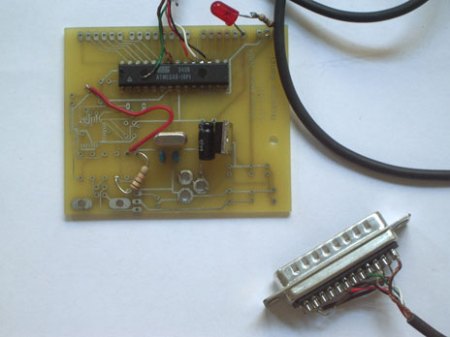
The schematic for the build is very simple and [Bruno] has all the software out in the open. Even the PCB is single sided and looks like it would be a great candidate for a homebrew PCB. There’s no indication [Bruno] is trying to monetize his creation, so he’s either doing right, or so very wrong. Check out the Dualshock 2/Mario 3 demo of this board after the break.

Continue reading “Using Classic Game Controllers With A Wii”

Toaster Oven Forgoes Pop-Tarts, Reflows Solder

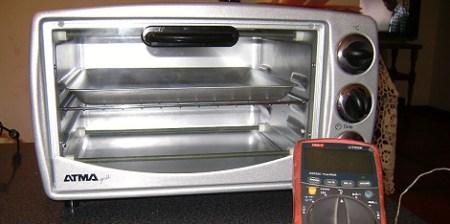
For SMD work, solder paste and a heat gun is great. Heat guns aren’t the cheapest thing, so [Karel] decided to make cheap reflow oven out of a toaster oven. With a PCB taken from a laminator temperature control board, the build was fairly successful, so [Karel] decided to add a thermistor to his oven.

There was a problem with placing this thermistor near the board: solder melts in a reflow oven, so [Karel] needed to figure how to connect the thermistor to the control board outside the oven. The solution was crimping thin copper tubing to the thermistor leads and passing that tube through the wall of the oven. Epoxy was used to avoid an electrical short. A low tech solution, but very effective. After applying some solder paste and going in the oven, this board looks very clean. There are a few solder bridges, but nothing a wick can’t take care of.

[Karel] is now working on an update to the temperature controller that controls the oven over a serial connection. Check out the video of a few temperature cycles after the break.

Continue reading “Toaster Oven Forgoes Pop-Tarts, Reflows Solder”

ATtiny Hacks: Reading From A Motorcycle’s J1850 Data Bus

ATtiny Hacks Theme Banner

[TZ] has been using ATtiny microcontrollers to read and pass along data from his Harley Davidson motorcycle. The image you see above is using an ATtiny 4313 to read data from the J1850 bus.

The J1850 protocol is an older standard which may not be available in newer vehicles. But if your vehicle has it, you may be able to tap into the bus through an ODB-II connector. [TZ] is decoding the data with the 4313, then using an inexpensive Bluetooth module to send the information to an Android tablet. Fortunately, someone has already written a nice GUI to display the speed and tachometer.

This isn’t the only approach to data harvesting with an ATtiny chip that he’s explored. There’s a second video after the break that shows a much more complicated setup. It still harvests the J1850 data in the same way, but also uses additional I2C sensors and an embedded ARM board to gather GPS data. Everything is pushed to his smart phone, which displays current gear, RPM, speed, engine temperature, fuel level, and GPS information via a WiFi connection.

Continue reading “ATtiny Hacks: Reading From A Motorcycle’s J1850 Data Bus”

Robotic Disco Floor Is A Mobile Party

[Chris Williamson] designed the Rave Rover, a mobile disco floor with integrated stripper pole for this year’s DragonCon.

[Chris] started building combat robots back in 2000 for Battlebots and Robot Wars and cofounded the South Eastern Combat Robot league. He’s a lover and not a fighter, so for the DragonCon robotics track [Chris] built his mobile dance party. He put up an Instructable of his build and some of the features are really clever. Whenever the dance floor is being ‘used’, pneumatic cylinders lower the disco floor so it rests directly on the ground. A good idea, especially considering what we imagine happens on the Rave Rover.

For the light-up disco floor, [Chris] cut black ABS sheets on a CNC router and installed RGB LED modules controlled by an Arduino. The floor can display low-res animations, but random patterns look just a cool.

The Rave Rover was designed and built over a one month span to get ready in time for DragonCon. The build was a little hurried but the quality is still there. Check out video of the Rave Rover at DragonCon after the break.

Continue reading “Robotic Disco Floor Is A Mobile Party”

Hackaday Birthday Cake!

[Alex], aka [Grovenstien] turned 30 this weekend. After a conversation with his sister, where she asked: “what was that website with the skull that you always look at?”, he thought maybe he’d get a sticker or a shirt. She surprised him with this totally awesome birthday cake! There really aren’t any build details, but you can pretty much see that it has LEDs for eyes as well as some crazy sparkler effects going on as well. What we’re particularly impressed with is the fact that everything was hand cut, even that crisp text at the bottom. Happy Birthday [Grovenstien] and awesome job big sister!

check out the rest of the pictures after the break.

Continue reading “Hackaday Birthday Cake!”

Broken Xbox 360 Converted Into An Arcade Controller

xbox_360_arcade_controller

Like many Xbox 360s out there, [Aaron’s] console succumbed to the dreaded three red lights of death. Since it seemed to be unrepairable, there wasn’t a lot that could be done with it other than throw it out. Rather than be wasteful however, [Aaron] thought of a great way to reuse the console’s outer shell.

He’s a big fan of fighting games, and as everyone knows, this genre is best played with an arcade-style controller. The 360’s shell seemed to be just about the right size, so he gutted it and got busy constructing his own arcade controller. With the console cleared out, he installed all of his arcade bits, wiring them to a stripped third-party Xbox controller.

He installed a four port USB hub to the front of the console, enabling use of the 360’s USB ports, and rewired the power button to trigger the Xbox Guide button. A shiny coat of paint later, and he was ready to play.

Keep reading to see a short video of [Aaron’s] arcade stick in action, and check out the picture gallery he put together of the controller’s construction.

Continue reading “Broken Xbox 360 Converted Into An Arcade Controller”