Wii Homebrew Hack – No Game Discs Required

Jailbreaking hacks have come and gone for the Wii, ever changing as Nintendo tweaks their software to prevent homebrew from running. Piracy concerns aside, there is a legitimate Wii homebrew scene, and a  new, easy to use tool has been released for those looking to give it a try.

Many of the previous jailbreaks relied on bugs found within official Wii games, but there’s a new kid on the block that requires nothing more than an Internet connection and an SD card. LetterBomb is the latest jailbreaking tool, which was created by an individual named [blasty]. It seems incredibly easy to use, requiring little more than entering your Wii’s MAC address into a web form. The site generates a customized jailbreak file, which your run on your Wii via the SD card – that’s all there is to it!

If I had a Wii, I would be hesitant to enter any sort of globally-unique number that could identify my console into a random web site, but perhaps I am being overly paranoid. Either way, it would be great to see an open-source version of this tool released so that jailbreaks could be done offline, without any risk of having your MAC address recorded.

[Thanks, blurry]
Arduino Link Libraries

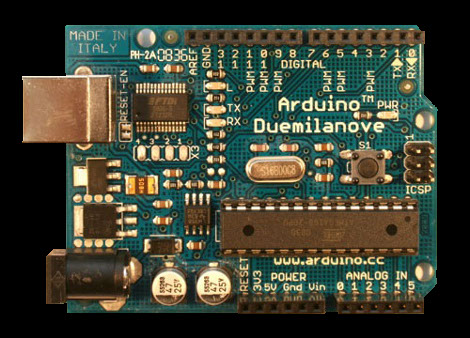
Arduino is great, but it sometimes gets in the way due to its entry level style of doing things. One limitation is making your own library that also includes other libraries.[Scott] has sent in a great tutorial that deals with just that issue.

He covers how to make your own custom libraries while building off of preexisting ones. That’s something Arduino’s automatic magic wont touch.He covers getting your library to compile while including aanother library, linking versus compiling, and getting it all linked up.

Add in clear examples, lots of explanation and a hand full of good practices for C with libraries (like Forward Class Declaration vs Includes, and Using Brackets vs Quotation Marks for Includes), and this is one tutorial that any aspiring AVR or Arduino developer should check out.

Persistence Of Vision Helicopter Blades With RGB LEDs

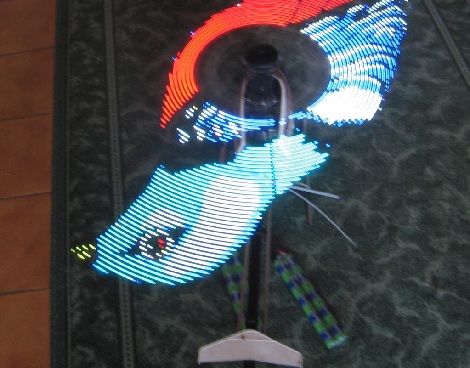
A user named [BOcnc] on the rcgroups forums just posted his RGB POV helicopter blades.

The two blades are attached to the heli just as any other whirlygig. The electronics, though, are mounted underneath the blade with a battery pack. We covered a build last year that demonstrated weight added to a spinning blade won’t tear everything apart, but that build used only blue LEDs. This build is full color and makes us feel like we’re living in a cyberpunk future populated by Recognizers and Daft Punk.

The images are stored on an SD card that receives data from a USB port. The microcontroller is a PIC32, and from what we can assume from the schematics, the RPM of the blades is measured by an on-board hall effect sensor (don’t quote us on that, though). There’s no hope of a commercial release from [BOcnc], though. He can’t find anyone to manufacture the blades, and the entire build was too expensive. It sure looks pretty though, so check out the video of it after the break.

Continue reading “Persistence Of Vision Helicopter Blades With RGB LEDs” →

Keeping Tabs On Your Tabby With A Camera And GPS

cat_eye_pictures_and_gps

[Janis] has an outdoor cat that likes to roam all over the neighborhood. He was curious to see what he was up to all day, so he decided to build a small cat cam to document the feline’s comings and goings. After the cat returned one evening with a snail riding along on his back, [Janis] thought it would be pretty interesting to see where the cat was going as well.

He calls his creation “CatEye”, and it consists of a small JPEG color camera and GPS sensor, both of which are managed by what looks to be an ATMega328. The camera snaps pictures as the cat roams around, while the GPS sensor records its location throughout its travels. All of the data is stored on an SD card, making it easy to transfer the pics and .KML files back to his computer. A few clicks later, he can see everywhere his cat has been, using Google Earth.

It seems like a pretty interesting project, and we would love to see some schematics and code so that we can strap one of these on [Caleb] our cat to see where he’s been all day.

Boost Your Garden’s Output Using Ultrasonic Mist

ultrasonic_aeroponic_growing_rig

If you enjoy gardening, it’s never too early to start thinking about next year’s growing season. [Jared Bouck] over at InventGeek loves his tomatoes, but the slow grow rates of his dirt-bound plants were less than impressive. To get things moving faster, he created a low-cost aeroponics system that uses ultrasonic mist to produce some pretty impressive results.

The construction process of this ultrasonic aeroponics rig looks dead simple, and [Jared] said that he had everything assembled in about half an hour. A cheap ultrasonic mister was mounted in the bottom of a plastic tub, and holes were cut in the tub’s lid to make room for his growing baskets. Tomato seedlings were wrapped in rock wool and placed in a clay growing medium, suspended over the water bath. The mister was turned on, and after just a few days, the results were obvious.

In the last step of his tutorial, he compares his aeroponically grown plant to one grown in soil – the difference is unbelievable. Considering how reasonably priced his setup is, it seems like a no-brainer to start growing your entire vegetable garden this way.

Nanode: A Low-cost Network-enabled Arduino Ethernet Alternative

nanode_ethernet_enabled_arduino_board

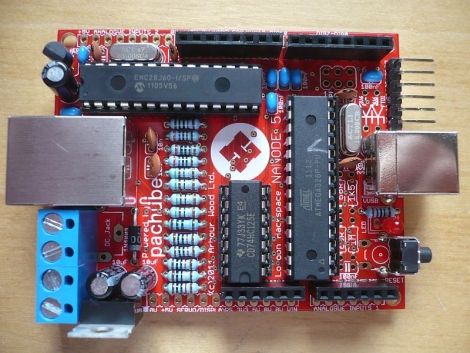
The folks over at Hackspace London have been working hard to create a “very low cost, open source, Internet connected platform on which others can develop their ideas”, which they have dubbed “Nanode”.

Essentially an Arduino with Ethernet networking on-board, the Nanode is armed with an ATMega 328 microcontroller along with all the other standard goodies you would expect from an Arduino-compatible device. The Nanode can be controlled with a web browser right out of the box, thanks to some custom Ethernet libraries. Additionally network of Nanodes can be easily configured to communicate with a “master” unit via a multidrop serial bus, allowing the device to be used for a wide array of distributed control tasks.

Obviously most of these features can be had in the form of an Arduino Ethernet board, or achieved by using an Ethernet shield. The Nanode is a touch cheaper than either option at $40 for a kit, and the native networking capabilities sound like they would be quite handy. That said, we are a bit bummed that it only has 10BaseT networking capabilities, though it is always nice to have options when it comes to choosing a microcontroller board.

[Thanks, TheHypnotist]