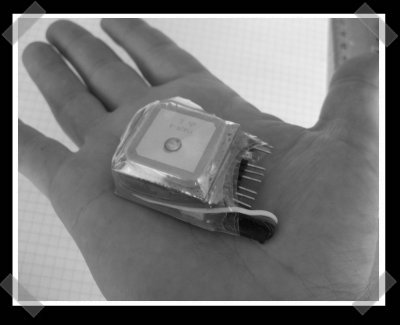
This is a nice, compact gps logger that’s built around a PIC16F872 and some eeprom chips. It was designed for a particular GPS receiver, but should be easily adaptable to others since the unit ouputs standard sentences at 4800 baud. Full schematics and board layout are available on the project page.
Build A Twitter Client With Fluid
The Fluid Site Specific Browser (SSB) is one of our favorite pieces of kit for Leopard. You can use Fluid to give web services you use constantly like Gmail, Facebook, Wikipedia, or Pandora their own icon and a browser tailored to that site’s specific workflow. Fluid based on WebKit and has plugin support among many other features. Embedded above is [Eric Eggert] showing how to create a reasonable Twitter client using it. The initial setup is identical to any other Fluid app: point it at https://twitter.com/. The clever bit is leveraging Fluid’s GreaseMonkey style userscripting support. He created a userscript to autorefresh. A second userscript is used to strip off all of the extraneous page elements leaving just the text field and the timeline. Every time you get a new message it generates a growl notification and you can even attach it to the status bar. Best of all: it avoids all API limitations since you’re accessing through the web interface.
U.S. And China Host Majority Of Malware
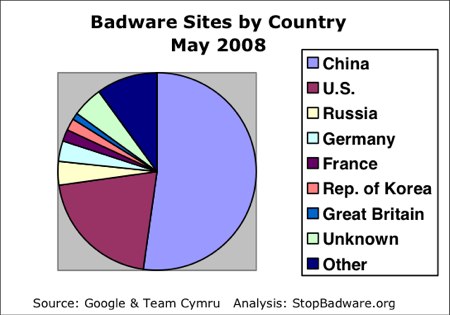
StopBadware.org has released their May 2008 Infected Sites Report(PDF). They took their current list of 213K active badware websites and resolved the IP addresses. These addresses were used to determine the network block owner and country. The results could be skewed to networks Google scans more often, but they should give a decent overall picture. China hosts 52% of all the badware sites while the U.S. has 21%. There weren’t any other countries maintaining over 4% of the total. They also calculated the number of infected sites per capita, which China also led. Last year’s report resulted in several AS block maintainers cleaning up to the point that they don’t even make the top 250 this year.
GetLoFi’s Dub Siren

GetLoFi has always been one of our first stops when looking for circuit bending fun. Their latest project is building this simple dub siren from a noise making key chain. Dub sirens or rasta boxes are a signature sound in dub reggae. The base of this project is an eight sound keychain. Each pad is wired to an eight position selector switch. The pitch resistor is replaced with a linear pot. One push button is used to replace the original eight and another is used for mute. Plug the 1/4inch jack into a delay pedal and you’re ready to rock. Check out the video below to see this particular box in use.
Citibank ATM PIN Heist Mystery Continues

For the last few months, the FBI have been investigating a breach of Citibank’s ATM transaction processing servers. We’ve seen credit card numbers get stolen before, but these compromised servers were used to collect card numbers and PINs as transactions took place. The group responsible hired people to write new cards and use them to make ATM withdrawals. The card makers would keep a percentage and launder the rest. This is just a very small part of story and the extent of the breach isn’t fully realised yet. Threat Level’s [Kevin Poulson] has the whole story on this disturbing situation.
[photo: Bryan Derballa]
Crawling + SQL Injection With Scrawlr
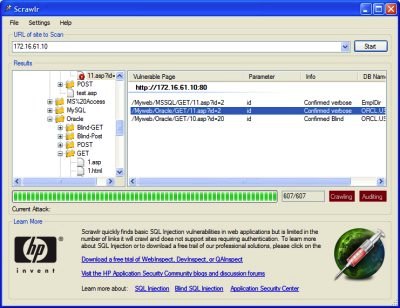
Scrawlr is the latest tool to come out of HP’s Web Security Research Group. It was built in response to the massive number of SQL injection attacks happening on the web this year. Most of these vulnerable sites are found through googling, so Scrawlr works the same way. Point it at your web server and it will crawl all of the pages and evaluate the URL parameters to see if they’re vulnerable to verbose injection. It reports the SQL server and table names if it comes across anything.
It only supports 1500 pages right now and can’t do authentication or blind injection. It’s still a free tool and a great way to identify if your site is vulnerable to automated tools finding you website via search engines.
[via Acidus]
Server Access FAIL
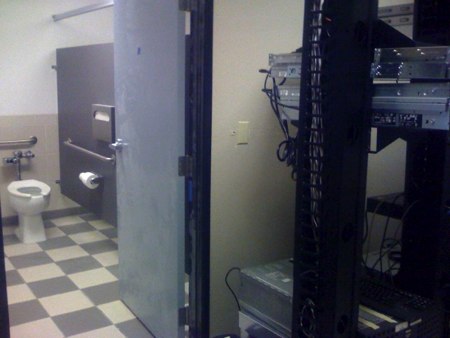
Head over to The Daily WTF to find out about the building upgrade that made this data center only accessible from the handicap stall of the women’s restroom.