
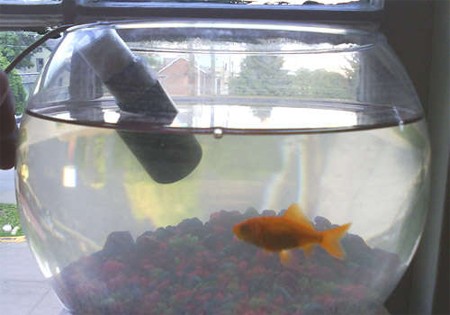
Chances are you’ve never wondered what your goldfish is trying to say, but if you have (or if you just want a project), check out this DIY hydrophone.
You will need a computer microphone, vegetable oil, plastic wrap, scissors, solder, and a small unused plastic bottle. Solder the mic capsule to an appropriate length of cable and test. The entire assembly can then be submerged in vegetable oil inside a plastic bottle. Yes, vegetable oil. Seal the bottle and you’re done.
DIY Slingbox
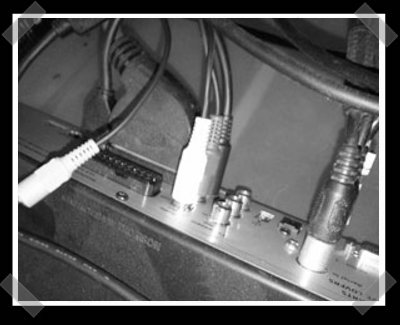
[David] took some interesting steps to put together his own Slingbox-ish setup. He used a Mac mini running Quicktime Broadcaster to capture the stream from a Firewire video camera which his cable/satellite receiver is plugged into. You’ll have to use an OS X machine, but that’s not too difficult these days. Broadcaster is about the simplest way to capture from Firewire and stream. We’re using it in our own office to multicast the signal from a Canadian satellite box.
Roomba Pac-Man
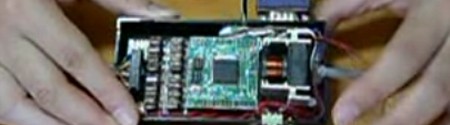
[Ron Tajima] fashioned a Pac-Man casemod for his Roomba using 448 LEDs and a SH2 MPU control unit. It features the correct arcade sounds and even the death animation. The bot has Bluetooth access thanks to his previous Wiimote hack. He hopes to use this platform to create a real world version of the game.
[youtube=http://www.youtube.com/watch?v=2wsP_nmk_iw&hl=en]
For more Roomba hacking, check out the Hacking Roomba book and our previous Roomba related posts.
[via Geekdad]
Using Multiple Browsers For Security
[Rich] over at Securosis takes us through some of his browser paranoia exercises. He uses different browser profiles for different types of web activities. Based on potential risk, various tasks are separated to protect from CSRF attacks and more. Everyday browsing with low risk passwords is done in one. RSS reading with no passwords is done in another. He runs his personal blog in a browser dedicated just to that.
For high risk research, he uses virtual machines to further minimize any potential nasty code getting through. Very high risk sites are browsed through a non-persistent read-only Linux virtual machine. While these techniques can be less effective if the entire OS is comprised, they can still provide a few layers of additional security.
Fellow browser paranoia sufferers may want to consider Firefox plug-ins like NoScript and memory protection from Diehard.
Playing The Building With David Byrne
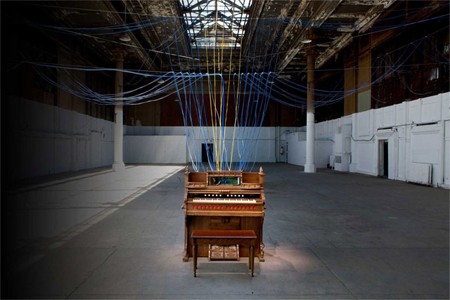
Do you remember the solenoid concert that used a sequencer to control several solenoids striking different surfaces? Musician David Byrne has taken the concept and executed it on a much larger scale with his “Playing the Building” installation in an old municipal ferry terminal in New York. Devices that bang the girders, rattle the rafters, and blow through the pipes of the building are attached to the only object inside, a weathered pipeorgan. Every key is wired to different device in the building, each producing a unique sound. Attendees are invited to fiddle with keys of the organ to produce sounds from the building’s various materials, thus playing the building like an instrument. Here’s a video from the installation.
[via Today and Tomorrow]
Creeping Wave Antenna
Monitoring medical patients remotely 24 hours a day has always proven to be a difficult proposition due the size of the wireless sensors attached to the patient’s body to relay vital signs. A team from Queen’s University Belfast has come up with a solution that utilizes the creeping wave effect. The effect applies to electromagnetic waves as they come into contact with solid objects. While the majority of the waves are absorbed by the object, a small amount move along the surface of the object before they continue their path.
Since most of the signal sent by conventional biosensors is absorbed by the patient’s body, the signal must be strong enough to compensate. The antennas designed by the Queen’s University team, though, focus their broadcast laterally instead of inward and outward, maximizing the amount of waves that will travel along patients’ bodies via the creeping wave effect and minimizing the amount that are absorbed. These antennas are up to 50 times as efficient as conventional antennas of the same size, broadcasting a stronger signal with less power.
The applications to the wireless body area networking, attaching multiple biosensors to patients’ bodies, field are obvious, but this technology could be used in other ways. Since the creeping wave antenna is small and wearable, it could conceivably be used to boost low power communication to PDAs, cellphones, or any other portable wireless product.
[via Medgadget]
Flying Manta Ray Blimp
German engineering firm Festo has created this flying manta ray. Dubbed the Air_ray, it’s a balloon made of an aluminum-vaporised “PET foil”. Inflated with helium, the Air_ray’s propulsion system is a flapping wing drive. Each wing has alternating pressure and tension flanks that are attached to an internal set of ribs. The flanks are connected to a remotely controlled servo motor. When pressure is applied to either of the flanks, the wing bends in the opposite direction. By alternating pressure on the flanks, the wings beat. The servos are powered by two 8V LiPo accumulator cells.
The total weight of the Air_ray including the balloon, propulsion system, power supply, and helium is 1.6Kg. Festo has more specs in this PDF.
[via Neatorama]









