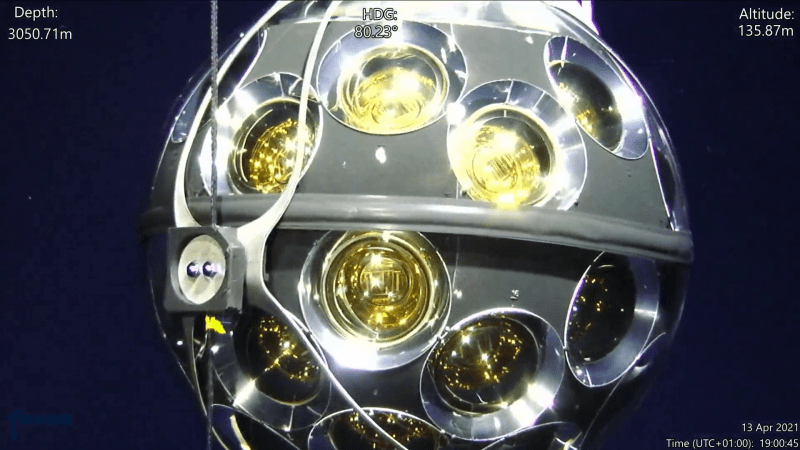
One of the photo-detector spheres of ARCA (Credit: KM3NeT)

Confirmation Of Record 220 PeV Cosmic Neutrino Hit On Earth

Neutrinos are exceedingly common in the Universe, with billions of them zipping around us throughout the day from a variety of sources. Due to their extremely low mass and no electric charge they barely ever interact with other particles, making these so-called ‘ghost particles’ very hard to detect. That said, when they do interact the result is rather spectacular as they impart significant kinetic energy. The resulting flash of energy is used by neutrino detectors, with most neutrinos generally pegging out at around 10 petaelectronvolt (PeV), except for a 2023 event.

This neutrino event which occurred on February 13th back in 2023 was detected by the KM3NeT/ARCA detector and has now been classified as an ultra-high energy neutrino event at 220 PeV, suggesting that it was likely a cosmogenic neutrinos. When we originally reported on this KM3-230213A event, the data was still being analyzed based on a detected muon from the neutrino interaction even, with the researchers also having to exclude the possibility of it being a sensor glitch.

By comparing the KM3-230213A event data with data from other events at other detectors, it was possible to deduce that the most likely explanation was one of these ultra-high energy neutrinos. Since these are relatively rare compared to neutrinos that originate within or near Earth’s solar system, it’ll likely take a while for more of these detection events. As the KM3NeT/ARCA detector grid is still being expanded, we may see many more of them in Earth’s oceans. After all, if a neutrino hits a particle but there’s no sensor around to detect it, we’d never know it happened.


Top image: One of the photo-detector spheres of ARCA (Credit: KM3NeT)

How’s The Weather? (Satellite Edition)

When [Tom Nardi] reported on NOAA’s statement that many of its polar birds were no longer recommended for use, he mentioned that when the satellites do give up, there are other options if you want to pull up your own satellite weather imagery. [Jacopo] explains those other options in great detail.

For example, the Russian Meteor-M satellites are available with almost the same hardware and software stack, although [Jacopo] mentions you might need an extra filter since it is a little less tolerant of interference than the NOAA bird. On the plus side, Meteor-M is stronger than the NOAA satellite on 1.7 GHz, and you can even use a handheld antenna to pick it up. There are new, improved satellites of this series on their way, too.

Continue reading “How’s The Weather? (Satellite Edition)”

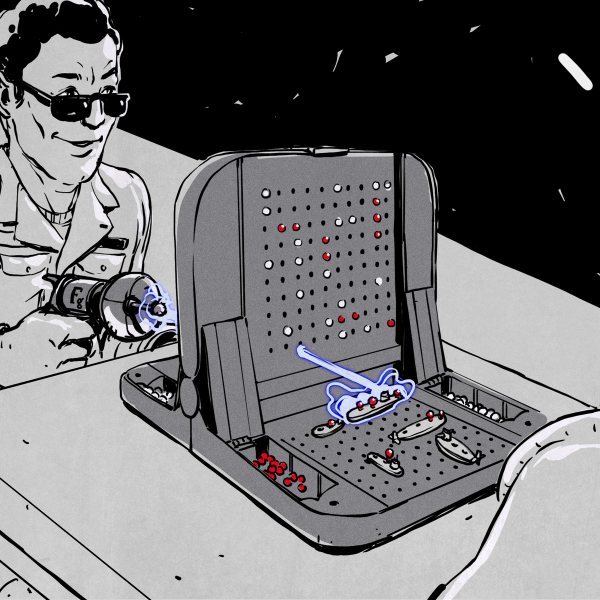
Remembering James Lovell: The Man Who Cheated Death In Space

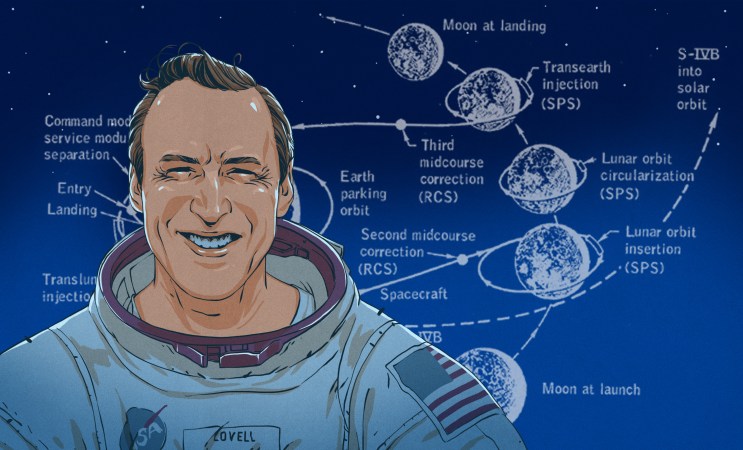
Many people have looked Death in the eye sockets and survived to tell others about it, but few situations speak as much to the imagination as situations where there’s absolutely zero prospect of rescuers swooping in. Top among these is the harrowing tale of the Apollo 13 moon mission and its crew – commanded by James “Jim” Lovell – as they found themselves stranded in space far away from Earth in a crippled spacecraft, facing near-certain doom.

Lovell and his crew came away from that experience in one piece, with millions tuning into the live broadcast on April 17 of 1970 as the capsule managed to land safely back on Earth, defying all odds. Like so many NASA astronauts, Lovell was a test pilot. He graduated from the US Naval Academy in Maryland, serving in the US Navy as a mechanical engineer, flight instructor and more, before being selected as NASA astronaut.

On August 7, 2025, Lovell died at the age of 97 at his home in Illinois, after a dizzying career that saw a Moon walk swapped for an in-space rescue mission like never seen before.

Continue reading “Remembering James Lovell: The Man Who Cheated Death In Space”

Australia’s Space Program Finally Gets Off The Pad, But Only Barely

Australia is known for great beaches, top-tier coffee, and a laidback approach to life that really doesn’t square with all the rules and regulations that exist Down Under. What it isn’t known for is being a spacefaring nation.

As it stands, a startup called Gilmour Space has been making great efforts to give Australia the orbital launch capability it’s never had. After numerous hurdles and delays, the company finally got their rocket off the launch pad. Unfortunately, it just didn’t get much farther than that.

Continue reading “Australia’s Space Program Finally Gets Off The Pad, But Only Barely”

Annealing In Space: How NASA Saved JunoCam In Orbit Around Jupiter

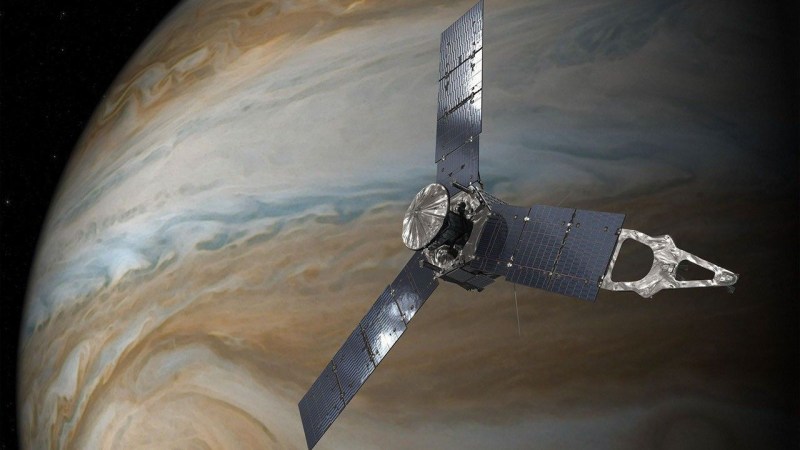
The Juno spacecraft was launched towards Jupiter in August of 2011 as part of the New Frontiers series of spacecraft, on what would originally have been a 7-year mission, including a nearly 5 year cruise to the planet. After a mission extension, it’s currently orbiting Jupiter, allowing for many more years of scientific data to be gathered using its instruments. One of these instruments is the JunoCam (JCM), a visible light camera and telescope. Unfortunately the harsh radiation environment around Jupiter had led many to believe that this camera would fail before long. Now it seems that NASA engineers have successfully tested a fix.

Location of the Juno spacecraft's science instruments. (Credit: NASA)
Location of the Juno spacecraft’s science instruments.

Although the radiation damage to JCM was obvious a few dozen orbits in – and well past its original mission’s 34 orbits – the big question was exactly what was being damaged by the radiation, and whether something could be done to circumvent or fix it. The good news was that the image sensor itself was fine, but one of the voltage regulators in JCM’s power supply was having a bad time. This led the engineers to try annealing the affected part by cranking up one of the JCM’s heaters to a balmy 25°C, well above what it normally is kept at.

This desperate step seemed to work, with massively improved image quality on the following orbits, but soon the images began to degrade again. Before an approach to Jupiter’s moon Io, the engineers thus tried it again but this time cranked the JCM’s heater up to eleven and crossed their fingers. Surprisingly this fixed the issue over the course of a week, until the JCM seems as good as new. Now the engineers are trying their luck with Juno‘s other instruments as well, with it potentially providing a blueprint for extending the life of spacecraft in general.

Thanks to [Mark Stevens] for the tip.

The Apollo–Soyuz Legacy Lives On, Fifty Years Later

On this date in 1975, a Soviet and an American shook hands. Even for the time period, this wouldn’t have been a big deal if it wasn’t for the fact that it happened approximately 220 kilometers (136 miles) over the surface of the Earth.

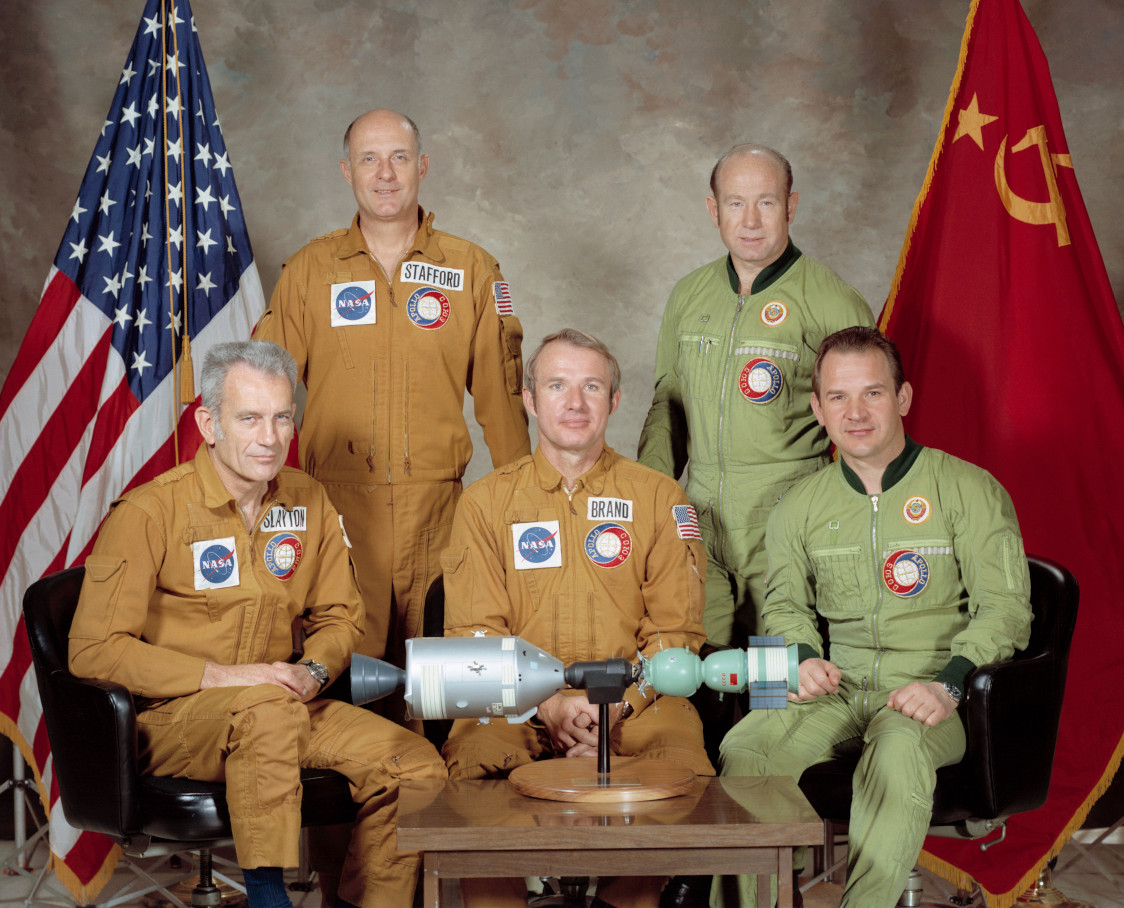
Crew of the Apollo–Soyuz Test Project

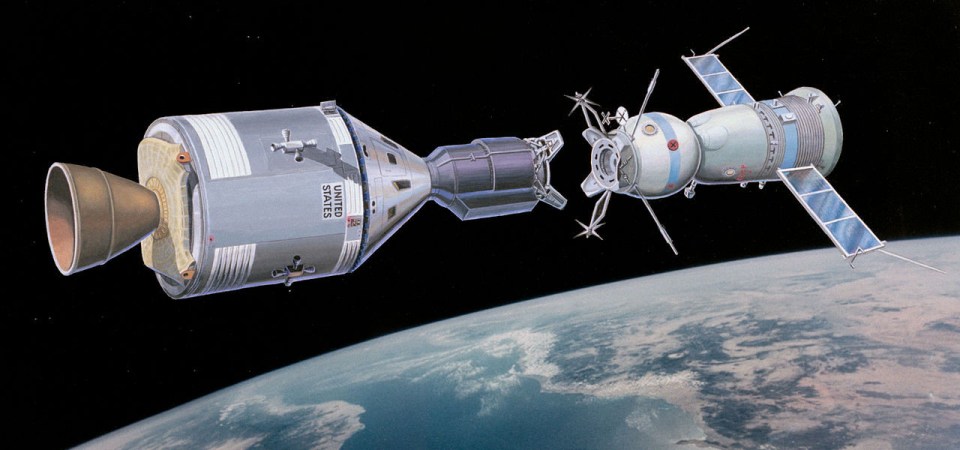
Although their spacecraft actually launched a few days earlier on the 15th, today marks 50 years since American astronauts Thomas Stafford, Vance Brand, and Donald “Deke” Slayton docked their Apollo spacecraft to a specifically modified Soyuz crewed by Cosmonauts Alexei Leonov and Valery Kubasov. The two craft were connected for nearly two days, during which time the combined crew was able to freely move between them. The conducted scientific experiments, exchanged flags, and ate shared meals together.

Politically, this very public display of goodwill between the Soviet Union and the United States helped ease geopolitical tensions. On a technical level, it not only demonstrated a number of firsts, but marked a new era of international cooperation in space. While the Space Race saw the two counties approach spaceflight as a competition, from this point on, it would largely be treated as a collaborative endeavour.

The Apollo–Soyuz Test Project lead directly to the Shuttle–Mir missions of the 1990s, which in turn was a stepping stone towards the International Space Station. Not just because that handshake back in 1975 helped establish a spirit of cooperation between the two space-fairing nations, but because it introduced a piece of equipment that’s still being used five decades later — the Androgynous Peripheral Attach System (APAS) docking system.

Continue reading “The Apollo–Soyuz Legacy Lives On, Fifty Years Later”

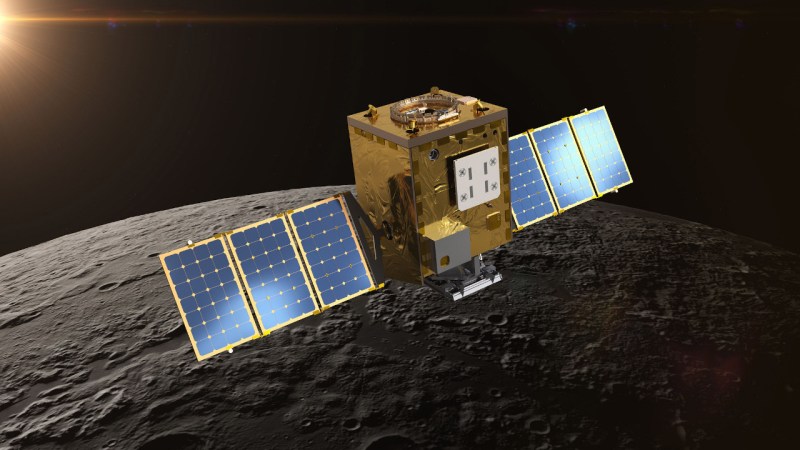
The Fight To Save Lunar Trailblazer

After the fire and fury of liftoff, when a spacecraft is sailing silently through space, you could be forgiven for thinking the hard part of the mission is over. After all, riding what’s essentially a domesticated explosion up and out of Earth’s gravity well very nearly pushes physics and current material science to the breaking point.

But in reality, getting into space is just the first on a long list of nearly impossible things that need to go right for a successful mission. While scientific experiments performed aboard the International Space Station and other crewed vehicles have the benefit of human supervision, the vast majority of satellites, probes, and rovers must be able to operate in total isolation. With nobody nearby to flick the power switch off and on again, such craft need to be designed with multiple layers of redundant systems and safe modes if they’re to have any hope of surviving even the most mundane system failure.

That said, nobody can predict the future. Despite the best efforts of everyone involved, there will always be edge cases or abnormal scenarios that don’t get accounted for. With proper planning and a pinch of luck, the majority of missions are able to skirt these scenarios and complete their missions without serious incident.

Unfortunately, Lunar Trailblazer isn’t one of those missions. Things started well enough — the February 26th launch of the SpaceX Falcon 9 went perfectly, and the rocket’s second stage gave the vehicle the push it needed to reach the Moon. The small 210 kg (460 lb) lunar probe then separated from the booster and transmitted an initial status message that was received by the Caltech mission controllers in Pasadena, California which indicated it was free-flying and powering up its systems.

But since then, nothing has gone to plan.

Continue reading “The Fight To Save Lunar Trailblazer”