Homemade Solid Propellant Rocket Motors

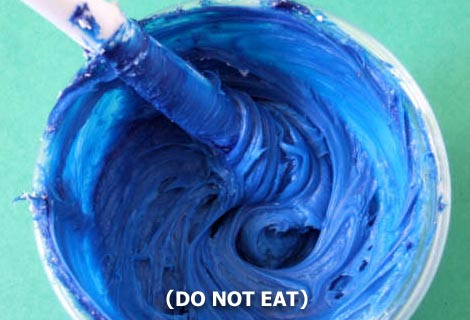
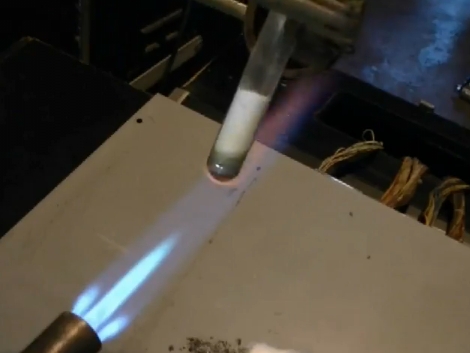
[KoD] and [Navic] are building solid propellant motors using sugar and potassium nitrate. They cook up the two ingredients along with water and a bonding agent. They find that corn syrup is particularly good for bonding and that cooking the strange brew is more of an artform than science. Either way, the video after the break is proof of the dangers involved in this hobby. Testing the engine thrust with a bathroom scale ends badly for the scale.

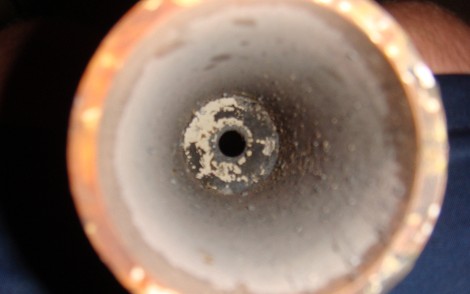
There is something satisfying about the ingenuity that goes into the materials. For a casing they’re using PVC pipe, and forming a cone to focus the thrust by using a what amounts to plumber’s epoxy putty. The capping agent for the finished motor is ground up kitty litter.

This is an interesting read, but for now we’re going to stick to water rockets.

Continue reading “Homemade Solid Propellant Rocket Motors”

Scanning Tunneling Microscope Under GPL3

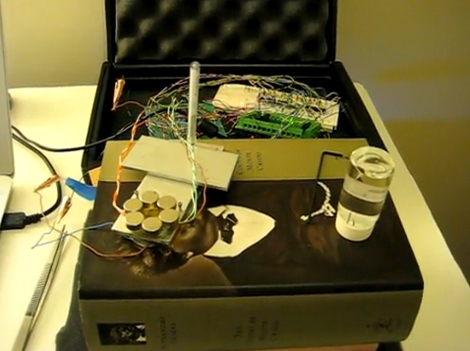
ChemHacker has posted schematics and code for a scanning tunneling microscope. [Sacha De’Angeli] finalized the proof-of-concept design for version 0.1 and released all of the information under the Gnu general public license version 3. You’ll need to build a sensor from a combination of a needle, a piezo, and a ring of magnets. There’s an analog circuit that gathers data from the probe, which is then formatted by and Arduino and sent to your computer.

We haven’t really dabbled in this type of equipment, though we did cover an STM earlier in the year. Take a look at the video after the break and then help jump-start are imagination by sharing your plans for this equipment in the comments.

Continue reading “Scanning Tunneling Microscope Under GPL3”

EL Wire: Make It, Connect It, Power It

[Jeri’s] back with a series of videos that outlines the step-by-step electroluminescent wire manufacturing, making EL panels from PCBs, and assembling power supplies for EL hardware. These concepts are actually quite approachable, something we don’t expect from someone who makes their own integrated circuits at home.

The concept here is that an alternating current traveling through phosphors will excite them and produce light. You need two conductors separated by a dielectric to get the job done. For wire, [Jeri] uses one strand of enameled magnet wire and one strand of bare wire. The enamel insulates them, protecting against a short circuit.

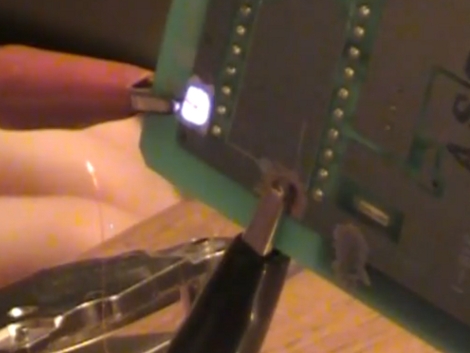
But that’s not all, she also tests using a circuit board as an EL panel. By repurposing the ground plane as one of the conductors, and using the solder mask as the dielectric she is able to paint on a phosphor product resulting in the glowing panel.

Finally, you’ve got to get juice to the circuit and that’s where her power supply video comes into the picture. We’ve embedded all three after the break. It’s possible that this is cooler than blinking LEDs and it’s fairly inexpensive to get started. The circuitry is forgiving, as long as you don’t zap yourself with that alternating current.

Continue reading “EL Wire: Make It, Connect It, Power It”

Making EL Wire

[youtube=http://www.youtube.com/watch?v=3RKBGxJJmwg]

[Jeri Ellsworth] adds electroluminescent wire to the list of things she makes. The materials list is incredibly low. The common components are epoxy coated magnet wire for the center conductor and bare wire for the second conductor. The part you don’t have on hand is phosphors, although she does link to a source.

The bad news: she doesn’t show us the build process or share the details about the inductor that fires this thing up. The good news: in-depth videos are on the way. In the mean time you can marvel in her glowing success at the end of the video, or check out some of her other electroluminescent fun.

Wine Cask Sensor Suite

As part of his Master’s dissertation [Salvador Faria] built a sensor suite for wine monitoring. He needed to develop a method of tracking data inside the wine cask during the vinification process. What he came up with eclipses the wine cellar temperature monitors we’ve seen before.

He picked up pH, temperature, carbon dioxide, alcohol, and relative humidity sensors from familiar vendors like Seeed, Parallax, and SparkFun. His original idea was to develop a floating probe that housed the entire package but he had quite a bit of trouble getting everything inside and maintaining buoyancy. The solution was a two-part probe; the stationary portion seen mounted on top of the cask houses the microcontroller, RF 433 MHz transmitter, and the gas sensors. Tethered to that is a floating probe that measures pH and temperature. Data is sent over radio frequency to an HTTP POST server every minute.

Making Nixie Tubes At Home

[Aleksander Zawada] makes vacuum tubes in his home. One of the most challenging builds he has taken on is to produce a working Nixie tube. He describes the process in a PDF (Internet Archive, updated 2024), covering his success and failure. It seems the hardest part is to get the tube filled with the proper gas, at the proper pressure, and firmly seal it. In the end he managed to make a tube with three digits (0, 1, and 2) that worked for about 700 hours before burning out.

[Aleksander] joins [Jeri Ellsworth] on the short list of hackers who can pull off extreme industrial manufacturing at home. Kudos.

[Thanks Duncan]

Making Glow Sticks At Home

[youtube=http://www.youtube.com/watch?v=tItOOpyJP5k]

Even if you have no interest in making these yourself, you might enjoy this educational instructable about making your own glow sticks. Comprised of a very short list of chemicals, all available online, the process is fairly simple. If you’re feeling like you want to take on a little more complicated chemistry project, you can also make the TCPO component your self, possibly saving some money as the individual components are cheaper than the final product. As they note, it is just cheaper and easier to buy a glow stick, unless you are making mass quantities.