Fixing A Cotton Candy Vending Machine

Cotton candy is probably the best way to eat pure sugar, which makes having your very own cotton candy vending machine to automate making it a bit of a dream. The machine that [Block’s Retro Repairs] got should therefore make him very happy, but unfortunately it was bought as defective. After digging into the machine in an earlier video, this time around there’s some actual success and proper cotton candy to enjoy.

The PCB with the rather frayed temperature sensor. (Credit: Block's Retro Repairs, YouTube)
The PCB with the rather frayed temperature sensor. (Credit: Block’s Retro Repairs, YouTube)

The way that cotton candy is made involves spinning thin threads of sugar, which are created by the heating and rapid crystallization of the sweet stuff. Unfortunately this machine wasn’t even really extruding sugar any more, so it had to get a deep clean to remove probably years of crusty buildup. After this things still weren’t working right, although cranking up the temperature on the induction heated head improved the results somewhat.

To really fix the machine, this head with its clearly dodgy thermocouple had to be disassembled. This revealed that said sensor was looking rather frayed, potentially shorting out against the aluminium head and likely not in the entirely right position any more. After adding some insulation back and making sure that the thermocouple was located closer to the top of the head, it was time for more testing.

Repairing the thermocouple seems to have fixed most ills, with still some calibration of the temperature required, but finally resulting in fancy shaped cotton candy in its myriad of colors. Along with the looming hazard of potentially acquiring Type II diabetes from all the testing, there was still a problem involving the remote management feature of this Red Rabbit machine.

These $6,000 vending machines do feature an Android 7-based software with a Rockchip SoC and access to a lot of settings via its large touch screen, but features such as setting prices for the products are locked away via a remote account. The machine was sadly still linked to someone else’s account, and so far Red Rabbit support had not responded to any documentation, repair help or account unlinking requests. This has left the machine in somewhat of a pickle.

It was possible to dump the software of the machine, which can be fetched from Archive.org, so if anyone would like to pitch in and break this remote lock, that would be very welcome. It’s also considered to replace the cash reader with a simple button or so, but where’s the fun in that?

Continue reading “Fixing A Cotton Candy Vending Machine”

Grocery Store Rocket Fuel: Don’t Try This At Home!

It seems like whenever the topic of rocket science comes up, the conversation quickly shifts to that of rocket fuels. As discussed in the excellent [Scott Manley] video below the break, there are many rocket fuels that can be found in some way, state, or form at your local grocery or liquor store. The video itself is a reaction to some college students in Utah who caused an evacuation when the rocket fuel they were cooking up exploded.

[Scott] himself theorizes that the fuel they were cooking was Rocket Candy, a volatile mix of sugar and potassium nitrate that is known to go Kaboom on occasion. And as it turns out, the combination might not even be legal in your area because as much as it can be used as rocket fuel, it can also be used for other things that go boom.

So, what else at your local megamart can be used to get to orbit? [Scott] talks about different kinds of alcohols, gasses, cleaners- all things that can be used as rocket fuel. He also talks about all of the solid reasons you don’t want to do this at home.

If this type of things gets your molecules excited, you might enjoy a bit we posted recently about using another grocery store staple to save Martian colonists from being held back by gravity.

Fifty Shades Of Brown: 3D Printing With Sugar

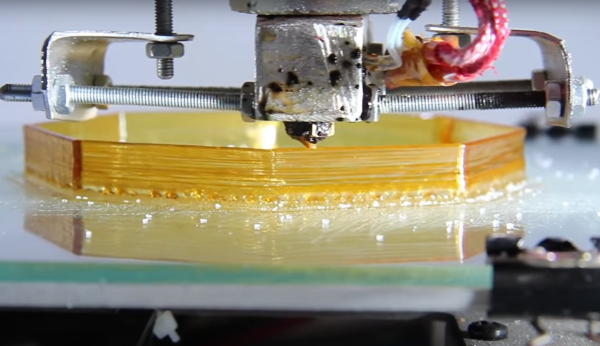
[Norbert Heinz] has been busy for the 2021 Hackaday Prize entry, working on the design of a direct granule extruder for 3D printing with waste materials, or materials that are not provided in the form of a filament. Sugar is pretty common in most households, so since that’s already available in granular form, [Norbert] gave 3D printing with granulated sugar a try. (Video, embedded below.)

[Editor’s note: He earned fifth place for this one! Well, not the sugar in particular, but the overall great work on granular extruders.]

Success was somewhat variable, as the gloopy material is notoriously fickle to work with, but the setup did produce some structures that stayed in one piece, at least for a while. Initially [Norbert] tried it real slow, effectively printing with the liquified sweet stuff, by dragging a molten blob of it around on the end of the extruder nozzle. Whilst this did work, the resulting print resolution did leave something to be desired. The next thing tried was increased print speed. This produced clearer prints, as the sugar did not have time to caramelise, or form a noticeable blob, but as soon as the bed started to cool, it caused it to crack badly.

Going slow seemed to be the way forward, as more time to cool may have reduced the stresses in the structure due to the increased cooling time. But anyway, the way we see it, is it’s fun trying, and if it fails, you can just eat it, so long as you disregard all that food safety stuff anyway.

[Norbert] documents the granule extruder journey on the project Hackaday.io page, so it should be straightforward enough to duplicate this is you were so inclined.

We’ve covered a few sugary hacks before; Need a renewable bed adhesive? out of glue stick? try sugar as a bed adhesive! Printing in gloopy, sloppy materials is nothing new at all, we covered it nearly ten years ago.

Continue reading “Fifty Shades Of Brown: 3D Printing With Sugar”

Iridescent Rainbow Chocolate, Just Add Diffraction Grating!

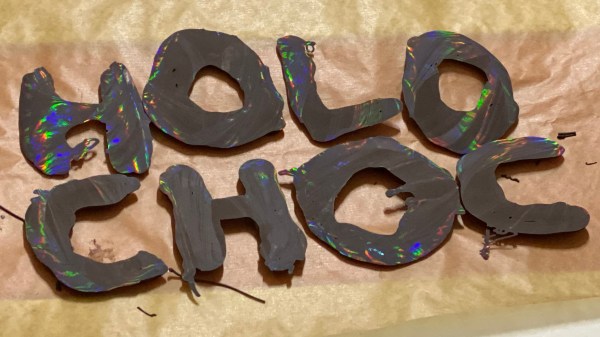
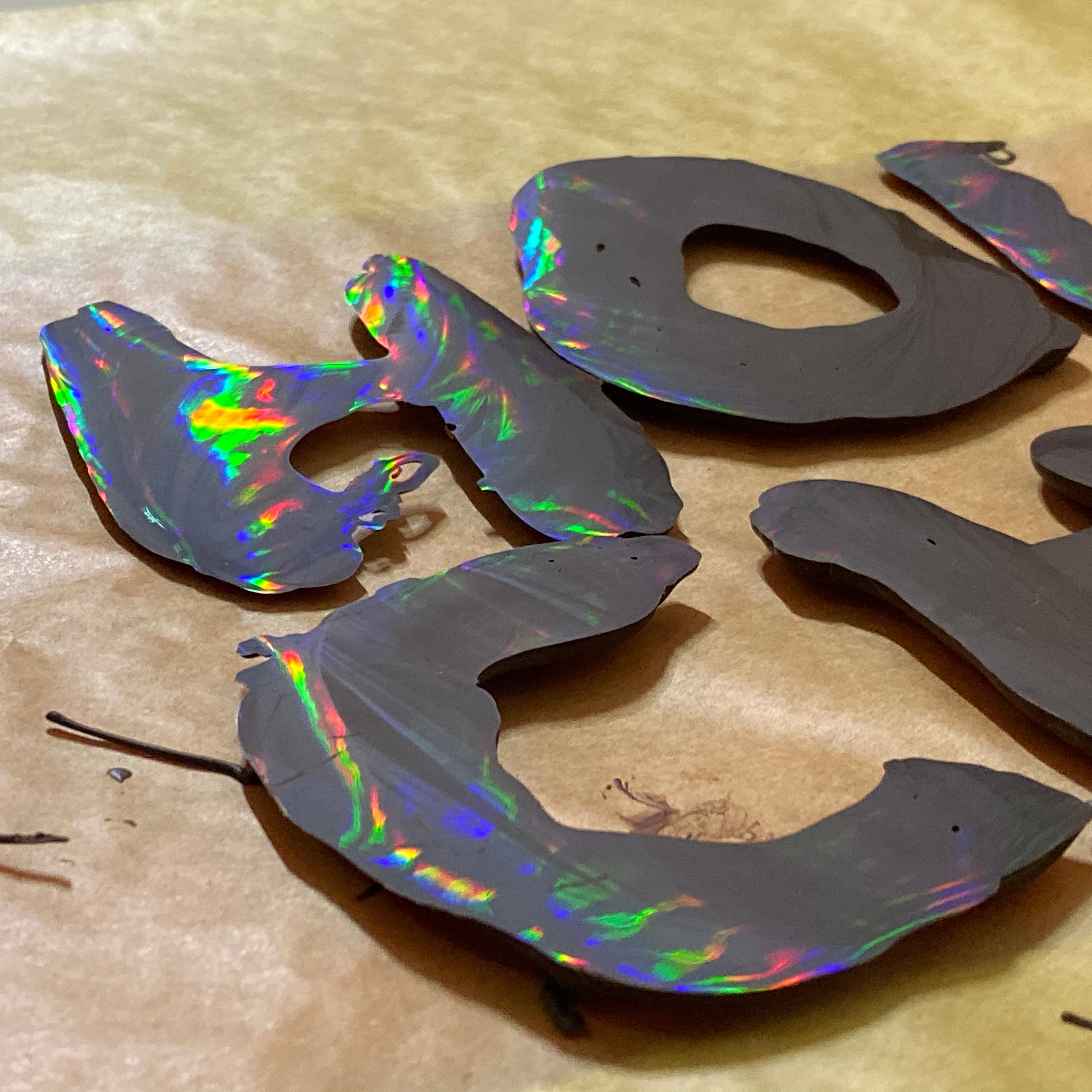
Chocolate plus diffraction grating equals rainbow chocolate

Here’s a great picture from [Jelly & Marshmallows] that shows off the wild effects of melted chocolate poured onto a diffraction grating. A diffraction grating is a kind of optical component whose micro-features act to disperse and scatter light. Diffraction gratings are available as thin plastic film with one side that is chock full of microscopic ridges, and the way light interacts with these ridges results in an iridescent, rainbow effect not unlike that seen on a CD or laserdisc.

It turns out that these micro-ridges can act as a mold, and pouring chocolate over a diffraction grating yields holo-chocolate. These photos from [Jelly & Marshmallows] show this effect off very nicely, but as cool as it is, we do notice that some of the letters seem a wee bit hit-or-miss in how well they picked up the diffraction grating pattern.

Fortunately, we know just what to suggest to take things to the next level. If you want to know more about how exactly this effect can be reliably accomplished, you’ll want to check out our earlier coverage of such delicious optics, which goes into all the nitty-gritty detail one could ever want about getting the best results with either melted sugar, or dark chocolate.

Sugar As A Bed Adhesive For 3D Printing

3D printers, like most CNC machines, reward careful thought and trial and error. It’s important to use the correct machine settings and to prepare the build environment properly in order to get good results. Fused Filament Fabrication printers rely on melting plastic just so in the production of parts, and have their own set of variables to play with. [Mysimplefix] has been exploring various solutions to bed adhesion and found something that seems to work perfectly, right in the pantry.

That’s right, this solution to the problem of bed adhesion is more commonly stirred into your coffee every morning – it’s sugar. [Mysimplefix] shares their preferred process, consisting of first mixing up a sugar/water solution in the microwave, before applying it to the bed with a paper towel and allowing the water to evaporate off.

Several test prints are then shown, with major overhangs, to show the adhesive capabilities of the sugar. The results are impressive, with parts sticking well while the bed is hot, while being easy to remove once cool. The video deals with PLA, but we’d be interested to see the performance with other materials as well.

It’s a tidy solution, and we’d love to know your thoughts and experiences in the comments. We’ve had a good long think about adhesives ourselves, too.

Continue reading “Sugar As A Bed Adhesive For 3D Printing”

The End Of The Candy Rainbow

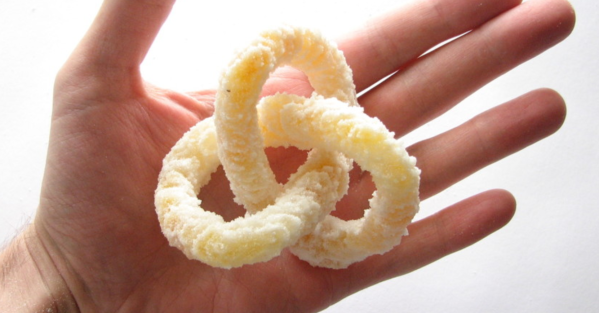
About a decade ago [Windell Oskay] and [Lenore Edman] spun out of Evil Mad Scientist Laboratories to work on CandyFab, an inexpensive 3D printer that used sugar as its medium. Wondering what happened to CandyFab? It’s been nearly that long since we last wrote about their work and Maker technology has moved on; nowadays 3D printers run the gamut from very inexpensive to production ready. The CandyFab project and nascent company are now shuttered, but there is a epilogue with some interesting lessons.

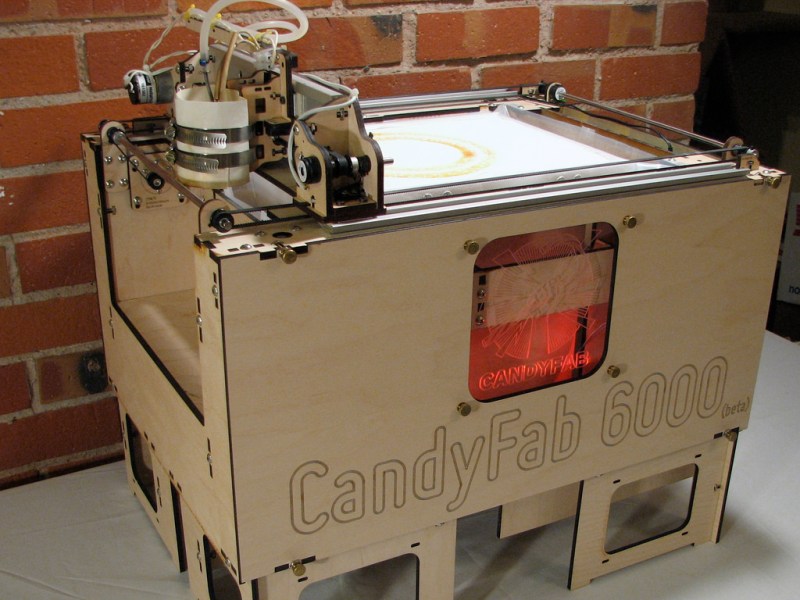
The CandyFab 6000

First of all, the saga of the CandyFab series of printers (above on the same page) is worth a read. Some of what these machines were capable of is still quite impressive by modern standards. Sure your Monoprice Mini Delta may be easy to use, fully assembled, functional when you take it out of the box, and quiet. But what if you need to print something up to 8.5″ x 11″ x 17″? The CandyFab 5000 can do that. Or even a humongous 24″ x 13.5″ x 9″? The CandyFab 4000 can do it, and for a measly $37 (if you printed a solid cube exactly the size of the build volume)! Sugar may have downsides but it’s still a pretty clever medium for some uses.

CandyFab credits the rise of MakerBot coupled with the complexity of iterating from a pile of “surplus junk” (their words) to something kitable. Reading their post-mortem brings to mind familiar problems from today’s hardware world. A spike of fantastic early publicity lead to the need to handle press while rapidly iterating from the aforementioned surplus parts to a reliable and manufacturable design. Then the complexity of balancing a day job and other side projects with the prospect of CandyFab as a business. Ultimately the need for the project in the first place (accessible inexpensive 3D printers) was alleviated by the market and the project came to a graceful close.

Give the post a read, we’re sure you’ll learn something!

Sugar Painting: Street Vendors Make Works Of Edible Art

Street vendors can sometimes show the best examples of refined skill. These street vendors in China have carved out a niche with a very specific type of candy. They pour heated sugar in various shapes and designs, then put it on a stick for your consumption. It doesn’t sound that impressive, but watch these videos and see the skill they show. As with many street vendors, you can tell these people have done this 10,000 times and the muscle memory could almost carry them on autopilot.

I would be happy to support street vendors like this.

http://www.youtube.com/watch?v=239GSmRW9XY