
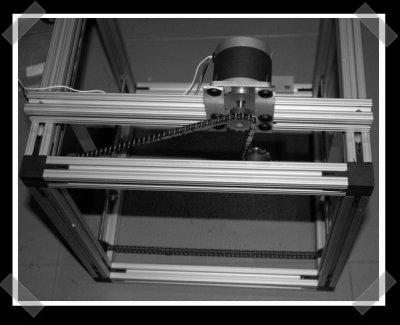
[Lou]’s been working on his own 3d printer: fabr. We find it appealing because the entry cost is quit a bit lower than something like the reprap. 80/20 isn’t that cheap, but you don’t need a large commercial laser cutter to build the chassis. The steppers he used appear to be inexpensive ones that can be salvaged from dot matrix printer. To drive it, he’s working on a custom microstepping board and hopes to eventually develop an Arduino shield to control the stepper drivers. That’s right, it’ll get an Arudino to act as the CNC control interface.
classic hacks2813 Articles
Clove 2 Glove For One Handed Input
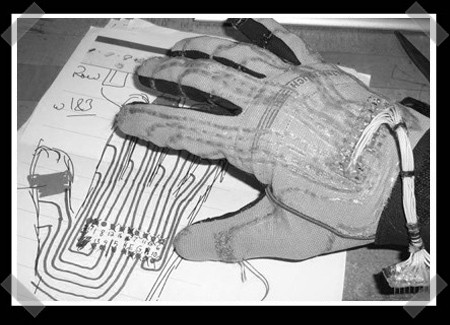
[Christopher Mitchell] (previously on Hack a Day) has come up with a rather interesting input device. The Clove 2 glove is a Bluetooth data input interface. The goal is to be able to “type” without the use of a traditional keyboard. Key strokes are achieved through finger movements. Your computer simply sees this as a Bluetooth HID device and some software translates it for you.
While it may seem confusing, he’s designed it to be very similar to typing on a keyboard. Each finger movement or combination is a key stroke. Just like typing on a regular keyboard, there are modifying strokes such as ALT or shift that effect others. Most common used keys require the least combinations of finger movements.
USB Popcorn Popper
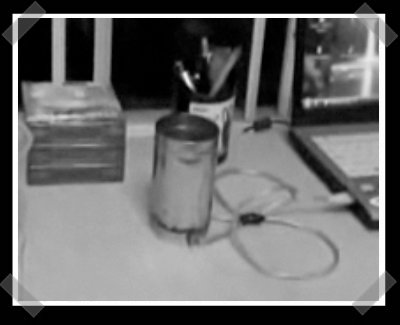
[sophia] sent in this interesting little video of a USB popcorn popper. It might just work too – we’ve burned our digits a time or two on a hot flashlight. The bottom is a jar lid, fitted with a pair of high intensity flashlight bulbs. These are wired directly to a USB cable (maybe a bit unwise). When plugged in, the bulbs are on and heat the metal container. Just add oil and popcorn… As usual, you can catch the video after the break.
Optical DJ Controller
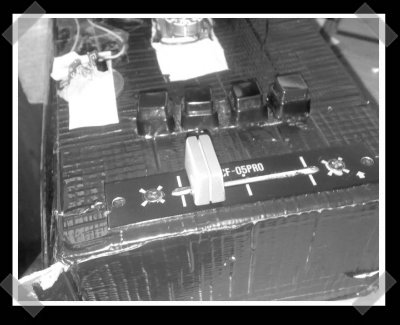
[Adrian] sent in this sweet little optical DJ controller. The ‘turntable’ was made from a CD and an encoder wheel created with a laser printed transparent overhead sheet. You can score some optical gear from a spare mouse, or just buy the parts. A PIC18F452 encodes everything into a midi signal. You can find a good photo of the schematics here. And you can hit the demo video after the break.
Laser Exposing PCB Resist
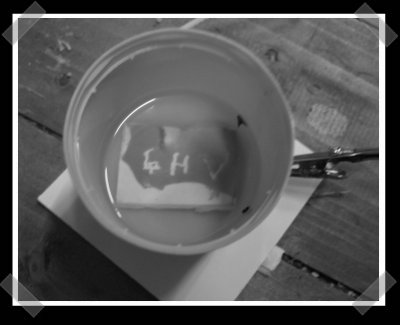
[andre] sent in his first attempt at using a HD-DVD laser diode to expose photosensitive resist to create PC boards. We’ve been meaning to give this a shot with the ol’ Epilog laser cutter. For the test, he coated the board with some resist and hand exposed it with the laser. Finally, he etched it with some sodium hydroxide.
Programmable AVR Thermostat
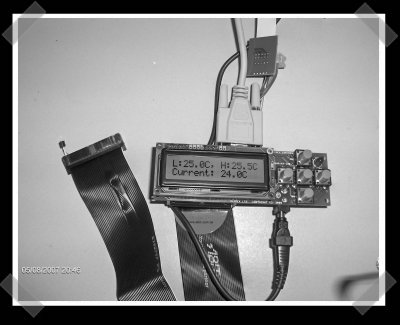
This nifty thermostat is actually built from just a few off the shelf components. A Dallas DS1820 1-wire temperature sensor provides and an Olimex ATMega development board. If you’re not so handy with the soldering side, you can pull this one off. The device can be programmed by the button cluster and will even output status via the serial port.
Use Junk To Measure Your Caps And Coils
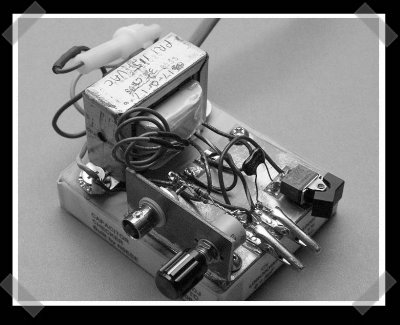
[Cliff] sent in [N5ESE]’s junk box project page. Most of the projects are amateur radio specific, but one that caught my eye was his capacitance checker









