Relive The Hackaday Belgrade Conference

The Hackaday Belgrade Conference was an amazing success. For proof, you need look no farther than the slate of talks that we have been publishing over that past several weeks. Each looks at different angles of the hardware universe; what does it mean to create hardware, where have we been, where are we going, and where does inspiration for the next great design come from?

The talks have now all been published and collected into one video playlist; it was an intense day of talks all caught in one streaming frenzy. But if you can’t make it through in one sitting, I’ve also listed the individual talks after the break so you that you may pick and choose.

There are, however, two talks that have just been published this afternoon. These are the opening remarks presented by Aleksandar Bradic and the closing remarks which I presented. When we meet people we’re often asked about what is going on behind the scenes. It’s really easy to think that nobody cares about what it takes to pull together a conference, run an amazing engineering challenge, or how we decide what we think matters when looking to the future. Alek covers the back story of how Supplyframe and Hackaday came together, as well as what led us to choose Belgrade for this conference. I discuss what I think is a core virtue of Hackaday; the free and open sharing of information and ideas. It’s a concept I believe in, and the most noble of reasons for documenting your work so that others may build upon your knowledge and skill.

Hackaday | Belgrade went beyond what we even considered possible. It joins the 2016 SuperConference (whose talk videos have also been published) as a shining example of our strong, active, and engaged community who want to spend their time enabling everyone — hackers, designers, and engineers alike — to succeed.

Continue reading “Relive The Hackaday Belgrade Conference”

Evolving Storytelling To Marry The Ancient Skills With The Digital Age

Storytelling is an art. It stretches back to the dawn of man. It engages people on an emotional level and engages their mind. Paulina Greta Stefanovic, a user experience researcher and interaction designer is on the cutting edge of bringing our technology together with the best human aspects of this long tradition.

The information age is threatening storytelling — not making it extinct, but reducing the number of people who themselves are storytellers. We are no longer reliant on people in our close social circles to be exquisite story tellers for our own enjoyment; we have the luxury (perhaps curse?) of mass market story-telling.

Paulina’s work unlocks interactive storytelling. The idea isn’t new, as great storytellers have always read their audience and played to their engagement. Interactive storytelling in the digital age seeks to design this skill into the technology that is delivering the story. This is a return from passive entertainment.

This breaks down into interactive versus responsive. At its simplest, think of responsive as a video that has a pause button. You can change the flow of the story but you can’t make the story your own. Surprisingly, this is a new development as the ability to pause playback is but a few decades old. So you can pause a responsive medium, but true interactive experiences involve creation — the audience is immersed in the story and can make substantive changes to the outcome during the experience.

This equates to a power transfer. The creator of the media is no longer in complete control, ceding some to the audience. We are just at the start of this technology and it looks like the sky is the limit on what we can do with algorithmic interactions.

Video games are the forerunners of this change. They already have branching stories that let the users make choices that greatly affect the storyline. This industry is huge and it seems obvious that this active aspect of story consumption is a big part of that success. Even more intriguing is a “drama management system” (a new term to me but I love it) that results in a story whose ending nobody knows until this particular audience gets there. What a concept, and something I can’t wait to see for myself!

If you find these concepts as interesting as I do, check out Paulina’s talk below, which she presented at the Hackaday Belgrade conference.

Electromagnetic Field’s Badge Hanging In The Balance

Making conference badges is a tough job. Unless you’re sitting on a gold mine, you have to contact a whole bunch of sponsors for help, work the parts that you can get into a coherent design, and do it all on the quick for a large audience. The EMF team is this close to getting it done, but they need some sponsorship for the assembly. If you know anyone, help them out! If they can’t line something up in the next two weeks, they’ll have to pull the plug on the badge entirely.

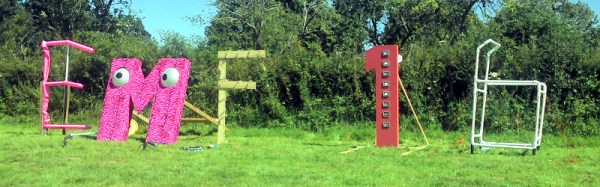
Electromagnetic Field is a summer-camp hacker convention / festival that takes place in England and is now in its third iteration. As with other big cons, the badge is a good part of the fun.

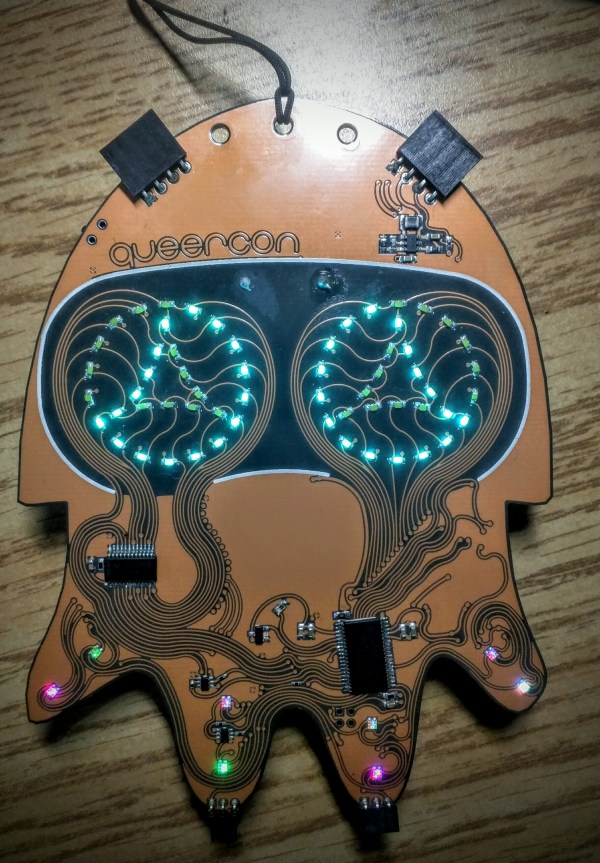
The 2016 EMF badge looks to be amazing. It’s powered by an ST STM32L4 low-power micro, a color LCD screen, a TI CC3100 WiFi radio module onboard, and a ridiculous number of other features including a gyro and magnetometer, and a giant battery. It’s also a testbed for the brand-new MicroPython, which aims to bring everyone’s favorite scripting language to embedded processors. In fact, they’ve largely built the MicroPython WiFi drivers for the badge.

If they can’t get a sponsor, all is not lost because everything is open source. We’ll all reap the benefits of their hard work. But that’s not the point. The point is that hundreds of hackers will be standing around in a field outside of London without the most audacious badge that we’ve seen designed dangling from their necks.
If you know anyone who can help, get in touch?

Thanks [schneider] for the tip!

Navid Gornall Eats His Own Face

Navid Gornall is a creative technologist at a London advertising agency, which means that he gets to play with cool toys and make movies. That also means that he spends his every working hour trying to explain tech to non-technical audiences. Which is why he was so clearly happy to give a talk to the audience of hardware nerds at the Hackaday Belgrade conference.

After a whirlwind pastiche of the projects he’s been working on for the last year and a half, with tantalizing views of delta printers, dancing-flame grills, and strange juxtapositions of heat sinks and food products, he got down to details. What followed was half tech show-and-tell, and half peering behind the curtain at the naked advertising industry. You can read our writeup of the highlights after the video below.

Continue reading “Navid Gornall Eats His Own Face”

Reinventing VHDL Badly

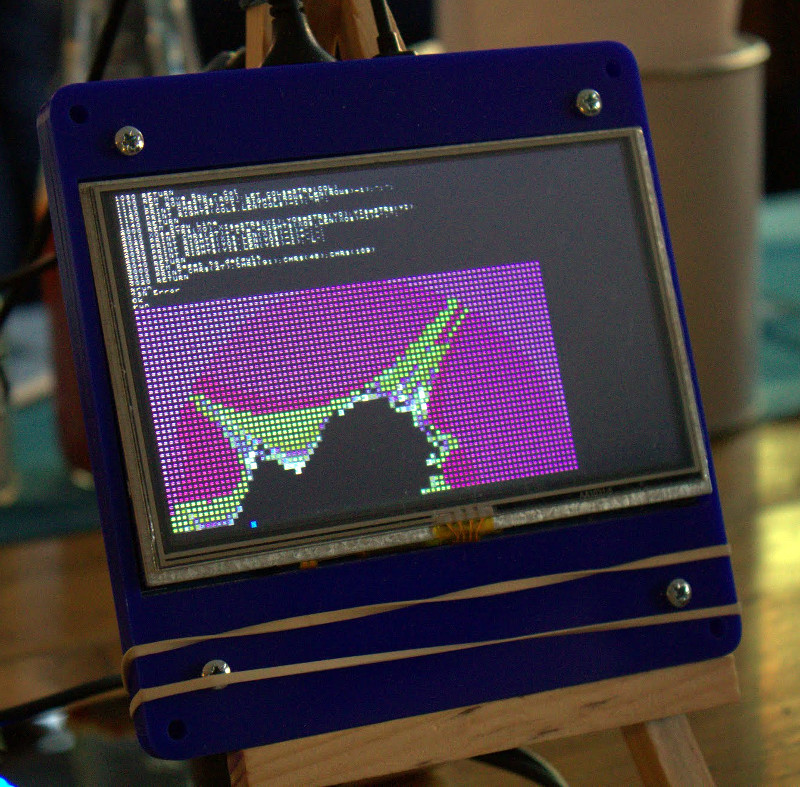
A few years ago, Philip Peter started a little pet project. He wanted to build his own processor. This really isn’t out of the ordinary – every few months you’ll find someone with a new project to build a CPU out of relays, logic chips, or bare transistors. Philip is a software developer, though, and while the techniques and theory of building hardware haven’t changed much in decades, software development has made leaps and bounds in just the past few years. He’s on a quest to build a CPU out of discrete components.

Search the Internet for some tips and tricks for schematic capture programs like KiCad and Eagle, and you’ll find some terrible design choices. If you want more than one copy of a very specific circuit on your board, you have to copy and paste. Circuit simulation is completely separate from schematic capture and PCB design, and unit testing – making sure the circuit you designed does what it’s supposed to do – is a completely foreign concept. Schematic capture and EDA suites are decades behind the curve compared to even the most minimal software IDE. That’s where Philip comes in. By his own admission, he reinvented VHDL badly, but he does have a few ideas that are worth listening to.

Continue reading “Reinventing VHDL Badly”

Meet Up With Hackaday This Saturday In San Mateo

We’ll be at Bay Area Maker Faire and we want to have a beer with you on Saturday night.

Two years ago we headed off to the Bay Area Maker Faire and thought we’d invite friends and acquaintances to congregate at a bar on Saturday night. Anyone who’s been to the Faire (or been through a harrowing weekend of working a booth) knows that a bar stool and frothy beverage are a great way to recuperate. The turnout was amazing, we easily filled up O’Neill’s Irish Pub with that first meetup, and the Hackaday BAMF Meetup was born. Last year we packed it to the seams. This year we’re planning for an even bigger turnout that will go late into the evening.

I’ve only ever heard one complaint about this event; the band is too loud. This year O’Neill’s doesn’t have a band lined up so everything seems to be coming up roses. Come hang out with us! If you RSVP we’ll buy your first beer. Bring your stories, your easily transported hacks to show off, and have fun with the eclectic and enthralling community that turns out for this, the greatest meetup on earth.

Hackaday Letter from the Editors

If this is the first you’ve heard about this year’s meetup, you should subscribe to our weekly newsletter. Every week, a Hackaday Editor writes about what’s been going on that week, and shares a few of the most interesting posts from the past seven days. You can sign up for it in the sidebar to the right or with that signup link I just shared. If you’d like to know what you’re getting yourself into, here’s the most recent newsletter which we sent out on Friday. It’s a mini Hackaday delivered to your mailbox.

Madison Maker Faire

Saturday was the first Madison Mini Maker Faire. In this case, it’s Madison, Wisconsin (sorry Madison, SD I didn’t mean to get your hopes up) where I live. Of course I’m not the only crazy hardware hacker in the area. As soon as I got there I almost tripped over Ben Heckendorn who also lives in the area.

ben-heck-gameboy

Check out that incredible Giant Game Boy the he was exhibiting. Okay, you think to yourself: Raspberry Pi and an LCD. Wrong! He’s actually using an FPGA to drive the LCD. Even cooler, it’s using an original Game Boy brain board, which the FPGA is connected to in order to translate the handheld’s LCD connector signals to work with the big LCD.

Continue reading “Madison Maker Faire”