Resurrection — Pressing WW2 Radio Equipment Back Into Service

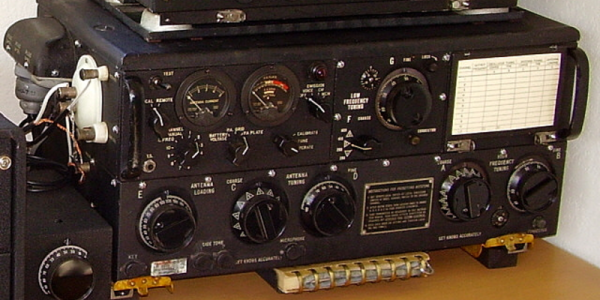
Mass production was key to survival during the Second World War. So much stuff was made that there continues to be volumes of new unpacked stuff left over and tons of used equipment for sale at reasonable prices. Availability of this war surplus provided experimenters in the mid 20th century with access to high performance test equipment, radio equipment, and high quality components for the first time.

Even today this old stuff continues to motivate and inspire the young generations because of its high build quality, unique electro-mechanical approaches, and overall innovative designs which continue to be relevant into the 21st century. In this post we will show you how to get started in the hobby of resurrecting WW2 radio equipment and putting it back on the air.

Continue reading “Resurrection — Pressing WW2 Radio Equipment Back Into Service”

Retrotechtacular: FAX As A Service In 1984

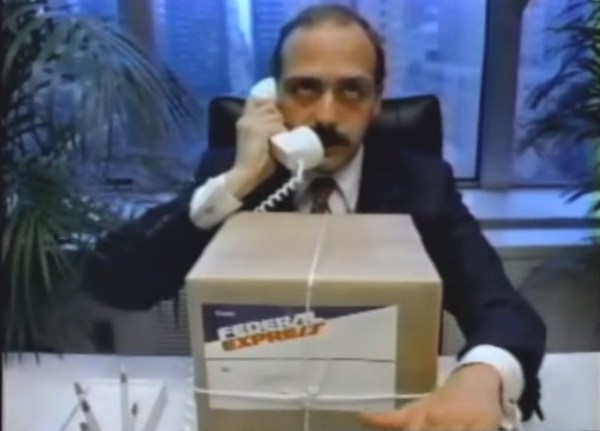
If you tell someone these days to send you something via FAX, you are likely to get a look similar to the one you’d get if you asked them to park your horse. But in 1984, FAX was a mysterious new technology (well, actually, it wasn’t, but it wasn’t yet common to most people).

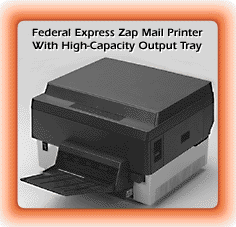
fed-ex_zapFedEx–the people who got famous delivering packages overnight–made a bold move to seize a new market: Zapmail (not to be confused with the modern mass mailing service). The idea was simple (you can see a commercial for it in grainy VHS splendor below): Overnight is great, but sometimes you need something sent across the country now. A FedEx driver picks up your documents, carries them to a FedEx office. There the documents FAX to another FedEx office where another driver delivers the printed copy. The process took two hours to get a paper document from one side of the continent to another.

Continue reading “Retrotechtacular: FAX As A Service In 1984”

The Lotus Sevens: The Real Most-Hackable Cars

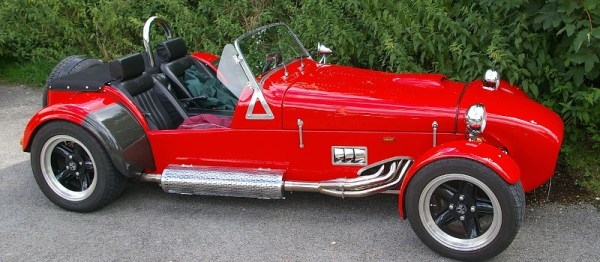
In the late 1940s and early 1950s, Europe was still struggling to recover from the crippling after-effects of war. In Britain it is referred to as the “austerity period”, with food still rationed and in which “make do and mend” was very much the order of the day. The consumer boom of the late 1950s and 1960s was very far in the future, and if you were a hardware hacker your source materials were limited to whatever you could find from war surplus or whatever prewar junk might come your way. This was a time in which the majority of adults had recently returned from war service, during which they had acquired practical skills through the necessities of battle that they sought an outlet for in peacetime.

One field that benefited from this unexpected flowering of creativity was that of motor racing. Before the war it had been an exclusive pursuit, with bespoke cars at famous circuits like the banked track at Brooklands, in Surrey. In a reflection of the wider social changes that followed the war the motor racers of the post-war years came from humbler backgrounds, they raced homemade specials made from tired-out prewar motors on wartime airfield perimeter tracks like the one at Silverstone which still hosts Formula One racing today.

Continue reading “The Lotus Sevens: The Real Most-Hackable Cars”

Retrotechtacular: Whatever Happened To The Paper Mobile Phone

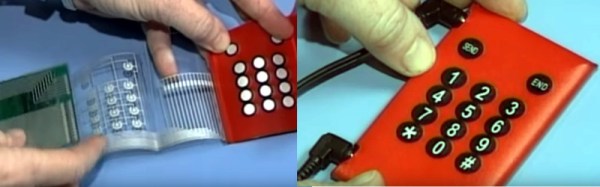
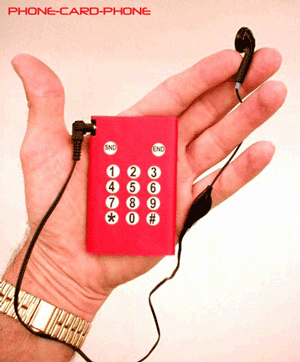
It was one of the more interesting consumer tech stories floating around at the turn of the century, a disposable cell phone manufactured using a multi-layer folded paper circuit board with tracks printed in conductive ink. Its feature set was basic even by the standards of the day in that it had no display and its only function was to make calls, but with a target price of only $10 that didn’t matter. It was the brainchild of a prolific New Jersey based inventor, and it was intended to be the first in a series of paper electronic devices using the same technology including phones with built-in credit card payment ability and a basic laptop model.

The idea of a $10 mobile phone does not seem remarkable today, it’s possible that sum might now secure you something with features far in excess of the Nokias and similar that were the order of the day at that time. But when you consider that those Nokias could have prices well into three figures without a contract, and that the new features people considered exciting were things like integrated antennas or swappable coloured plastic covers rather than the multicore processors or high-res cameras we’re used to today, a phone so cheap as to be disposable promised to be very disruptive.

The web site publicity shot for the disposable paper phone.

The product’s wonderfully dated website (Wayback Machine link, we’ve skipped the Flash intro for you) has pictures of the device, and the video below the break features shots of it in use as its inventor is interviewed. But by the end of 2002 the Wayback Machine was retrieving 404 errors from the server, and little more was heard of the product. No sign of one ever came our way; did any make it to market, and did you have one?

With the benefit of fifteen years hindsight, why did we not have paper mobile phones as part of the ephemera of the early years of the last decade? It was not a product without promise; a ten-dollar phone might have been a great success. And the description of a cheap laptop that talks to a remote server for its software sounds not unlike today’s Chromebooks.

Some of you might claim the product was vapourware, but given that they demonstrated a working prototype we’d hesitate to go that far. The likelihood is that it did not find the required combination of component price and manufacturing ease to exploit its intended market segment before its competition improved to the point that it could no longer compete. If you have ever taken apart a typical mobile phone of the period you’ll have some idea of why they were not cheap devices, for example the RF filter modules of the day were individually adjusted precision components. And paper-and-ink printed circuit boards are still a technology with a way to go even now, perhaps the idea was simply too far ahead of its time. Meanwhile within a relatively short period of time the price of simple candybar phones dropped to the point at which they would tempt the $10 buyer to spend more for a better product, so the window of opportunity had passed.

Continue reading “Retrotechtacular: Whatever Happened To The Paper Mobile Phone”

Will The Real Schrodinger’s Cat Please Stand Up

The story of Schrodinger’s cat is well known, and one of quantum theory’s most popular phrases on the world stage. You can find his cat on t-shirts, bumper stickers, internet memes and the like. However, few know the origins of the cat, and how it came into being. I suspect many do not understand it beyond the “dead and alive at the same time” catchphrase as well. Not surprisingly, it was Einstein who was at the center of the idea behind Schrodinger’s cat. In a vibrant discussion between the two via letters across the Atlantic, Schrodinger echoed Einstein’s concerns with the following:

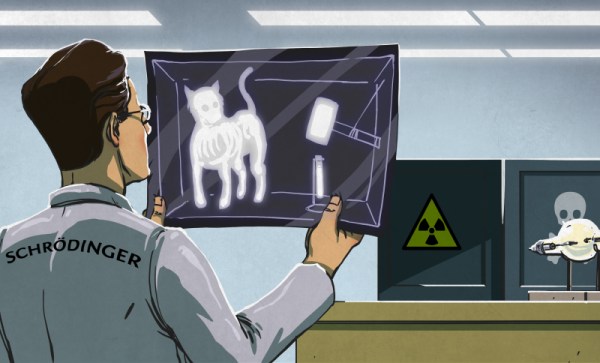
Contained in a steel chamber is a Geiger counter prepared with a tiny amount of uranium, so small that in the next hour it is just as probable to expect one atomic decay as none. An amplified relay provides that the first atomic decay shatters a small bottle of prussic acid. This and -cruelly- a cat is also trapped in the steel chamber. According to the wave function for the total system, after an hour, sit venia verbo [pardon my language], the living and dead cat are smeared out in equal measure.

This was the first mention of Schrodinger’s cat, and one would not be incorrect in stating that this paragraph from a letter was where the cat was born. However, the original idea behind the thought experiment was from Einstein and his loathing of the wording of the Einstein-Podolsky-Rosen (EPR) paper. He expressed his frustrations with Schrodinger with a few simple examples, who then catapulted it into his famous paradox . In this article we’re going to explore not so much the cat, but the meaning behind the thought experiment and what it is meant to convey, while keeping it simple enough for anyone to understand. So next time you see it on a t-shirt, you will be able to articulate the true meaning and know the real Schrodinger’s cat.

Continue reading “Will The Real Schrodinger’s Cat Please Stand Up”

Ask Hackaday: DIY Handwriting Recognition

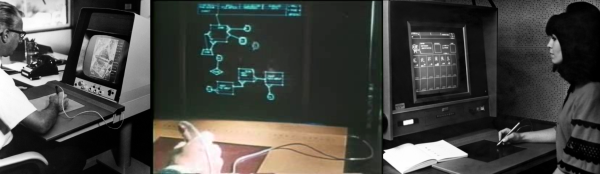
Computer handwriting recognition is very cool by itself, and it’s something that we’d like to incorporate into a project. So we went digging for hacker solutions, and along the way came up with an interesting bit of history and some great algorithms. We feel like we’ve got a good start on that front, but we’re stuck on the hardware tablet sensor itself. So in this Ask Hackaday, we’re going to make the case for why you could be using a tablet-like device for capturing user input or doing handwriting recognition, and then we’re going to ask if you know of any good DIY tablet designs to make it work.

Continue reading “Ask Hackaday: DIY Handwriting Recognition”

A Brief History Of ‘Drone’

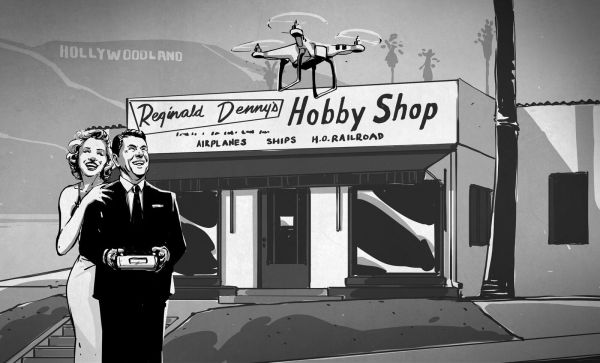
In the early 1930s, Reginald Denny, an English actor living in Los Angeles, stumbled upon a young boy flying a rubber band-powered airplane. After attempting to help the boy by adjusting the rubber and control surfaces, the plane spun into the ground. Denny promised he would build another plane for the boy, and wrote to a New York model manufacturer for a kit. This first model airplane kit grew into his own hobby shop on Hollywood Boulevard, frequented by Jimmy Stewart and Henry Fonda.

The business blossomed into Radioplane Co. Inc., where Denny designed and built the first remote controlled military aircraft used by the United States. In 1944, Captain Ronald Reagan of the Army Air Forces’ Motion Picture unit wanted some film of these new flying targets and sent photographer David Conover to the Radioplane factory at the Van Nuys airport. There, Conover met Norma Jeane Dougherty and convinced her to go into modeling. She would later be known as Marilyn Monroe. The nexus of all American culture from 1930 to 1960 was a hobby shop that smelled of balsa sawdust and airplane glue. That hobby shop is now a 7-Eleven just off the 101 freeway.

Science historian James Burke had a TV wonderful show in the early 90s – Connections – where the previous paragraphs would be par for the course. Unfortunately, the timbre of public discourse has changed in the last twenty years and the worldwide revolution in communications allowing people to instantaneously exchange ideas has only led to people instantaneously exchanging opinions. The story of how the Dutch East India Company led to the rubber band led to Jimmy Stewart led to remote control led to Ronald Reagan led to Death of a Salesman has a modern fault: I’d have to use the word ‘drone’.

The word ‘propaganda’ only gained its negative connotation the late 1930s – it’s now ‘public relations’. The phrase ‘global warming’ doesn’t work with idiots in winter, so now it’s called ‘climate change’. Likewise, quadcopter pilots don’t want anyone to think their flying machine can rain hellfire missiles down on a neighborhood, so ‘drone’ is verboten. The preferred term is quadcopters, tricopters, multicopters, flying wings, fixed-wing remote-controlled vehicles, unmanned aerial systems, or toys.

I’m slightly annoyed by this and by the reminder I kindly get in my inbox every time I use the dreaded d-word. The etymology of the word ‘drone’ has nothing to do with spying, firing missiles into hospitals, or illegally killing American civilians. People like to argue, though, and I need something to point to when someone complains about my misuse of the word ‘drone’. Instead of an article on Hollywood starlets, the first remote control systems, and model aviation, you get an article on the etymology of a word. You have no one else to blame but yourself, Internet.

Continue reading “A Brief History Of ‘Drone’”