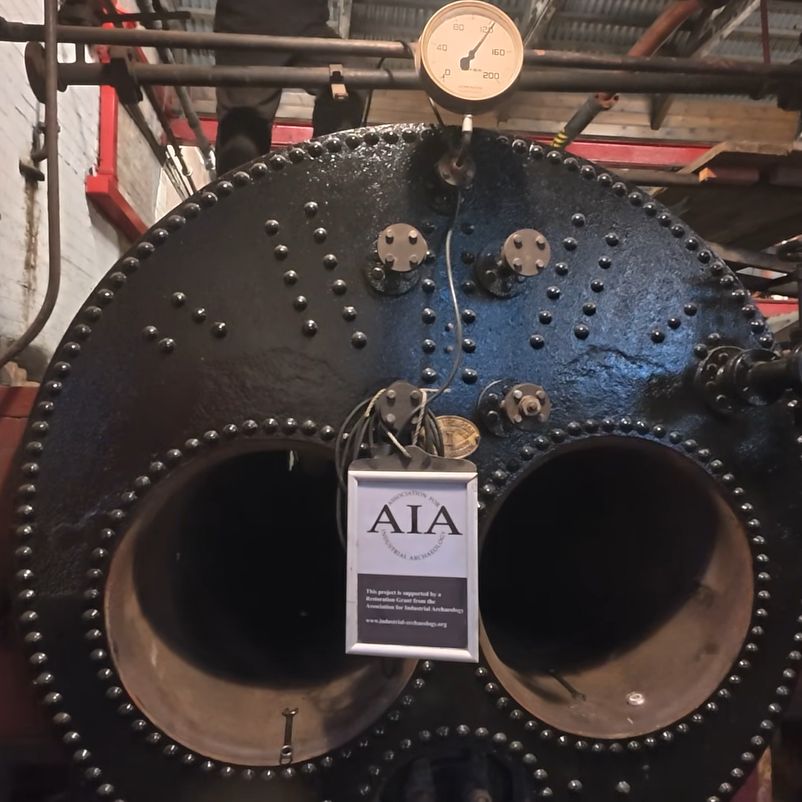
How To Restore Your 19th-Century Lancashire Boiler To Hold 120 PSI

The Industrial Revolution was powered by steam, with boilers being a crucial part of each steam engine, yet also one of the most dangerous elements due to the high pressures involved. The five Lancashire boilers at the Claymills Pumping Station are relatively benign in this regard, as they operate at a mere 80 PSI unlike e.g. high-pressure steam locomotives that can push 200 – 300 PSI. This doesn’t mean that refurbishing one of these boilers is an easy task and doesn’t involve plugging a lot of leaks, as the volunteers at this pumping station found out.

At this Victorian-era pumping station there are a total of five of these twin-flue Lancashire boilers, all about 90 years old after a 1930s-era replacement, with them all gradually being brought back into service. The subject of the video is boiler 1, which was last used in 1971 before the pumping station was decommissioned. Boilers 2 and 3 were known to be in a pretty bad condition, and they needed a replacement for boiler 5 as it was about to go down for maintenance soon.

Although the basic idea behind a Lancashire boiler is still to boil water to create steam, it’s engineered to do this as efficiently as possible to save fuel. This is why it has two flues where the burning coal deposits its thermal energy, which then goes on to heat the surrounding water. The resulting pressure from the steam also means that there are a lot of safeties to ensure that things do not get too spicy.

Continue reading “How To Restore Your 19th-Century Lancashire Boiler To Hold 120 PSI” →

Retrotechtacular: Bleeding-Edge Memory Devices Of 1959

Although digital computers are – much like their human computer counterparts – about performing calculations, another crucial element is that of memory. After all, you need to fetch values from somewhere and store them afterwards. Sometimes values need to be stored for long periods of time, making memory one of the most important elements, yet also one of the most difficult ones. Back in the 1950s the storage options were especially limited, with a 1959 Bell Labs film reel that [Connections Museum] digitized running through the bleeding edge of 1950s storage technology.

After running through the basics of binary representation and the difference between sequential and random access methods, we’re first taking a look at punch cards, which can be read at a blistering 200 cards/minute, before moving onto punched tape, which comes in a variety of shapes to fit different applications.

Electromechanical storage in the form of relays are popular in e.g. telephone exchanges, as they’re very fast. These use two-out-of-five code to represent the phone numbers and corresponding five relay packs, allowing the crossbar switch to be properly configured.

Continue reading “Retrotechtacular: Bleeding-Edge Memory Devices Of 1959” →

Ancient Ice Production

Today, we take ice for granted. But having ice produced in your home is a relatively modern luxury. As early as 1750 BC, ancient people would find ice on mountains or in cold areas and would harvest it. They’d store it, often underground, with as much insulation as they could produce given their level of technology.

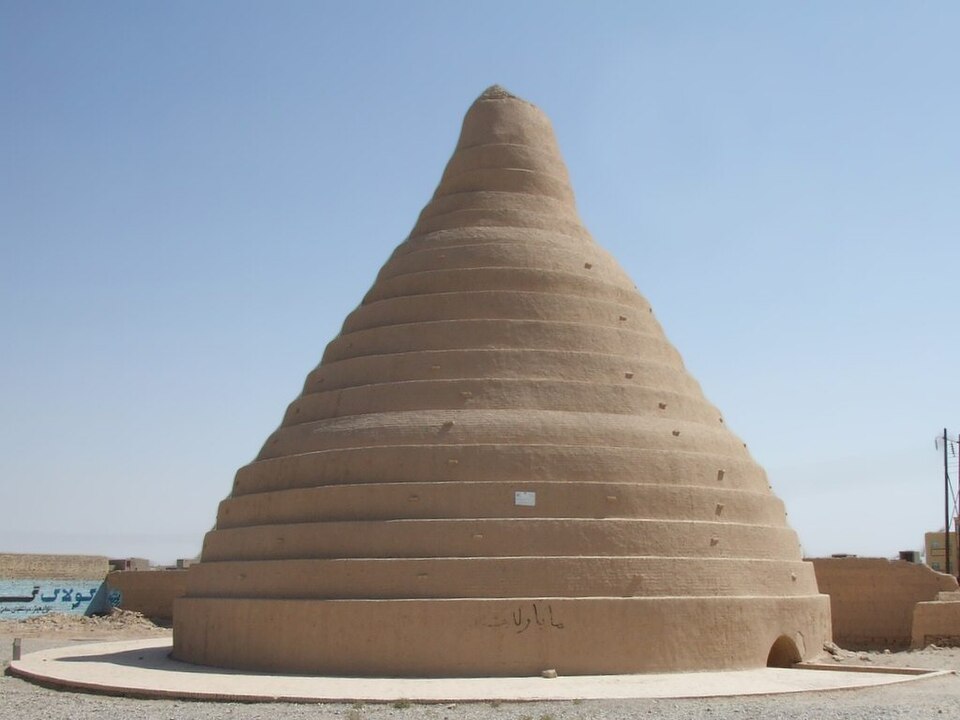
A yakhchāls in Yazd province (by [Pastaitkaen] CC BY-SA 3.0).
By 500 BC, people around Egypt and what is now India would place water in porous clay pots on beds of straw when the night was cold and dry. Even if the temperature didn’t freeze, the combination of evaporation and radiative cooling could produce some ice. However, this was elevated to a high art form around 400 BC by the Persians, who clearly had a better understanding of physics and thermodynamics than you’d think.

The key to Persian icemaking was yakhchāls. Not all of them were the same, but they typically consisted of an underground pit with a conical chimney structure. In addition, they often had shade walls and ice pits as well as access to a water supply.

Solar Chimney

The conical shape optimizes the solar chimney effect, where the sun heats air, which then rises. The top was typically not open, although there is some thought that translucent marble may have plugged the top to admit light while blocking airflow. yakhchālThe solar chimney produces an updraft that tends to cool the interior. The underground portion of the yakhchāl has colder air, as any hot air rises above the surface.

Continue reading “Ancient Ice Production” →

The Complicated Legacy Of Mind Controlled Toys

Imagine a line of affordable toys controlled by the player’s brainwaves. By interpreting biosignals picked up by the dry electroencephalogram (EEG) electrodes in an included headset, the game could infer the wearer’s level of concentration, through which it would be possible to move physical objects or interact with virtual characters. You might naturally assume such devices would be on the cutting-edge of modern technology, perhaps even a spin-off from one of the startups currently investigating brain-computer interfaces (BCIs).

But the toys in question weren’t the talk of 2025’s Consumer Electronics Show, nor 2024, or even 2020. In actual fact, the earliest model is now nearly as old as the original iPhone. Such is the fascinating story of a line of high-tech toys based on the neural sensor technology developed by a company called Neurosky, the first of which was released all the way back in 2009.

Yet despite considerable interest leading up to their release — fueled at least in part by the fact that one of the models featured Star Wars branding and gave players the illusion of Force powers — the devices failed to make any lasting impact, and have today largely fallen into obscurity. The last toy based on Neurosky’s technology was released in 2015, and disappeared from the market only a few years later.

I had all but forgotten about them myself, until I recently came across a complete Mattel Mindflex at a thrift store for $8.99. It seemed a perfect opportunity to not only examine the nearly 20 year old toy, but to take a look at the origins of the product, and find out what ultimately became of Neurosky’s EEG technology. Was the concept simply ahead of its time? In an era when most people still had flip phones, perhaps consumers simply weren’t ready for this type of BCI. Or was the real problem that the technology simply didn’t work as advertised?

Continue reading “The Complicated Legacy Of Mind Controlled Toys” →

How Volunteers Saved A Victorian-Era Pumping Station From Demolition

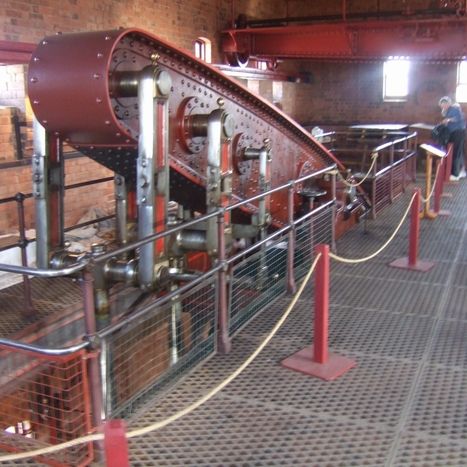
D-engine of the Claymills Pumping Station. (Credit: John M)

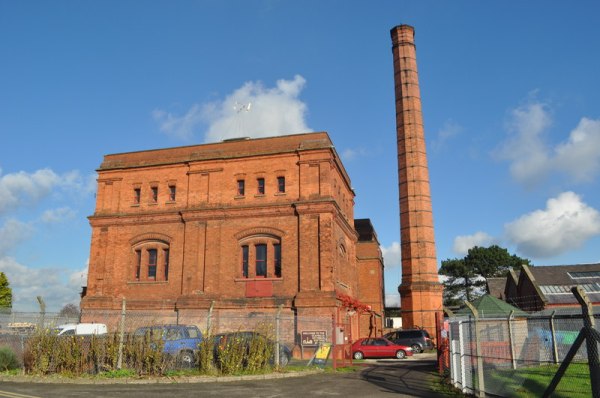
Although infrastructure like a 19th-century pumping station generally tends to be quietly decommissioned and demolished, sometimes you get enough people looking at such an object and wondering whether maybe it’d be worth preserving. Such was the case with the Claymills Pumping Station in Staffordshire, England. After starting operations in the late 19th century, the pumping station was in active use until 1971. In a recent documentary by the Claymills Pumping Station Trust, as the start of their YouTube channel, the derelict state of the station at the time is covered, as well as its long and arduous recovery since they acquired the site in 1993.

After its decommissioning, the station was eventually scheduled for demolition. Many parts had by that time been removed for display elsewhere, discarded, or outright stolen for the copper and brass. Of the four Woolf compounding rotative beam engines, units A and B had been shut down first and used for spare parts to keep the remaining units going. Along with groundwater intrusion and a decaying roof, it was in a sorry state after decades of neglect. Restoring it was a monumental task.

Continue reading “How Volunteers Saved A Victorian-Era Pumping Station From Demolition” →

The Engineering Of The Falkirk Wheel

We live in an age where engineering marvels are commonplace: airplanes crisscross the sky, skyscrapers grow like weeds, and spacecraft reach for the stars. But every so often, we see something unusual that makes us take a second look. The Falkirk Wheel is a great example, and, even better, it is functional art, as well.

The Wheel links two canals in Scotland. Before you click away, here’s the kicker: One canal is 35 meters higher than the other. Before 1933, the canals were connected with 11 locks. It took nearly a day to operate the locks to get a boat from one canal to the other. In the 1930s, there wasn’t enough traffic to maintain the locks, and they tore them out.

Fast Forward

In the 1990s, a team of architects led by [Tony Kettle] proposed building a wheel to transfer boats between the two canals. The original model was made from [Tony’s] daughter’s Lego bricks.

The idea is simple. Build a 35-meter wheel with two caissons, 180 degrees apart. Each caisson can hold 250,000 liters of water. To move a boat, you fill the caissons with 500 tonnes of water. Then you let a boat into one of them with its weight displacing an equal amount of water, so the caissons stay at the same weight.

Once you have a balanced system, you just spin the wheel to make a half turn. There are 10 motors that require 22.5 kilowatts, and each half-turn consumes about 1.5 kilowatt-hours.

Continue reading “The Engineering Of The Falkirk Wheel” →

PROFS: The Office Suite Of The 1980s

Today, we take office software suites for granted. But in the 1970s, you were lucky to have a typewriter and access to a photocopier. But in the early 1980s, IBM rolled out PROFS — the Professional Office System — to try to revolutionize the office. It was an offshoot of an earlier internal system. The system would hardly qualify as an office suite today, but for the time it was very advanced.

The key component was an editor you could use to input notes and e-mail messages. PROFS also kept your calendar and could provide databases like phonebooks. There were several key features of PROFS that would make it hard to recognize as productivity software today. For one thing, IBM terminals were screen-oriented. The central computer would load a form into your terminal, which you could fill out. Then you’d press send to transmit it back to the mainframe. That makes text editing, for example, a very different proposition since you work on a screen of data at any one time. In addition, while you could coordinate calendars and send e-mail, you could only do that with certain people.

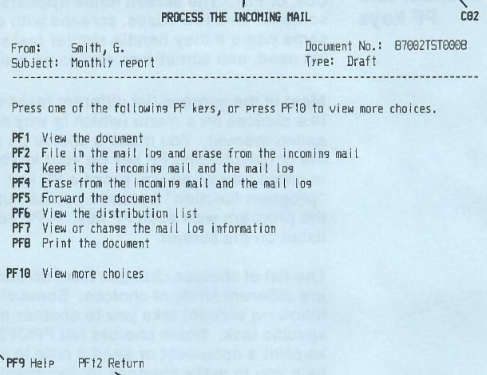
A PROFS message from your inbox

In general,  PROFS connected everyone using your mainframe or, perhaps, a group of mainframes. In some cases, there might be gateways to other systems, but it wasn’t universal. However, it did have most of the major functions you’d expect from an e-mail system that was text-only, as you can see in the screenshot from a 1986 manual. PF keys, by the way, are what we would now call function keys.

The calendar was good, too. You could grant different users different access to your calendar. It was possible to just let people see when you were busy or mark events as confidential or personal.

You could actually operate PROFS using a command-line interface, and the PF keys were simply shorthand. That was a good thing, too. If you wanted to erase a file named Hackaday, for example, you had to type: ERASE Hackaday AUT$PROF.

Styles

PROFS messages were short and were essentially ephemeral chat messages. Of course, because of the block-mode terminals, you could only get messages after you sent something to the mainframe, or you were idle in a menu. A note was different. Notes were what we could call e-mail. They went into your inbox, and you could file them in “logs”, which were similar to folders.

Continue reading “PROFS: The Office Suite Of The 1980s” →