As a Hackaday writer, you can never predict where the comments of your posts will go. Some posts seem to be ignored, while others have a good steady stream of useful feedback. But sometimes the comment threads just explode, heading off into seemingly uncharted territory only tangentially related to the original post.
Such was the case with [Steven Dufresne]’s recent post about decimal time, where the comments quickly became a heated debate about the relative merits of metric and imperial units. As I read the thread, I recalled any of the numerous and similarly tangential comments on various reddit threads bashing the imperial system, and decided that enough was enough. I find the hate for the imperial system largely unfounded, and so I want to rise to its defense.
Normally, when something explodes it tends to be a bad day for all involved. But not every explosion is intended to maim or kill. Plenty of explosions are designed to save lives every day, from the highway to the cockpit to the power grid. Let’s look at some of these pyrotechnic wonders and how they keep us safe.
Explosive Bolts
The first I can recall hearing the term explosive bolts was in relation to the saturation TV coverage of the Apollo launches in the late 60s and early 70s. Explosive bolts seemed to be everywhere, releasing umbilicals and restraining the Saturn V launch stack on the pad. Young me pictured literal bolts machined from solid blocks of explosive and secretly hoped there was a section for them in the hardware store so I could have a little fun.
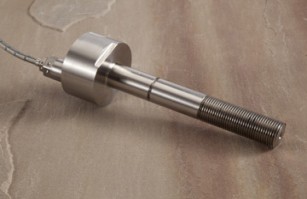
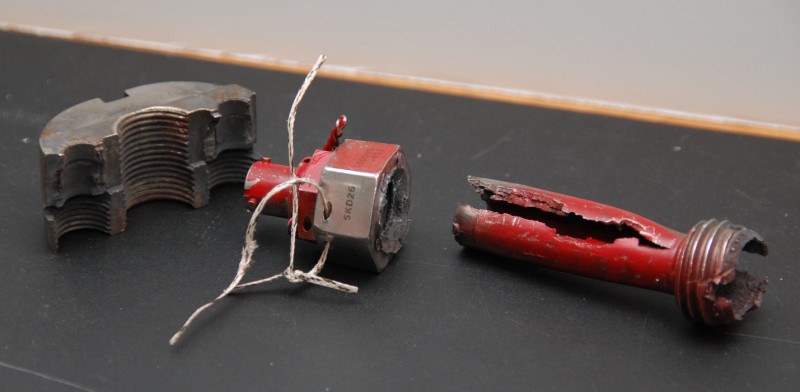
Pyrotechnic fasteners are mechanical fasteners (bolts, studs, nuts, etc.) that are designed to fail in a predictable fashion due to the detonation of an associated pyrotechnic device. Not only must they fail predictably, but they also have to be strong enough to resist the forces they will experience before failure is initiated. Failure is also typically rapid and clean, meaning that no debris is left to interfere with the parts that were previously held together by the fastener. And finally, the explosive failure can’t cause any collateral damage to the fastened parts or nearby structures.
Pyrotechnic fasteners fall into two broad categories. Explosive bolts look much like regular bolts, and are machined out of the same materials you’d expect to find any bolt made of. The explosive charge is usually internal to the shank of the bolt with an initiating device of some sort in the head. To ensure clean, predictable separation, there’s a groove machined into the bolt to create a shear plane.
Frangible nuts are another type of pyrotechnic fastener. These tend to be used for larger load applications, like holding down rockets. Frangible nuts usually have two smaller threaded holes adjacent to the main fastener thread; pyrotechnic booster charges split the nut across the plane formed by the threaded holes to release the fastener cleanly.
“Eject! Eject! Eject!”
Holding back missiles is one thing, but where pyrotechnic fasteners save the most lives might be in the cockpits of fighter jets around the world. When things go wrong in a fighter, pilots need to get out in a hurry. Strapping into a fighter cockpit is literally sitting on top of a rocket and being surrounded by explosives. Most current seats are zero-zero designs — usable at zero airspeed and zero altitude — that propel the seat and pilot out of the aircraft on a small rocket high enough that the parachute can deploy before the pilot hits the surface. Dozens of explosive charges take care of ripping the aircraft canopy apart, deploying the chute, and cutting the seat free from the parachuting pilot, typically unconscious and a couple of inches shorter from spinal disc compression after his one second rocket ride.
There’s little doubt that airbags have saved countless lives since they’ve become standard equipment in cars and trucks. When you get into a modern vehicle, you are literally surrounded by airbags — steering wheel, dashboard, knee bolsters, side curtains, seatbelt bags, and even the rear seat passenger bags. And each one of these devices is a small bomb waiting to explode to save your life.
When we think of explosives we tend to think of substances that can undergo rapid oxidation with subsequent expansion of hot gasses. By this definition, airbag inflators aren’t really explosives, since they are powered by the rapid chemical decomposition of nitrogenous compounds, commonly sodium azide in the presence of potassium nitrate and silicon dioxide. But the difference is purely academic; anyone who has ever had an airbag deploy in front of them or watched any of the “hold my beer and watch this” airbag prank video compilations will attest to the explosive power held in that disc of chemicals.
When a collision is detected by sensors connected to the airbag control unit (ACU), current is applied to an electric match, similar to the engine igniters used in model rocketry, buried within the inflator module. The match reaches 300°C within a few milliseconds, causing the sodium azide to rapidly decompose into nitrogen gas and sodium. Subsequent reactions mop up the reactive byproducts to produce inert silicate glasses and add a little more nitrogen to the mix. The entire reaction is complete in about 40 milliseconds, and the airbags inflate fully within 80 milliseconds, only to deflate again almost instantly through vent holes in the back of the bag. By the time you perceive that you were in an accident, the bag hangs limply from the steering wheel and with any luck, you get to walk away from the accident.
Grid Down
We’ve covered a little about utility poles and all the fascinating bits of gear that hang off them. One of the pieces of safety gear that lives in the “supply space” at the top of the poles is the fuse cutout, or explosive disconnector. This too is a place where a small explosion can save lives — not only by protecting line workers but also by preventing a short circuit from causing a fire.
Cutouts are more than just fuses, though. Given the nature of the AC transmission and distribution grid, the lines that cutouts protect are at pretty high voltages of 11 kV or more. That much voltage means the potential for sustained arcing if contacts aren’t rapidly separated; the resulting plasma can do just as much if not more damage than the short circuit. So a small explosive cartridge is used to rapidly kick the fuse body of a cutout out of the frame and break the circuit as quickly as possible. Arc suppression features are also built into the cutout to interrupt the arc before it gets a chance to form.
[Big Clive] recently did a teardown of another piece of line safety gear, an 11 kV lightning arrestor with an explosive disconnector. With a Dremel tool and a good dose of liquid courage, he liberated a carbon slug from within the disconnector, which when heated by a line fault ignites a .22 caliber charge similar to those used with powder actuated fastener tools. The rapid expansion of gasses ruptures the cases of the disconnector and rapidly breaks the circuit.
Conclusion
We’ve covered a few of the many ways that the power of expanding gas can be used in life safety applications. There are other ways, too — snuffing out oil field fires comes to mind, as does controlled demolition of buildings. But the number of explosives protecting us from more common accidents is quite amazing, all the more so when you realize how well engineered they are. After all, these everyday bombs aren’t generally blowing up without good reason.
Soon, the ball will drop in Times Square, someone will realize you can turn ‘2018’ into a pair of novelty sunglasses, and the forgotten mumbled lyrics of Auld Lang Syne will echo through New Year’s Eve parties. It’s time once again to recount the last 366 days, and what a year it’s been.
Arduino got into an argument with Arduino and Arduino won. We got new Raspberry Pis. Video cards are finally getting to the point where VR is practical. The FCC inadvertently killed security in home routers before fixing the problem. All of this is small potatoes and really doesn’t capture the essence of 2016. It’s been a weird year.
Want proof 2016 was different? This year, Microsoft announced they would provide a Linux ‘shim’ with every version of Windows. By definition, 2016 was the year of the Linux desktop. That’s how weird things have been in 2016.
Here at Hackaday we are a diverse bunch, we all bring our own experience to the task of bringing you the best of the hardware scene. Our differing backgrounds were recently highlighted by a piece from my colleague [Dan] in which he covered the teardown of a cordless electric chainsaw.
It was his line “Now, we’d normally shy away from any electric chainsaw, especially a cordless saw, and doubly so a Harbor Freight special“. that caught my eye. I’m with him on cordless tools which I see as a cynical ploy from manufacturers to ensure 5-yearly replacements, and I agree that cheap tools are a false economy. But electric chainsaws? Here on this small farm, they’re the saw of choice and here’s why.
No Timmy, we’re not preparing you for a life of mindless drudgery! PD, via Wikimedia Commons.
It’s funny, how obsessed we are with qualifications these days. Kids go to school and are immediately thrust into a relentless machine of tests, league tables, and exams. They are ruthlessly judged on grades, yet both the knowledge and qualifications those grades represent so often boil down to relatively useless pieces of paper. It doesn’t even end for the poor youngsters when they leave school, for we are now in an age in which when on moving on from school a greater number of them than ever before are expected to go to university. They emerge three years later carrying a student debt and a freshly-printed degree certificate, only to find that all this education hasn’t really taught them the stuff they really need to do whatever job they land.
A gold standard of education is revealed as an expensive piece of paper with a networking opportunity if you are lucky. You need it to get the job, but in most cases the job overestimates the requirement for it. When a prospective employer ignores twenty years of industry experience to ask you what class of degree you got twenty years ago you begin to see the farcical nature of the situation.
In our hackspaces, we see plenty of people engaged in this educational treadmill. From high schoolers desperately seeking to learn something other than simply how to regurgitate the textbook, through university students seeking an environment closer to an industrial lab or workshop, to perhaps most interestingly those young people who have eschewed university and gone straight from school into their own startups.
What are the evocative sounds and smells of your childhood? The sensations that you didn’t notice at the time but which take you back immediately? For me one of them is the slight smell of phenolic resin from an older piece of consumer electronics that has warmed up; it immediately has me sitting cross-legged on our living room carpet, circa 1975.
“Get ready for a life that smells of hot plastic, son!” John Atherton [CC BY-SA 2.0], via Wikimedia Commons.That phenolic smell has gone from our modern electronics, not only because modern enclosures are made from ABS and other more modern plastics, but because the electronics they contain no longer get so hot. Our LCD TV for instance nowadays uses only 50 watts, while its 1970s CRT predecessor would have used several hundred. Before the 1970s you would not find many household appliances that used less than 100 watts, but if you take stock of modern electrical appliances, few use more than that. Outside the white goods in your kitchen and any electric heaters or hair dryers you may own, your appliances today are low-powered. Even your lighting is rapidly being taken over by LEDs, which are at their heart low-voltage devices.
There are many small technological advancements that have contributed to this change over the decades. Switch-mode power supplies, LCD displays, large-scale integration, class D audio and of course the demise of the thermionic tube, to name but a few. The result is often that the appliance itself runs from a low voltage. Where once you would have had a pile of mains plugs competing for your sockets, now you will have an equivalent pile of wall-wart power supplies. Even those appliances with a mains cord will probably still contain a switch-mode power supply inside.
Last week, Hackaday had the chance to tour NASA’s Jet Propulsion Laboratory (JPL) in Pasadena, California. Tours are given all the time at JPL, but ours was special. Steve Collins invited us, and acted as our tour guide, and a new friendship with Michelle Easter got us a look inside the labs where equipment for the 2020 Mars mission is being built.








!["Get ready for a life that smells of hot plastic, son!" John Atherton [CC BY-SA 2.0], via Wikimedia Commons.](https://hackaday.com/wp-content/uploads/2016/12/656px-early_1950s_television_set_eugene_oregon.jpg)